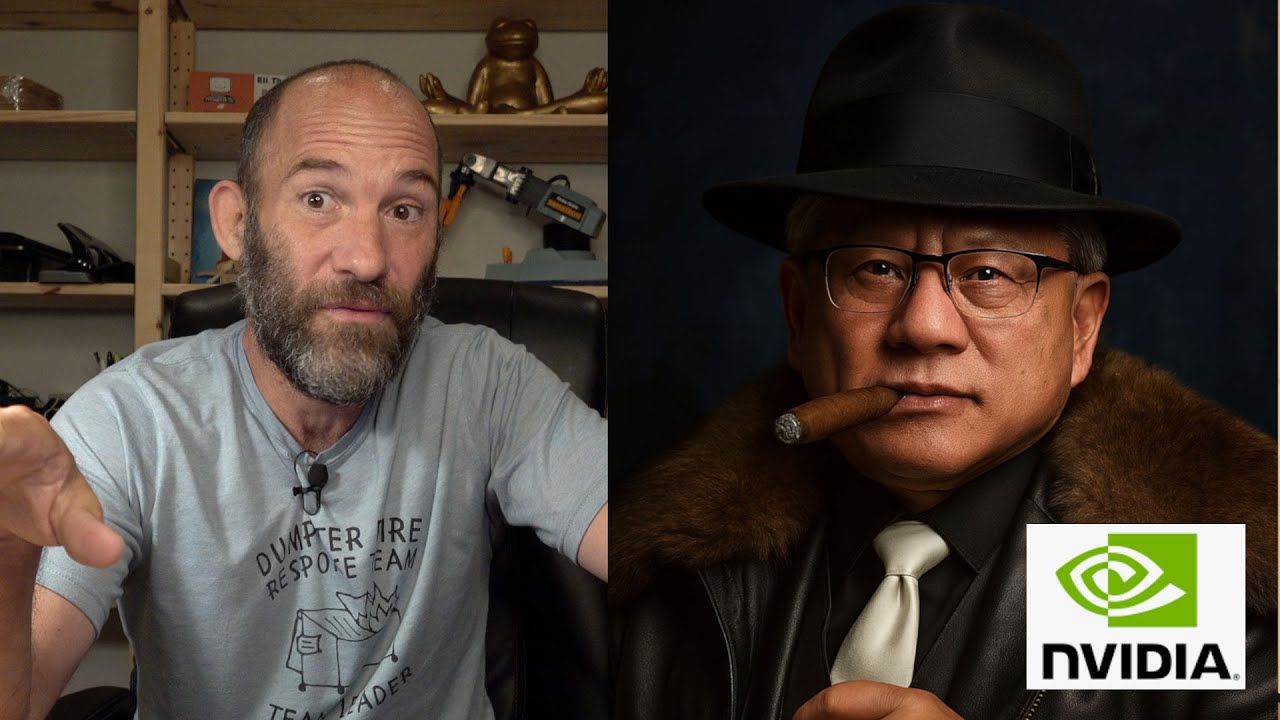
In this video, Eli from Daily Blob expresses skepticism about the current AI investment landscape, suggesting that the AI bubble is becoming “sus” (suspicious). He highlights the unusually close and cooperative relationships among major tech companies like OpenAI, Oracle, Google, Microsoft, and Nvidia, which contrasts with the traditionally fierce competition in the tech industry. Eli worries that this incestuous collaboration is artificially inflating the hype around AI, pushing the narrative that AI is the future and justifying massive investments, despite the technology not being as revolutionary as claimed.
Eli focuses on Nvidia’s recent announcement of a $100 billion investment in OpenAI, which is unusual because OpenAI is not buying GPUs outright but leasing them from Nvidia. This leasing arrangement raises questions about the financial mechanics behind the deal. Instead of a straightforward purchase, OpenAI will spread payments over the useful life of the GPUs, which could be up to five years. Eli explains that leasing is common in business but finds it odd at this scale and in this context, suggesting it might be more about financial engineering than genuine technological advancement.
The video delves into the potential implications of this leasing model. Nvidia, facing challenges such as export restrictions and lost sales in China, might be using this deal to boost its financials by effectively selling GPUs to itself through OpenAI. This could inflate Nvidia’s order books and revenue figures artificially. Eli warns that if OpenAI cannot sustain its funding rounds or meet lease payments, Nvidia could be left holding a large inventory of expensive GPUs that are not generating expected returns, posing a significant financial risk.
Eli also critiques the astronomical valuations of companies like OpenAI, which is reportedly worth $500 billion and aiming to become the first trillion-dollar startup. He questions the sustainability of such valuations, especially given that OpenAI is still burning cash and has yet to prove a clear path to profitability. The concern is that the AI investment frenzy might be driven by a “greater fool” theory, where investors keep pouring money in hoping to find someone willing to pay even more later, rather than based on solid business fundamentals.
In conclusion, Eli urges viewers to be cautious and critical of the current AI hype and financial maneuvers. While leasing and partnerships are normal business practices, the scale and nature of these deals in the AI sector feel unusual and potentially risky. He invites viewers to share their thoughts on Nvidia’s investment strategy and the broader AI bubble, emphasizing that while AI technology has value, the economic and financial aspects surrounding it might be more precarious than they appear. Eli also plugs his upcoming Silicon Dojo class and encourages engagement with his channel.