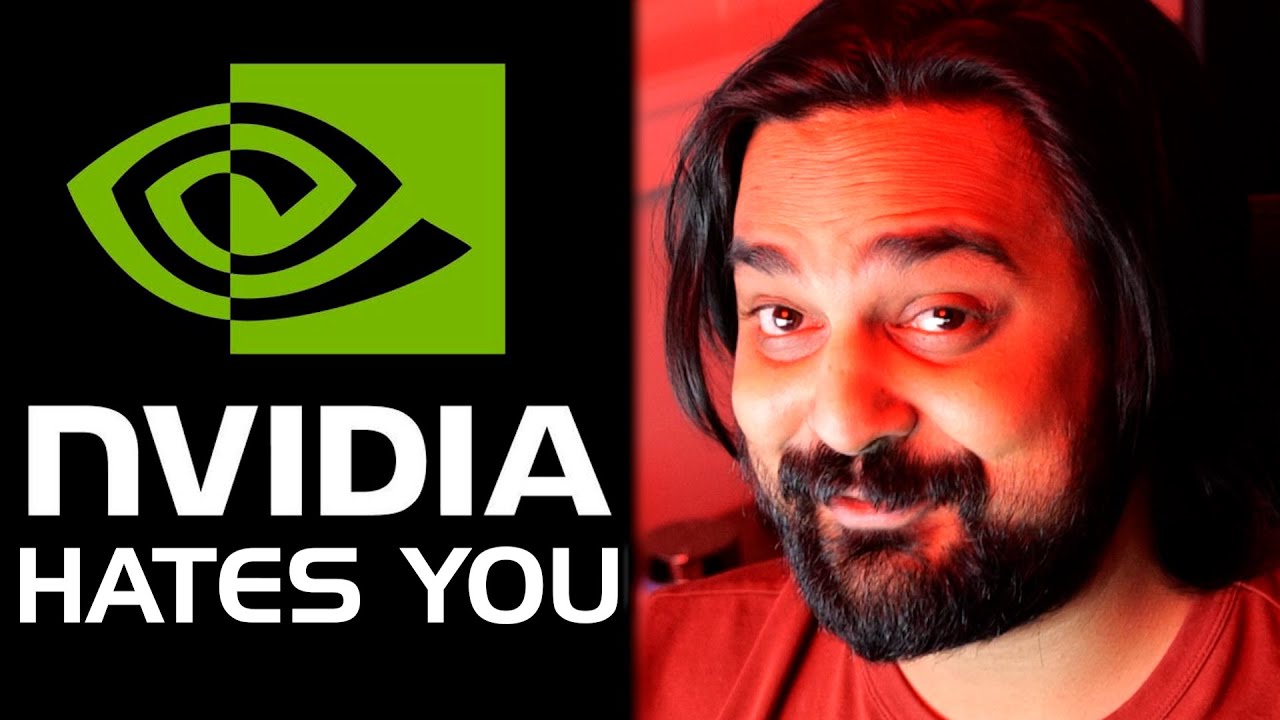
The video criticizes Nvidia for prioritizing AI companies over gamers, resulting in GPU shortages and unaffordable prices, while relying on AI-powered features to mask hardware limitations. The host, Mudahar, warns that this shift, along with the unchecked growth of AI, could harm both gamers and society, but expresses hope that public resistance might eventually push Nvidia to make gaming hardware more accessible again.
The video discusses the growing frustration among gamers with Nvidia, arguing that the company seems to prioritize selling its high-end graphics cards to AI companies rather than to gamers. The host, Mudahar, points out that Nvidia’s CEO has openly considered resurrecting older GPU models for gamers, since the latest and greatest hardware is being snapped up by large AI firms. This shift in focus has led to severe shortages and skyrocketing prices for gaming GPUs, making it increasingly difficult for average consumers to afford new hardware.
Mudahar highlights the absurdity of current GPU prices, noting that top-tier cards like the RTX 5090 can cost several thousand dollars—sometimes more than a used car. He reminisces about a time when $1,000 was considered an outrageous price for a graphics card, but now that amount barely gets you a mid-range model. The situation is exacerbated by the fact that most of Nvidia’s market share comes from gamers, yet the company seems more interested in catering to the lucrative AI sector.
The video also critiques the increasing reliance on AI-powered features like DLSS (Deep Learning Super Sampling) and frame generation to compensate for hardware limitations. While these technologies can boost performance and extend the life of older GPUs, Mudahar argues that they are now being used as a crutch by developers who neglect proper game optimization. He demonstrates how enabling features like path tracing and frame generation can make games look better, but often at the cost of input lag and a reliance on “fake” frames, which diminishes the genuine performance improvements from one GPU generation to the next.
Beyond gaming, Mudahar expresses concern about the broader societal impact of AI and automation, referencing Nvidia’s CEO’s comments about “AI immigrants” and the push for robotics to replace human labor. He criticizes the tech industry’s out-of-touch rhetoric and warns that the unchecked expansion of AI infrastructure could lead to job losses and increased inequality, with little benefit to ordinary people. The video also touches on the proliferation of AI-powered consumer products, like Razer’s “Project Ava,” which Mudahar sees as unnecessary and emblematic of tech companies’ misguided priorities.
Despite the bleak outlook, Mudahar ends on a somewhat hopeful note, mentioning the rise of grassroots opposition to new AI data centers in the United States. He argues that public resistance could force companies like Nvidia to reconsider their strategies, potentially leading to more affordable hardware for gamers if the AI bubble bursts. Ultimately, he urges viewers to stay informed and critical of the tech industry’s direction, hoping that consumer pushback will eventually restore balance and accessibility to gaming technology.