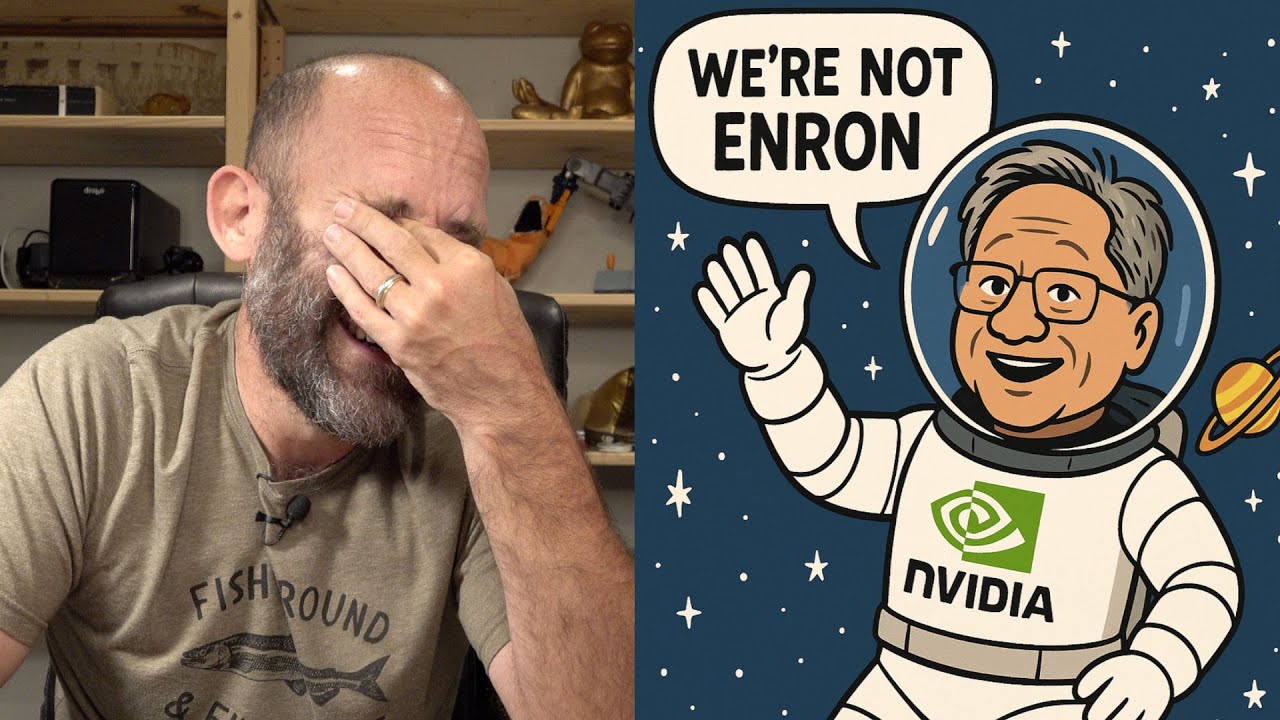
In the video, Eli humorously critiques Nvidia’s ambitious claims about launching AI-powered data centers into space, expressing skepticism about the environmental impact, technical challenges, and the feasibility of such ventures despite their potential benefits. He cautions against the hype-driven marketing tactics reminiscent of Enron, advocating for a more realistic approach to technological innovation while inviting viewers to share their opinions.
In this video, Eli, the computer guy, expresses his frustration with the modern technology workflow and the overwhelming amount of information he has to process when creating his content. He humorously shares his annoyance at accidentally mixing up two articles about space data centers—one about Jeff Bezos and another about Nvidia—leading to a headache. Despite his irritation, he dives into discussing Nvidia’s recent announcement about space-based data centers, a concept he finds both intriguing and absurd.
Eli critiques Nvidia’s bold claims about StarCloud, a startup in Nvidia’s Inception program, which plans to launch AI-equipped satellites with powerful GPUs into orbit to create data centers in space. The startup argues that space-based data centers could reduce energy costs by tenfold and alleviate Earth’s energy consumption and cooling challenges. However, Eli is skeptical about the environmental impact of launching numerous satellites and solar panels into space, questioning the real sustainability of such ventures despite the promise of nearly unlimited solar power in orbit.
The video also touches on technical challenges such as the need for space-hardened equipment and latency issues. Eli references Planet Labs’ approach of using consumer-grade electronics in space to reduce costs and increase redundancy, suggesting that modern electronics may not require as much hardening as traditionally thought. He also discusses latency concerns, emphasizing that while space-based data centers might be useful for applications like Earth observation and wildfire detection, the inherent communication delays make them unsuitable for real-time applications like gaming or video conferencing.
Eli is particularly critical of Nvidia’s marketing hype, especially the claim that “in 10 years, nearly all new data centers will be built in outer space.” He finds this statement unrealistic and emblematic of the over-the-top promises often seen in the tech industry today. He compares Nvidia’s marketing tactics to those of Enron, implying that such grandiose claims may be more about hype than practical reality. Despite his cynicism, Eli acknowledges the potential of AI and technology but urges a more grounded and realistic approach to innovation.
In conclusion, Eli invites viewers to share their thoughts on the feasibility of space-based data centers and Nvidia’s promotional claims. He also promotes his free technology education classes at silicondojo.com, emphasizing his passion for teaching practical tech skills like AI and computer vision. The video ends on a humorous note, with Eli joking about needing a large bottle of Tylenol to cope with the headaches caused by the tech industry’s hype and complexity.