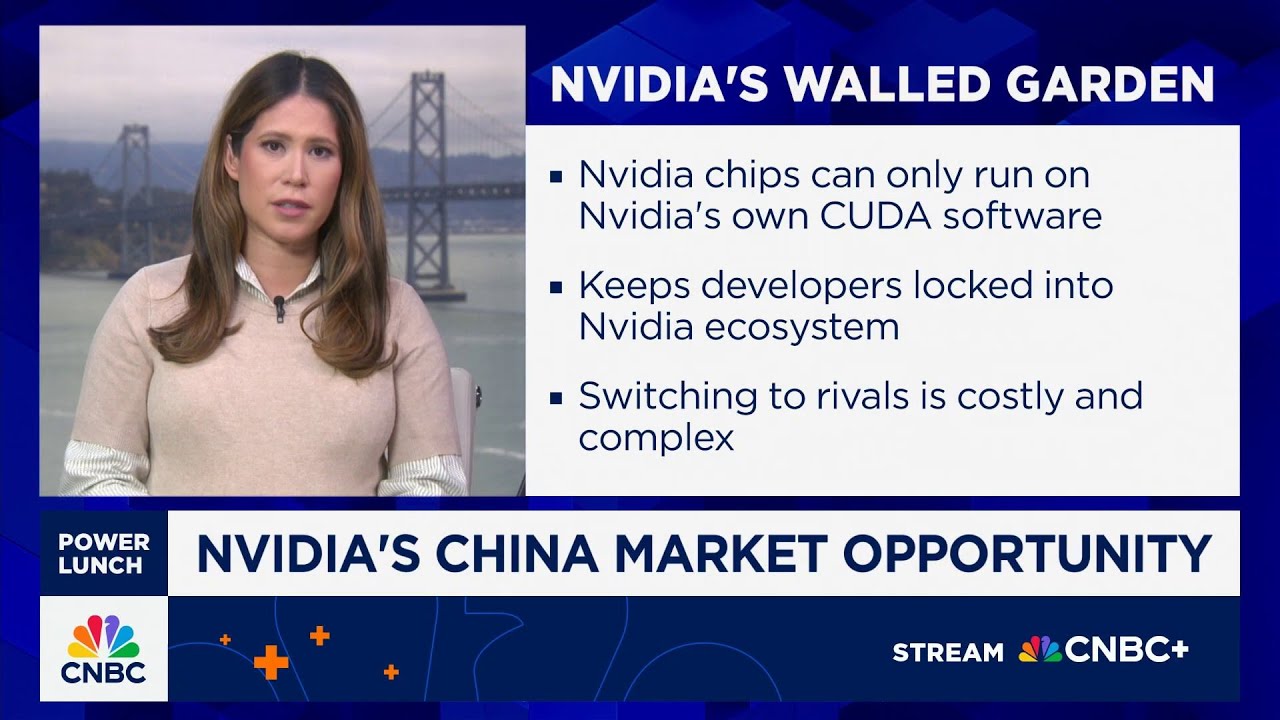
Nvidia’s recent approval to sell its H-20 chip to China, combined with its strong Cuda software ecosystem and the rapidly growing AI inference market, positions the company for significant growth despite the chip not being its most advanced product. Additionally, massive investments from major tech firms in expanding compute infrastructure further bolster Nvidia’s potential to reach a market valuation of $5 to $6 trillion.
The recent news that Nvidia is now allowed to sell its H-20 chip to China marks a significant development, though the chip itself is not among Nvidia’s top-tier products. The H-20 is considered the fourth best chip and is less powerful compared to Nvidia’s latest offerings. However, it holds considerable value in China because Chinese companies have effectively optimized their technologies around older hardware, making the H-20 a practical and strategic choice for the market there.
Nvidia’s market opportunity extends far beyond just the hardware it sells. A critical factor in the company’s sustained dominance is its comprehensive ecosystem, particularly the Cuda software platform. This software has become foundational for developers and enterprises building AI applications, which means that even less advanced chips like the H-20 can still leverage Nvidia’s broader technological infrastructure. This ecosystem advantage is a key reason why Nvidia remains highly attractive to investors and why Wall Street is bullish on the company’s future.
Despite previous restrictions on selling to China, Nvidia has continued to perform well financially, indicating that the Chinese market, while important, is only a part of the overall picture. The company’s growth is also driven by the increasing demand for AI inference—the phase where trained models are deployed and used extensively by enterprises and consumers. This inference market is experiencing rapid growth, often described as a “hockey stick” trajectory, which bodes well for Nvidia’s long-term revenue streams.
Another major driver of Nvidia’s growth is the massive capital expenditure commitments from leading tech companies. Industry giants like Meta (formerly Facebook), Google, and collaborations such as Project Stargate involving OpenAI and Oracle are investing hundreds of billions of dollars into expanding their compute capacity. These investments fuel demand for Nvidia’s chips and technology, reinforcing the company’s position as a critical supplier in the AI infrastructure space.
In summary, Nvidia’s potential to reach a market valuation of $5 trillion or even $6 trillion is supported by a combination of factors: its strong ecosystem anchored by Cuda software, the growing AI inference market, strategic access to China with the H-20 chip, and substantial investments from major tech players in compute infrastructure. Together, these elements create a robust foundation for Nvidia’s continued growth and dominance in the AI and semiconductor industries.