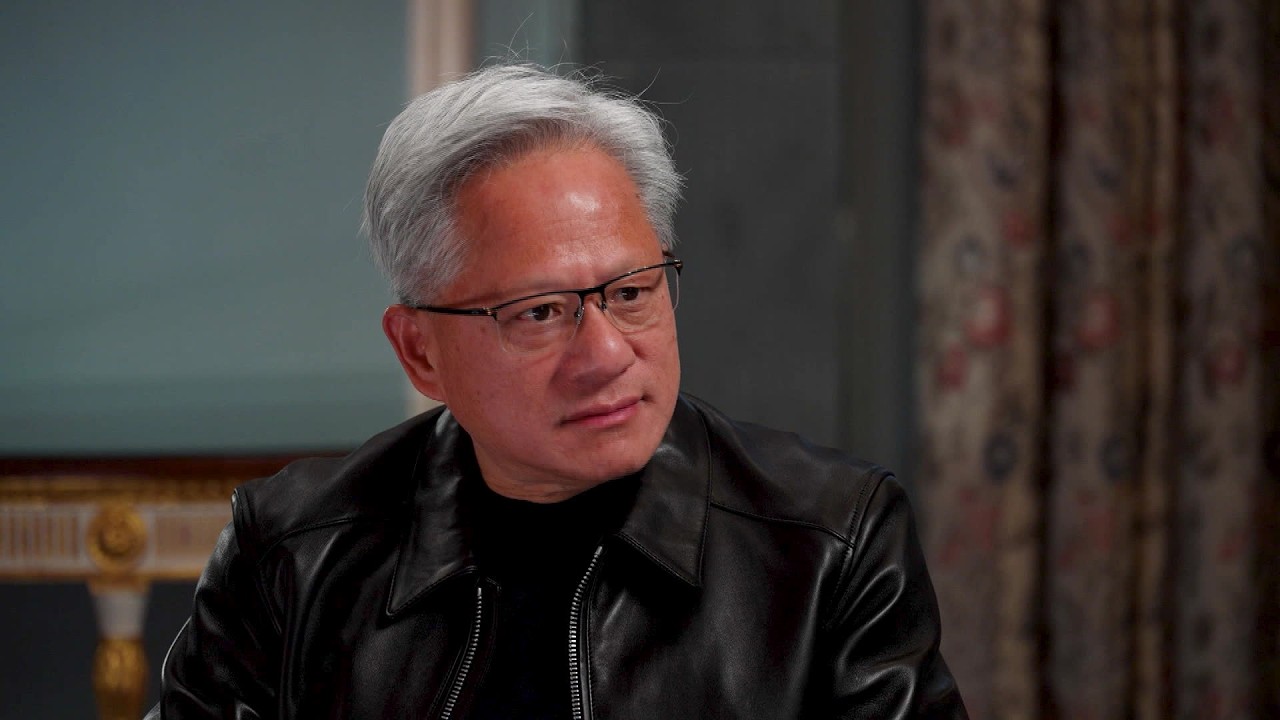
Nvidia CEO Jensen Huang emphasizes the importance of sovereignty, responsible AI development, and the transformative potential of AI technology, while acknowledging current industry challenges and the decreasing costs that make AI more accessible. He affirms Nvidia’s commitment to ethical practices by stating the company would consider halting chip sales to irresponsible AI users if harm is evident, highlighting the balance between collaboration and accountability.
Nvidia CEO Jensen Huang discusses the concept of sovereignty in the context of AI, emphasizing that true sovereignty means controlling one’s own data, experiences, cultural values, and institutional knowledge. He explains that sovereignty also entails having uninterrupted access to critical infrastructure like electricity, internet, and water, which are essential for society and businesses. Huang stresses that sovereignty provides the agency to determine one’s own destiny, even though collaboration and partnerships may be necessary.
Addressing concerns about the AI boom, Huang acknowledges current challenges such as delays and pushbacks in data center projects and IPOs but believes these are largely self-imposed and temporary. He highlights that AI technology is fundamentally transformative and irreversible. Huang notes that the industry is still maturing, likening it to the early days of the internet, with young companies experiencing growing pains while rapidly advancing AI capabilities.
Huang expresses optimism about the success of leading AI companies like Anthropic and OpenAI, both major Nvidia customers and investment targets. He points out that these companies have transitioned from unprofitable startups to profitable enterprises generating significant revenues through token-based models. Huang views their potential IPOs as important milestones that will fuel further growth and innovation in the AI sector, which remains broad, deep, and capital-intensive.
Regarding the cost of AI, Huang explains that the cost per token and the cost of intelligence are decreasing dramatically each year, making AI more accessible and beneficial to customers. Despite AI’s growing unpopularity and calls from figures like Sam Altman and Elon Musk to slow down development, Huang maintains a consistent optimism. He believes that safety and responsibility are paramount and that accelerating AI development alongside safety measures and monitoring technologies is essential for realizing AI’s full potential.
Finally, Huang addresses the hypothetical question of whether Nvidia would stop selling chips to companies using AI irresponsibly. He confirms that Nvidia would engage in conversations before taking such actions but acknowledges the complexity of imposing values on other companies or countries. However, if Nvidia were certain that an application of its technology was causing harm, it would take appropriate measures, underscoring the company’s commitment to responsible AI development and deployment.