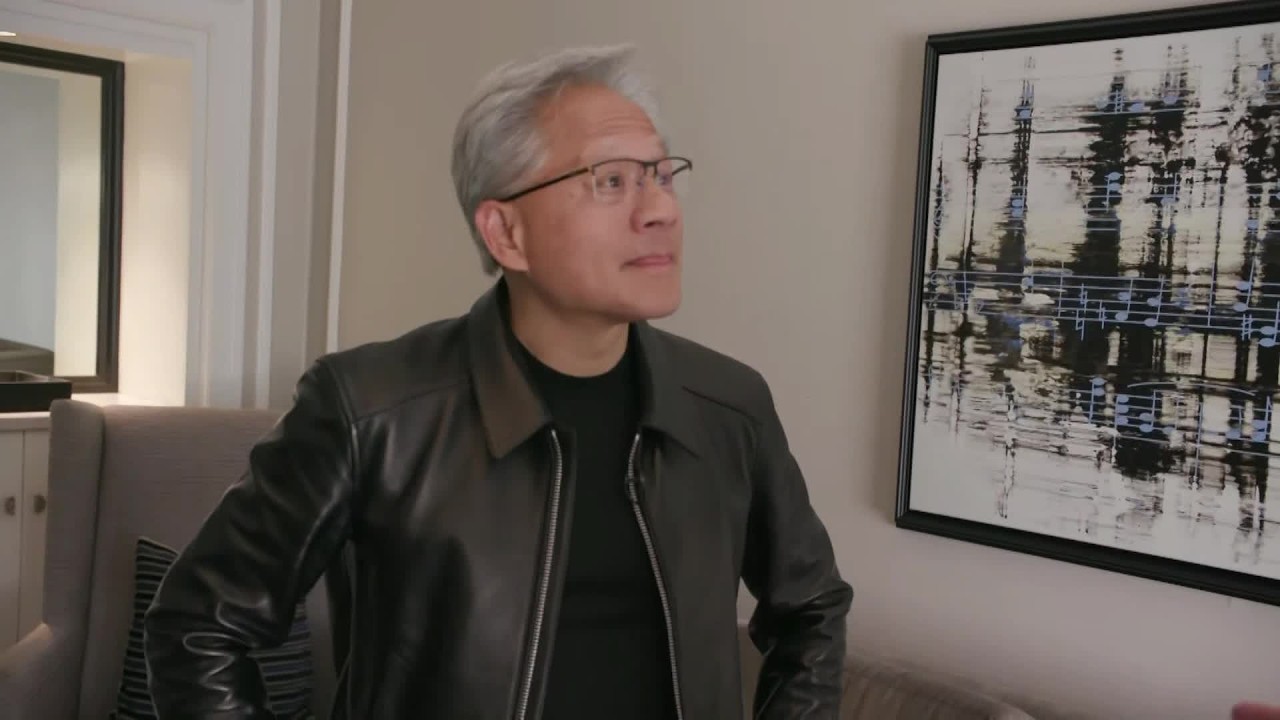
Nvidia CEO Jensen Huang highlighted South Korea’s pivotal role in the global AI boom, emphasizing the country’s booming semiconductor and industrial sectors. He announced significant partnerships, including a $500 billion business collaboration with SK Group, involving memory purchases and supercomputer sales to support large-scale AI infrastructure. Nvidia is also investing $1 billion in Korea’s leading cloud provider, Never, to help scale data center capacity both domestically and internationally. Huang stressed Korea’s technological adeptness and enthusiasm for AI adoption, positioning it as a key player in building the future AI ecosystem.
Huang discussed Nvidia’s ongoing collaboration with Korean partners on the development of high bandwidth memory (HBM), crucial for AI computing. He noted that the semiconductor industry is evolving from building computers primarily for human use to creating systems that support billions of AI agents and robots. This shift will require the semiconductor industry to expand significantly, potentially growing tenfold over the next decade. Huang emphasized the challenges in scaling infrastructure such as land, power, and construction, which will throttle growth despite the industry’s capacity to double annually.
Addressing supply constraints, Huang acknowledged shortages in HBM, LPDDR5 memory, and other supply chain components, as well as limitations in data center construction resources. He explained that these bottlenecks will slow the pace of AI infrastructure expansion, despite strong demand. The $500 billion figure with SK Group encompasses long-term memory purchases and supercomputer sales, reflecting deep integration between Nvidia and Korean companies. Huang also highlighted SK Telecom’s plans to build up to two gigawatts of AI cloud capacity, underscoring Korea’s commitment to scaling AI infrastructure.
On the global AI landscape, Huang reflected on differences between the U.S. and China, noting that China focuses on reducing the cost per token in AI models, while the U.S. prioritizes the quality of tokens. He praised the extraordinary talent in both countries and predicted continued advancements driven by their respective strengths. Huang also emphasized the importance of open AI models for safety, security, innovation, and sovereignty. He advocated for a balanced future where both open and closed AI models coexist, each serving different needs and use cases.
Finally, Huang addressed recent incidents involving AI model security, using them as examples to illustrate that closed models are not inherently safer than open ones. He stressed the necessity of distributed, diverse AI technologies to avoid single points of failure and enhance self-defense capabilities. Open models, he argued, enable quicker identification and patching of vulnerabilities, as demonstrated by the use of an open model to detect a security breach in another system. Huang concluded that openness in AI fosters resilience, innovation, and safety in the rapidly evolving AI ecosystem.