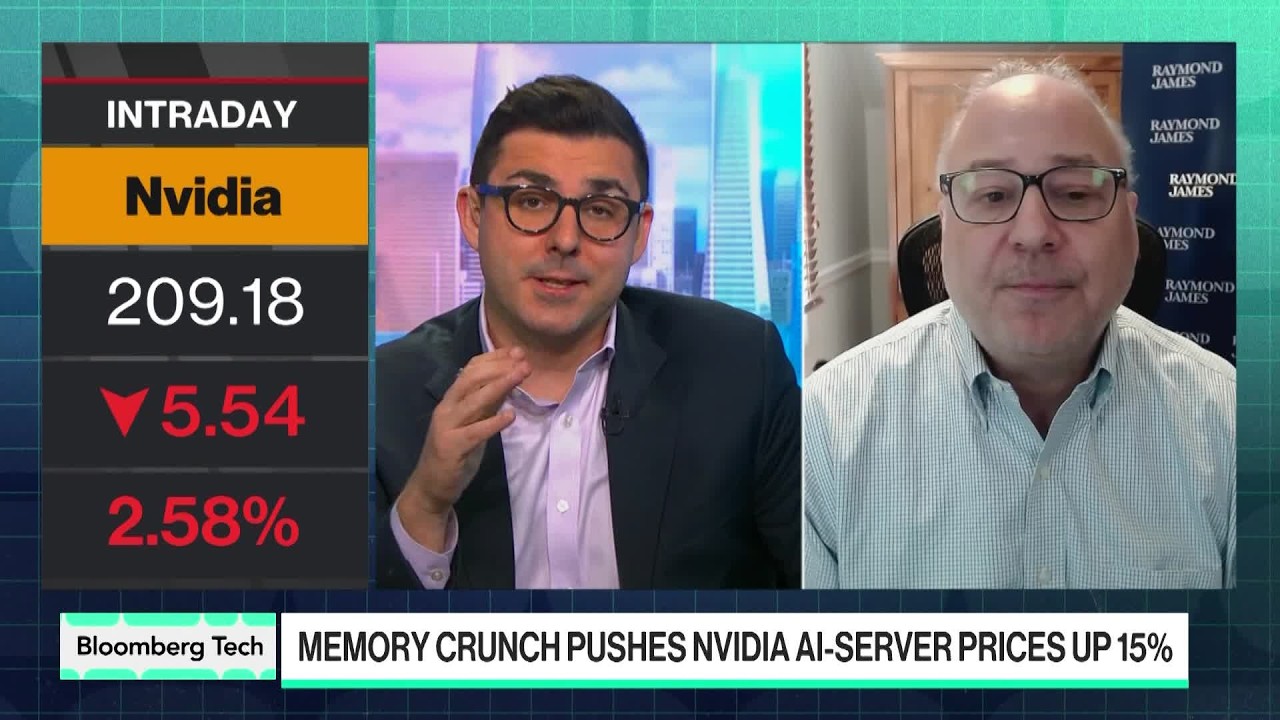
Nvidia is set to increase prices for its AI systems by about 15% due to rising memory costs and strong demand outpacing supply, while employing vendor financing strategies to support customer purchases amid investor concerns. Despite continued use of older GPUs and limited impact from the Chinese market, Nvidia balances advancing cutting-edge technology with maintaining cash flow and managing geopolitical uncertainties.
The video discusses the anticipated 15% price increase for Nvidia’s Blackwell and Rubin AI systems, primarily driven by rising memory costs. Memory, especially high-bandwidth memory (HBM) stacks used in these GPUs, has seen significant price hikes, which directly impact the overall cost of AI platforms. Given the substantial amount of memory required for these systems, the 15% increase is considered reasonable and not surprising. However, there is speculation that prices could rise further, though much depends on Nvidia’s prior pricing strategies and long-term supply agreements.
There is uncertainty about how much of the price increase will be reflected in actual contracts, as published prices do not always translate directly to contract prices. Nvidia has been proactive in securing memory supply through long-term agreements, anticipating demand well in advance. Despite this, demand for AI hardware continues to outpace the industry’s ability to supply, maintaining upward pressure on costs. This dynamic underscores the challenges Nvidia and its customers face in balancing supply constraints with growing AI infrastructure needs.
The discussion also touches on Nvidia’s financial strategies, particularly the use of circular or vendor financing through partnerships with major investment firms like Blackstone, Blackrock, Apollo, and KKR. While this approach shifts financial risk off Nvidia’s balance sheet and supports customer purchases, it raises concerns among investors about the optics of Nvidia effectively financing its own customers. Nonetheless, Nvidia’s strong cash flow—generating about $1 billion every two days—justifies reinvesting in AI opportunities, though investors would prefer to see more aggressive stock buybacks to balance these financing moves.
Regarding the lifecycle of Nvidia GPUs, there is a distinction between the economic lifetime and accounting depreciation. Newer generations like Blackwell are essential for the most demanding AI applications due to their efficiency and performance. However, older GPUs such as Ampere and Hopper models continue to be utilized effectively, broadening the market and extending the useful life of these assets. This dual usage allows Nvidia to maintain cash flow from older hardware while pushing forward with cutting-edge technology for high-end applications.
Finally, the potential impact of Nvidia’s sales in the Chinese market is considered limited due to geopolitical uncertainties. While incremental sales to China could occur, the unpredictability of ongoing business relations means analysts tend to discount this revenue stream. The risk of sudden shutdowns or restrictions makes China a less reliable market for Nvidia’s AI products, and thus it is not a major factor in the company’s near-term financial outlook.