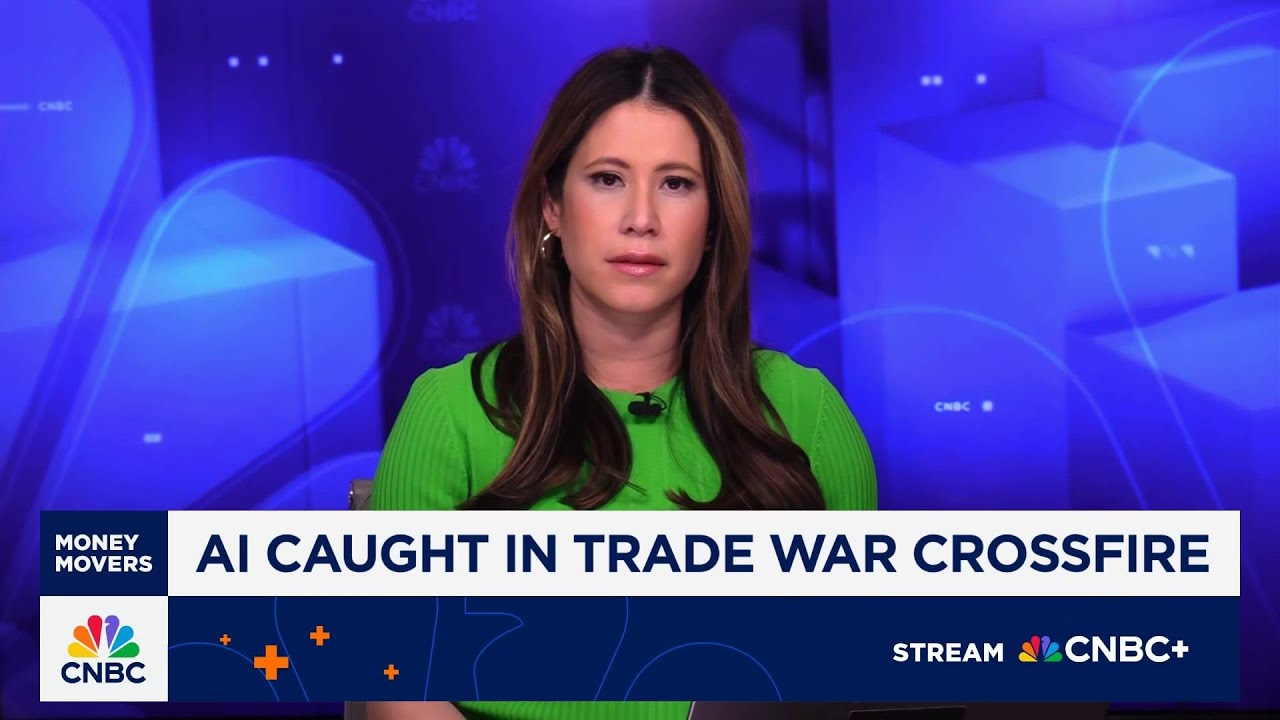
The video explains how Nvidia’s stock has declined due to concerns over potential U.S. export restrictions on AI technology amid escalating trade tensions with China, which threaten its access to key markets. It also highlights the internal debate within the U.S. tech community between containment policies and the need for global AI collaboration to maintain long-term innovation and competitiveness.
The video discusses the recent decline in Nvidia’s stock price amid concerns over potential changes in U.S. AI export policies. Trump officials are considering shifting from a tiered export control system to a country-by-country deal approach, which could impact access to advanced semiconductor technology. This move is seen as a strategic use of chip restrictions as leverage in broader trade negotiations, particularly with China, and has unsettled investors worried about the future supply and profitability of Nvidia’s products.
Nvidia’s CEO, Jensen Huang, spoke at Capitol Hill emphasizing the long-term nature of AI competition, especially with China. He highlighted China’s significant presence in AI research, with 50% of the world’s AI researchers based there, and acknowledged China’s rapid technological advancements exemplified by Chinese tech companies like Xiaomi releasing open-source AI models. Huang’s comments underscore the ongoing global race in AI development and the importance of maintaining access to international markets for American tech firms.
The video also points out the contrasting performance of Chinese tech stocks versus U.S. stocks since President Trump’s inauguration. Chinese internet giants like Alibaba have seen substantial gains, while Nvidia’s stock has fallen over 20%. The broader context shows that non-semiconductor tech companies have struggled, reflecting the challenging environment for U.S. tech firms amid trade tensions and export restrictions. This divergence highlights the geopolitical and economic pressures shaping the tech industry’s landscape.
A key issue discussed is the internal debate within the U.S. tech community regarding AI policy. While the Trump administration favors containment measures such as tariffs and export controls, figures like Jensen Huang advocate for the diffusion of American AI technology globally. Huang emphasizes the importance of competing long-term in AI development and warns against overly restrictive policies that could hinder innovation and international collaboration, especially as China advances rapidly in this field.
Finally, the video raises concerns about Nvidia’s business with China, especially after a $5.5 billion writedown due to excess inventory caused by export restrictions. The potential shift to a deal-by-deal export approach could further limit Nvidia’s access to Chinese markets and other countries, threatening its revenue streams. The overall outlook suggests that increasing geopolitical tensions and policy uncertainties pose significant risks for Nvidia and the broader U.S. semiconductor industry, complicating their global growth prospects.