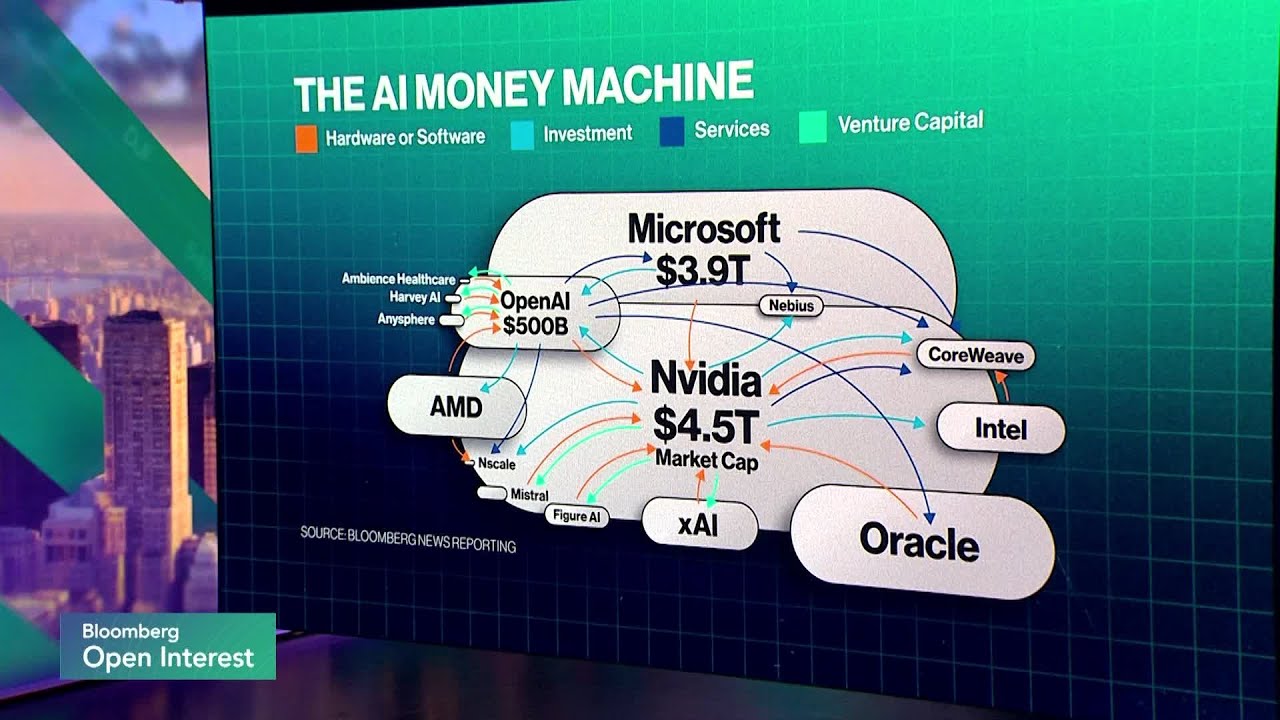
Nvidia’s acquisition of a stake in Synopsys strengthens its strategic ecosystem by fostering partnerships that enhance chip design software performance on Nvidia GPUs, reinforcing its dominant position in the AI hardware market. Despite competition from alternatives like Google’s TPUs, Nvidia maintains a near-monopoly with high profitability and supply constraints, leveraging equity investments to secure both financial returns and technological leadership.
The video discusses Nvidia’s recent strategic move of acquiring a stake in Synopsys, a company that provides essential software tools for chip design and validation. Before chips are manufactured, their designs must be thoroughly tested using platforms like Synopsys’. Nvidia purchased shares at around $414.79, and the stock has since risen to nearly $440, reflecting a 2 to 3% gain. This investment mirrors Nvidia’s previous stakes in companies like Intel and Nokia, which were also tied to engineering partnerships, indicating a pattern in Nvidia’s approach to expanding its influence in the tech ecosystem.
Synopsys’ software is widely used by companies designing their own chips, making it a valuable partner for Nvidia. The synergy lies in Synopsys promoting its software as being more effective when run on Nvidia GPUs, potentially driving sales of Nvidia hardware. This strategy positions Nvidia not only as a chip manufacturer but also as an investor with a broad portfolio in related technology firms. The company’s CEO, Jensen Huang, has explained that these equity investments are made because they are good investments and help advance technological partnerships, rather than being part of complex financial maneuvers.
The video also touches on the broader context of Nvidia’s market position and competition. Despite emerging alternatives like Google’s Tensor Processing Units (TPUs), Nvidia remains supply-constrained but highly profitable, selling every GPU that manufacturers like TSMC can produce. Nvidia holds about 90% of the GPU market, which is described as a technical monopoly, giving the company a dominant and enviable position. This dominance allows Nvidia to maintain high margins without needing to discount prices to compete with TPU or other technologies.
There is also a discussion about the competitive dynamics involving other major players like Google and SoftBank. SoftBank’s CEO reportedly had to sell his Nvidia stake to invest in OpenAI, highlighting the complex investment landscape in AI and chip technology. Despite concerns about TPU as a competitor, Nvidia’s strong market position and supply constraints mean it continues to lead the GPU market. The TPU, while significant, has not yet displaced Nvidia’s dominance, partly because Nvidia’s GPUs are deeply entrenched in the AI and chip design ecosystem.
Overall, the video portrays Nvidia’s investment in Synopsys as part of a broader strategic play to strengthen its technological ecosystem and maintain market leadership. By taking equity stakes in key companies, Nvidia not only secures financial returns but also fosters partnerships that enhance the performance and adoption of its hardware. This approach, combined with Nvidia’s dominant market share and high margins, positions the company well amid evolving competition and technological advancements in AI and semiconductor design.