The video begins by addressing a common misconception that screen sharing, screen casting, or desktop capture does not work on Wayland. The presenter clarifies that it indeed works and is being used in the video itself. Contrary to some claims, running OBS as root is not required for screen capture on Wayland. While many applications like Discord and Zoom have implemented support for Wayland screen sharing, some tools, such as Simple Screen Recorder, still lack support. The presenter acknowledges that there are issues with Wayland screen sharing that need to be addressed but emphasizes that these problems are mostly on the application side rather than being inherent to Wayland or NVIDIA hardware.
The video then discusses the various use cases for screen capturing, including content creation, streaming, video conferencing, marketing, and software development. Screen capture is a valuable tool for demonstrating desktop environments, debugging graphical bugs, and remote collaboration. On Wayland, multiple approaches exist for screen capture, with the most common being the XDG desktop portal combined with Pipewire. This method is widely supported by applications like OBS, Discord, and Zoom. Other methods include built-in desktop protocols and kernel mode setting (KMS) grabs, but the latter requires elevated privileges, making it less practical for everyday use.
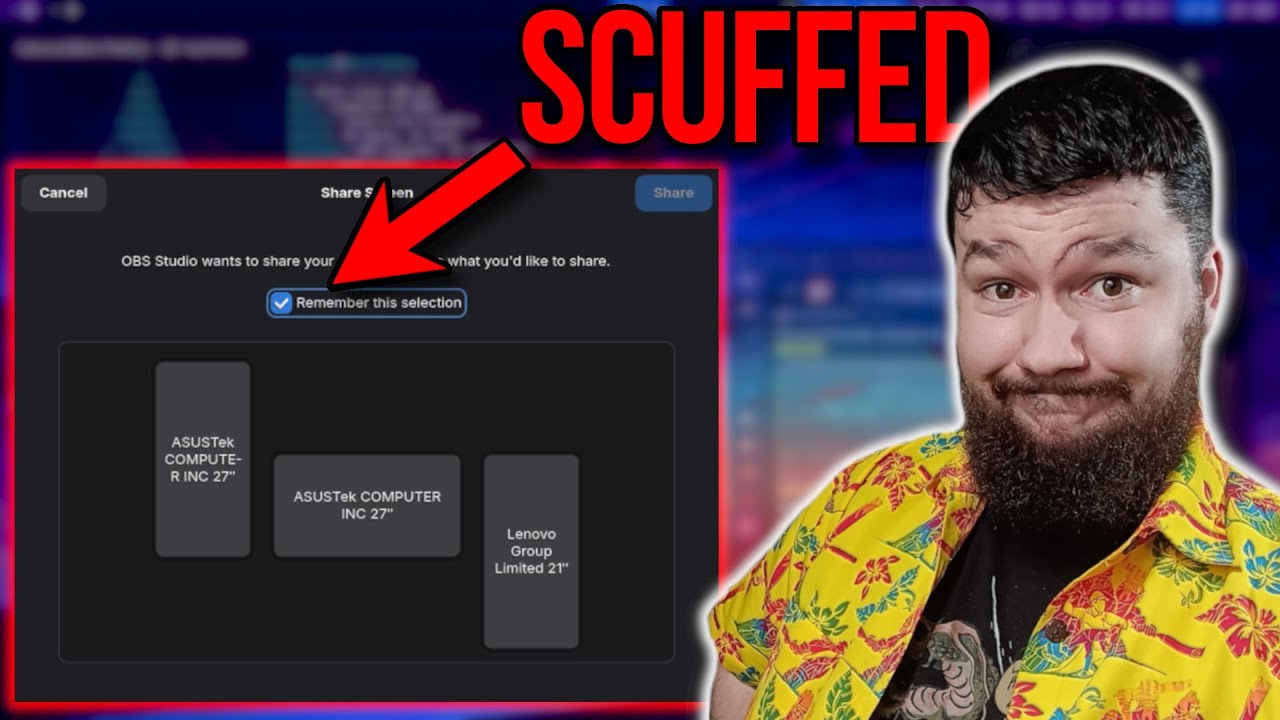
One technical issue highlighted is the challenge with explicit synchronization (explicit sync) in screencasting. This feature requires implementation across the compositor, drivers, and applications, making it complex and slow to adopt. However, the main focus of the talk is on the permission system for screen capture. Currently, Wayland uses a token-based permission system where users must grant access to specific windows or displays. While this improves security compared to X11, where any window could be captured without explicit permission, it introduces usability problems. Tokens are sometimes not remembered, forcing users to repeatedly grant permissions, and the permission prompts do not clearly identify which window or element is being requested for capture, leading to confusion.
The presenter shares personal experiences with the permission system, describing how managing multiple capture sources in applications like OBS can become cumbersome. When capturing multiple windows, such as Discord cameras or browser windows, users face repeated permission prompts without clear identification of each source. This makes automation and remote use cases difficult because physical access is often required to grant permissions. Some users resort to fragile workarounds like automating keyboard and mouse input to navigate permission dialogs, which is not a sustainable solution. The presenter argues for the need for a more flexible, ahead-of-time permission system that allows users to authorize applications like OBS to capture without repeated prompts while maintaining security.
In conclusion, the video calls for community discussion and development of better solutions for Wayland screen capture permissions. The suggested idea is to implement a system where users can grant persistent capture tokens to trusted applications, allowing seamless screen capture without compromising security. This would enable smoother workflows for content creators, streamers, and remote users. The presenter invites viewers to share their experiences and thoughts on Wayland screen capturing and encourages support for the channel. Ultimately, while Wayland screen capture works well in many cases, there is room for improvement, especially in the permission management system.