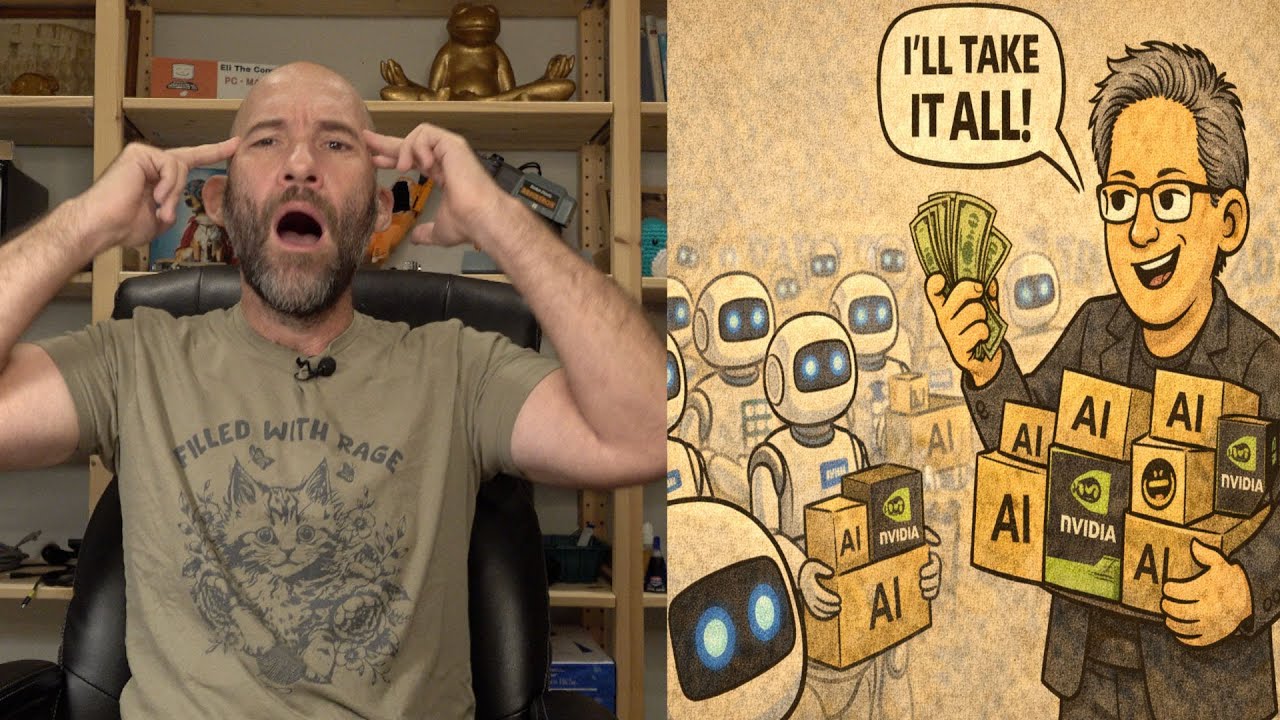
Eli the Computer Guy criticizes NVIDIA’s $20 billion acquisition of Groq’s assets, arguing that it stifles competition in the AI hardware space by allowing NVIDIA to absorb innovative technology and talent while avoiding regulatory scrutiny. He warns that such monopolistic practices harm innovation and urges the tech community to prioritize ethical behavior and open, empowering technology over corporate consolidation.
1 Like
In this video, Eli the Computer Guy discusses the recent deal in which NVIDIA is acquiring the assets of AI chip startup Groq for $20 billion, a move he sees as highly detrimental to competition in the AI hardware space. He begins by reminiscing about a time when being a technology professional was a source of pride and laments the current state of the industry, which he feels is dominated by questionable business practices and monopolistic behavior. Eli also plugs his Silicon Dojo initiative, which offers free hands-on technology education, contrasting it with the corporate-driven tech world.
Eli explains that NVIDIA, with a market cap of over $4.6 trillion, has become the dominant player in AI hardware, particularly with its versatile but expensive GPUs. He argues that while versatility is valuable in lab and testing environments, production systems typically require specialized hardware optimized for specific tasks. This is where companies like Groq, which developed ASIC chips focused solely on AI inference, offered a compelling alternative to NVIDIA’s general-purpose GPUs.
He criticizes the current AI investment climate, comparing it to the early days of social media marketing when companies threw money at new technologies without understanding their value or ROI. Eli believes that the current massive investment in AI is unsustainable and will eventually taper off as the industry matures and focuses on efficiency and return on investment. He warns that the cycle of overinvestment followed by consolidation is repeating, with large companies like NVIDIA using their financial power to eliminate potential competitors before they can grow.
Eli is particularly concerned about the way NVIDIA structured the Groq deal to avoid regulatory scrutiny. Instead of a straightforward acquisition, NVIDIA is buying Groq’s assets and hiring its key executives, leaving the shell of the company behind. He describes this as “strip mining” the startup, a tactic that allows NVIDIA to absorb valuable technology and talent while sidestepping antitrust issues. He notes that this practice is becoming more common in the tech industry, with large corporations using their resources to neutralize emerging threats in ways that are technically legal but harmful to innovation and competition.
Finally, Eli warns that this trend of big tech companies preemptively killing off future competitors is damaging to the industry and society as a whole. He argues that idolizing tech CEOs and allowing them to consolidate power stifles innovation and prevents the next generation of disruptors from emerging. Eli calls on viewers, especially those working in Silicon Valley, to reflect on the ethical implications of their work and urges a return to technology’s roots as a force for empowerment and positive change. He closes by promoting his educational efforts and expressing hope for a more open and innovative tech landscape.