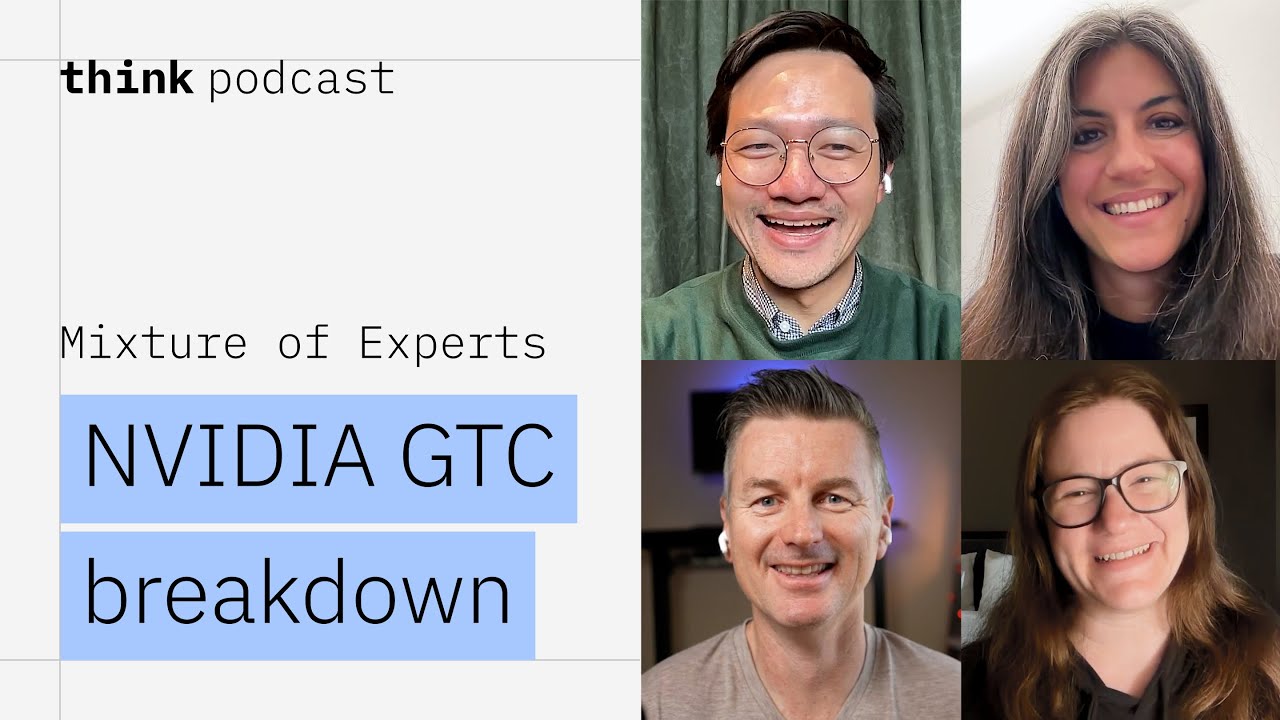
In this episode of Mixture of Experts, the panel discusses several major developments in the AI industry, starting with Nvidia’s GTC conference. Nvidia is shifting from being primarily a hardware company to focusing heavily on software, particularly agentic AI systems. These systems can spawn multiple sub-agents to perform complex tasks autonomously, which significantly increases computational demands. Nvidia’s new NemoClaw platform builds on the open-source OpenCloud project by adding security and permission controls, aiming to create a safer and more enterprise-ready AI agent platform. The discussion highlights Nvidia’s broad ambitions, including robotics enhanced by large language models (LLMs), autonomous vehicles, and more, reflecting a sprawling but potentially strategic expansion.
The conversation then moves to Anthropic’s announcement of the Anthropic Institute, led by co-founder Jack Clark, which aims to study the societal, economic, and safety impacts of AI. While the panel appreciates the transparency and interdisciplinary approach, there is skepticism about whether a company building AI systems can objectively audit its own impact without conflicts of interest. Nonetheless, the institute’s focus on red teaming, societal effects, and economic research, especially regarding labor markets, is seen as a positive step toward understanding AI’s real-world consequences. The panelists emphasize the importance of collaboration between such internal research efforts and independent organizations to ensure a comprehensive view of AI’s implications.
Next, the panel discusses Shopify’s entry into the agentic shopping space, where AI agents will autonomously discover, compare, and purchase products on behalf of users. Unlike Amazon’s centralized platform, Shopify’s distributed model could democratize agentic commerce but also raises questions about how brands will maintain emotional connections with consumers when agents optimize purely for cost and performance. The panelists also express concerns about the potential hollowing out of reliable information sources, as AI agents might rely increasingly on ad-driven content, degrading the quality of recommendations. They highlight the need for new systems to preserve and share trustworthy knowledge to sustain a healthy digital ecosystem.
The episode then covers a reported strategic pivot at OpenAI, which is reportedly refocusing on coding and enterprise users rather than broad consumer applications. This shift reflects the recognition that enterprise markets offer more sustainable growth and stickier user bases compared to transient consumer trends. The panelists note that while OpenAI popularized AI with consumer-facing products like ChatGPT, the long-term value lies in serving developers and businesses with coding agents and workflow automation. However, they debate whether OpenAI is late to this market, given Anthropic’s earlier focus on enterprise AI, and discuss the challenges of building moats and network effects in the coding assistant space, which currently remains highly competitive and interchangeable.
Overall, the episode paints a picture of an AI industry rapidly evolving with multiple players exploring diverse strategies—from Nvidia’s expansive hardware-software integration and robotics, Anthropic’s ethical and societal research, Shopify’s agentic commerce ambitions, to OpenAI’s enterprise pivot. The panel underscores the complexity and uncertainty of AI’s future, emphasizing the need for responsible development, collaboration across disciplines, and vigilance about the quality of information and user experience as AI agents become more autonomous and pervasive. The discussion closes with a recognition that while the landscape is dynamic and sometimes chaotic, these developments are critical to shaping how AI will impact society and business in the coming years.