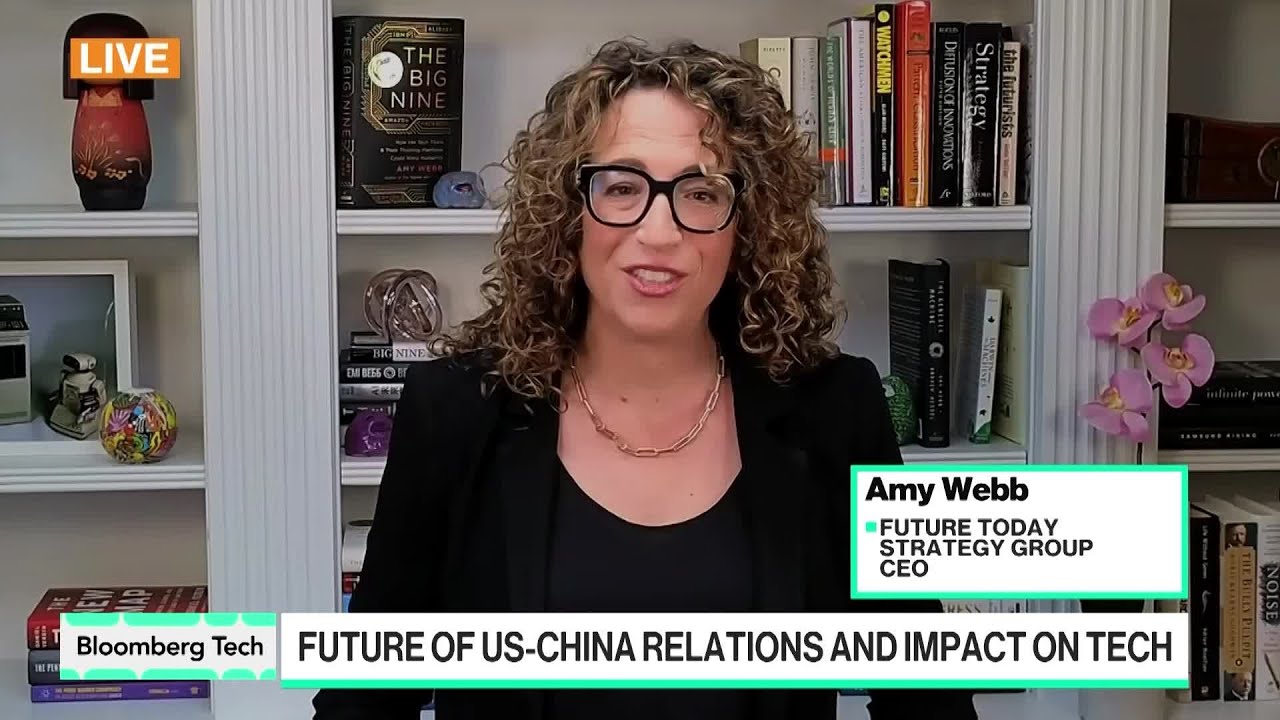
The recent interactions between Trump and Xi signaled a de-escalation in tensions rather than a complete reset in their relations, particularly concerning frontier technologies like AI and semiconductors. While tariffs may have taken a backseat, the focus has shifted to technological competition, especially in semiconductor development. This shift highlights the ongoing strategic rivalry between the U.S. and China in critical technology sectors.
Regarding Nvidia and its Blackwell architecture chips, there was speculation that these might be discussed between the two leaders, but that did not happen. Nvidia’s CEO, Jensen Huang, remains optimistic about regaining some access to the Chinese market. The current situation offers more predictability compared to previous uncertainty, which could alleviate short-term supply chain concerns for companies like Nvidia, AMD, and other U.S. semiconductor toolmakers. However, unrestricted sales to China are unlikely, given the geopolitical sensitivities.
Nvidia’s recent achievement of a $5 trillion market capitalization is significant not only for investors but also for the broader U.S. economy. Despite having zero sales in China, Nvidia’s products are widely used by major American tech companies such as Microsoft, Apple, Google, and Oracle. This valuation suggests that Nvidia can currently thrive without Chinese sales, but the future remains uncertain as China continues to develop its own semiconductor capabilities and AI technologies.
China’s ongoing five-year plans emphasize building a modern industrial system by heavily investing in frontier sectors like aerospace, biomanufacturing, quantum materials, and supply chain improvements. These efforts require advanced chips, which China aims to domesticate through local chip makers and AI champions. While this strategy could be beneficial for China’s technological independence, it poses challenges for Western companies and economies that currently dominate these sectors.
A critical bottleneck in this technological competition is the supply of rare earth materials essential for semiconductor manufacturing. Currently, these materials are sourced predominantly from one region, limiting diversification. Although there is hope for future engineering solutions to reduce dependence on these materials, the U.S. and other Western nations are unlikely to achieve large-scale advanced manufacturing independence in the near term. Meanwhile, China’s government-backed industrial modernization efforts, supported by substantial capital, position it strongly for future competitiveness in these critical technologies.