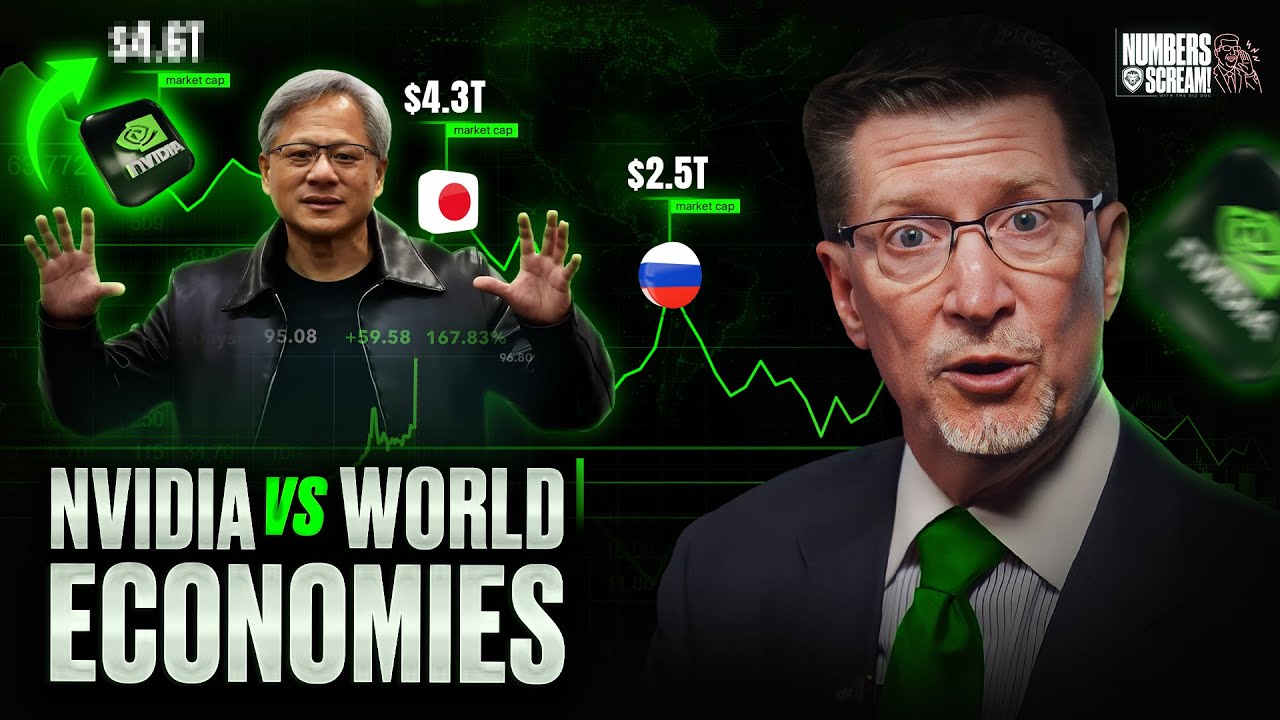
In this episode of “Number Scream,” Tom Ellsworth, also known as the Bisdock, breaks down five major economic and financial topics using key numbers to provide context and clarity. He begins by highlighting Nvidia’s staggering market capitalization, which is approaching $5 trillion. Ellsworth compares Nvidia’s value to the GDP of entire countries, noting that it rivals or surpasses the economies of Germany, Japan, India, and the UK. This comparison underscores Nvidia’s dominance in the AI sector and the sheer scale of its influence in the global market.
Next, Ellsworth examines the reality behind ICE (Immigration and Customs Enforcement) detention numbers. He points out that while mainstream media often amplifies the issue, the actual number of detainees under the Biden administration is around 40,000, which is significantly lower than the 70,000 seen under Trump. He argues that the political uproar is less about the numbers and more about the exposure of potential voter fraud and misuse of relief funds, particularly in places like Minneapolis. Ellsworth suggests that ICE actions reveal deeper issues related to campaign finance and welfare fraud, which is why the topic generates such heated debate.
The third topic focuses on the S&P 500 and the state of the U.S. economy. Despite widespread commentary about economic instability, Ellsworth shows that the S&P 500 has remained relatively flat since the start of the year, fluctuating within a narrow range. He emphasizes that while there are still risks and affordability concerns, the dire headlines do not reflect the reality in most Americans’ retirement accounts. The market’s stability, he notes, is a sign that the economic situation is not as bleak as some suggest.
Ellsworth then discusses the Federal Reserve’s interest rate decisions and the speculation surrounding the next Fed chair. According to betting data from the platform Kalshi, there is a 98% chance that the Fed will maintain current rates at the next meeting. The frontrunners for the next Fed chair are Kevin Warsh and Rick Rieder, with Kevin Hassett dropping out of contention. Ellsworth uses this as an example of how public opinion and insider speculation can shape expectations about economic policy and leadership.
Finally, Ellsworth explores where Europe gets its energy, particularly oil and natural gas. He reveals that the United States and Norway supply nearly 30% of the EU’s oil, while Russia’s share has dropped to just 1% due to sanctions. Even more striking, the U.S. now provides 60% of the EU’s imported natural gas. Ellsworth argues that this energy dependence gives the U.S. significant leverage in international relations, especially as European leaders express concerns about U.S. policies at forums like Davos. He concludes by inviting viewers to consult with his firm for business strategy and growth advice, emphasizing the importance of understanding the real numbers behind the headlines.