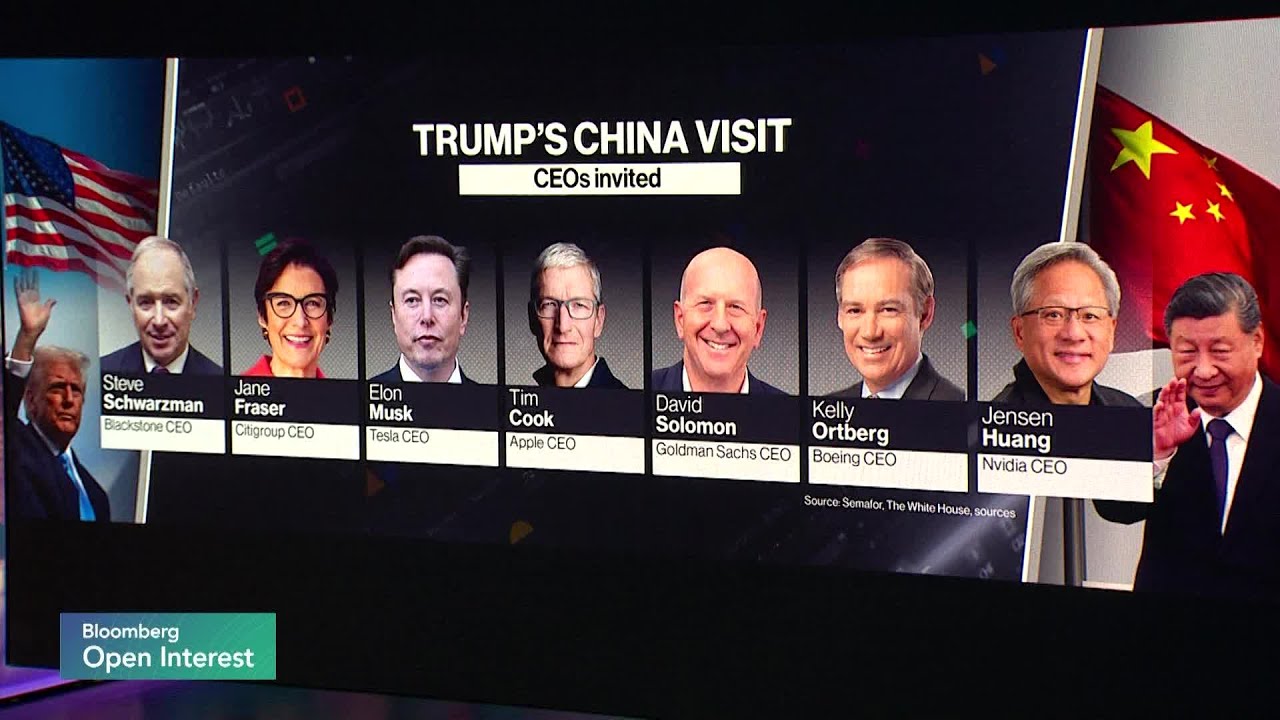
President Trump’s China trip includes a late addition of Nvidia CEO Jensen Huang, highlighting the strategic importance of semiconductor trade amid sensitive export restrictions and potential negotiations to expand chip sales to China. The visit also aims to balance economic ties and national security concerns while seeking China’s cooperation on Iran-related regional stability and energy market issues.
President Trump has indicated that the U.S. has Iran “very much under control,” though inflation and energy prices suggest otherwise. As part of ongoing diplomatic efforts, there is speculation that Trump may ask Chinese President Xi Jinping for assistance in pressuring Iran, particularly to reopen the Strait of Hormuz. Additionally, the U.S. might request China to release more oil from its substantial reserves—1.4 billion barrels, which surpasses the combined reserves of the U.S. and eight other major holders—to help stabilize energy markets and curb inflation.
The administration is keen to maintain a stable bilateral relationship with China despite tensions surrounding Iran. This is reflected in the composition of the business delegation accompanying President Trump on his China trip. The delegation includes CEOs from major companies with significant trade interests in China, such as Boeing and Cargill, highlighting the administration’s focus on economic ties and trade opportunities, particularly in sectors like aerospace and agriculture.
A notable late addition to the delegation is Jensen Huang, CEO of Nvidia, which signals a potential shift or expansion in the discussions around semiconductor trade. Huang’s inclusion was reportedly a last-minute decision, with President Trump personally inviting him to join the trip. This move adds complexity to the agenda, given the sensitive nature of semiconductor technology and recent U.S. policies restricting chip exports to China.
The semiconductor issue is particularly significant because the U.S. had previously banned the export of Nvidia’s H100 chips to China but reversed this policy in January, allowing limited shipments subject to a 25% fee. However, as of April, no H100 chips have been shipped to China because the Chinese government has not authorized purchases. Huang’s presence may indicate potential negotiations to either begin these sales or possibly expand the range of advanced chips allowed for export, including Nvidia’s newer Blackwell chips.
Overall, the late addition of Nvidia’s CEO to the delegation underscores the strategic importance of semiconductor technology in U.S.-China relations. It suggests that the administration is exploring ways to balance trade interests with national security concerns, while also leveraging China’s role in global energy markets and regional security issues like Iran. The trip thus represents a multifaceted effort to manage complex economic and geopolitical challenges between the two countries.