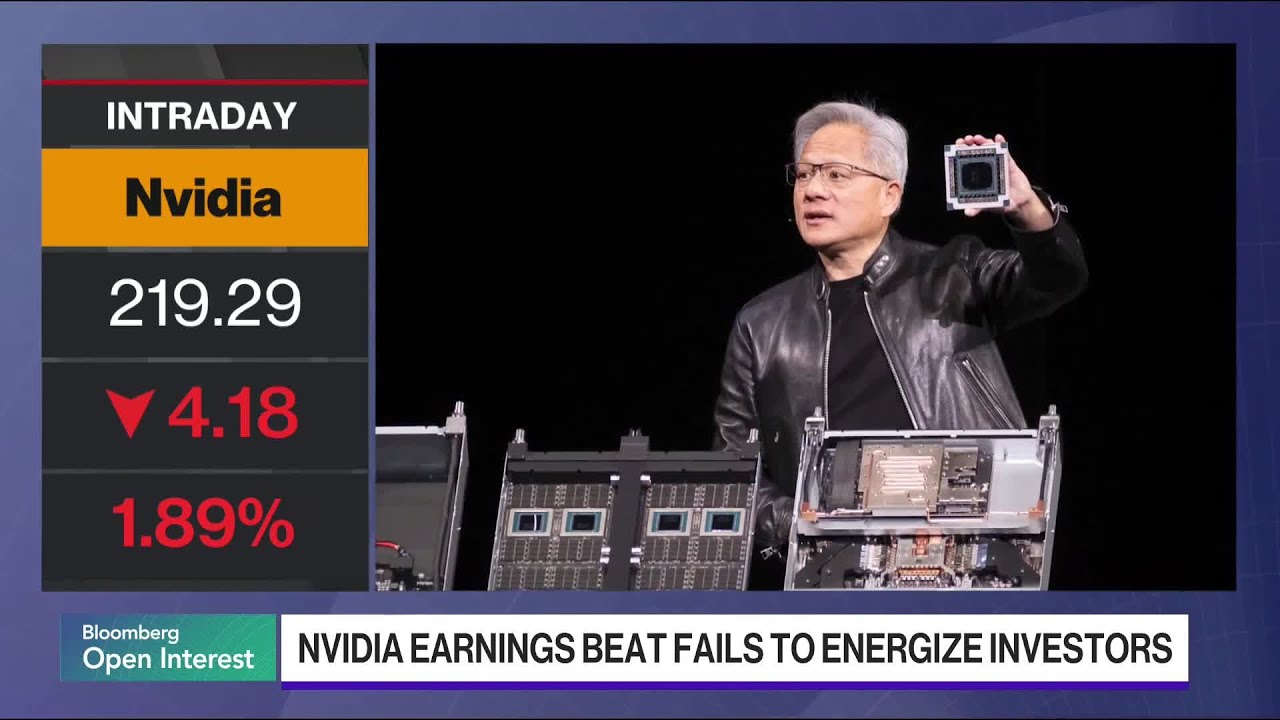
NVIDIA’s recent earnings report impressed with strong performance, but investor enthusiasm was tempered by already high expectations and overshadowed by major IPO news, notably SpaceX’s filing. Gil Luria of DA Davidson highlighted NVIDIA CEO Jensen Huang’s confident stance, emphasizing NVIDIA’s dominance in several market segments, including a near-monopoly in certain chip areas and significant growth in their standalone CPU business. Huang also downplayed competitors like AMD, Broadcom, and Cerebras, reinforcing NVIDIA’s central role in the AI industry and its continued growth trajectory.
The discussion then shifted to valuation comparisons between NVIDIA and SpaceX. Despite SpaceX’s massive $2 trillion valuation and 20% growth rate, NVIDIA trades at a much lower multiple (around 17 times sales) but boasts an impressive 85% growth rate. Joe Kaiser of Switchyard Partners pointed out NVIDIA’s substantial networking revenue, which rivals Qualcomm, and highlighted the company’s “AI factory” concept, projecting $370 billion in annual sales. The conversation underscored NVIDIA’s strong market position and relatively attractive valuation compared to other tech giants entering the public markets.
SpaceX’s ambitious $28.5 trillion total addressable market (TAM) was scrutinized, with Gil Luria noting that much of SpaceX’s valuation is tied to its visionary mission of making humanity multiplanetary. While acknowledging the technical challenges SpaceX faces, such as Starship’s payload capacity and launch reliability, both experts agreed on Elon Musk’s proven ability to overcome obstacles and deliver on long-term goals. The discussion also touched on SpaceX’s AI-related ventures, including its GPU clusters and partnerships with companies like Anthropic, highlighting the company’s multi-faceted business model spanning current revenue streams, emerging opportunities, and visionary projects.
The conversation then turned to the competitive landscape in AI, focusing on OpenAI and Anthropic. Despite OpenAI’s early lead and rapid revenue growth, Anthropic has recently gained significant traction, especially with its coding tools, which have doubled user numbers and are favored by some developers. Both Gil and Joe emphasized the intense competition among AI companies, including Google’s Gemini, and the critical importance for OpenAI to secure capital through an IPO to maintain its competitive edge by funding infrastructure and innovation.
Finally, the panelists reflected on the broader market implications of these tech IPOs. They noted that investors are currently willing to accept substantial losses from companies like OpenAI, Anthropic, and SpaceX due to their enormous growth potential and transformative visions. However, the success of these companies is interconnected; if one falters, it could impact the entire AI-driven ecosystem. The race remains wide open, with multiple players vying for dominance, and capital availability will be a key factor in determining who leads the next wave of technological innovation.