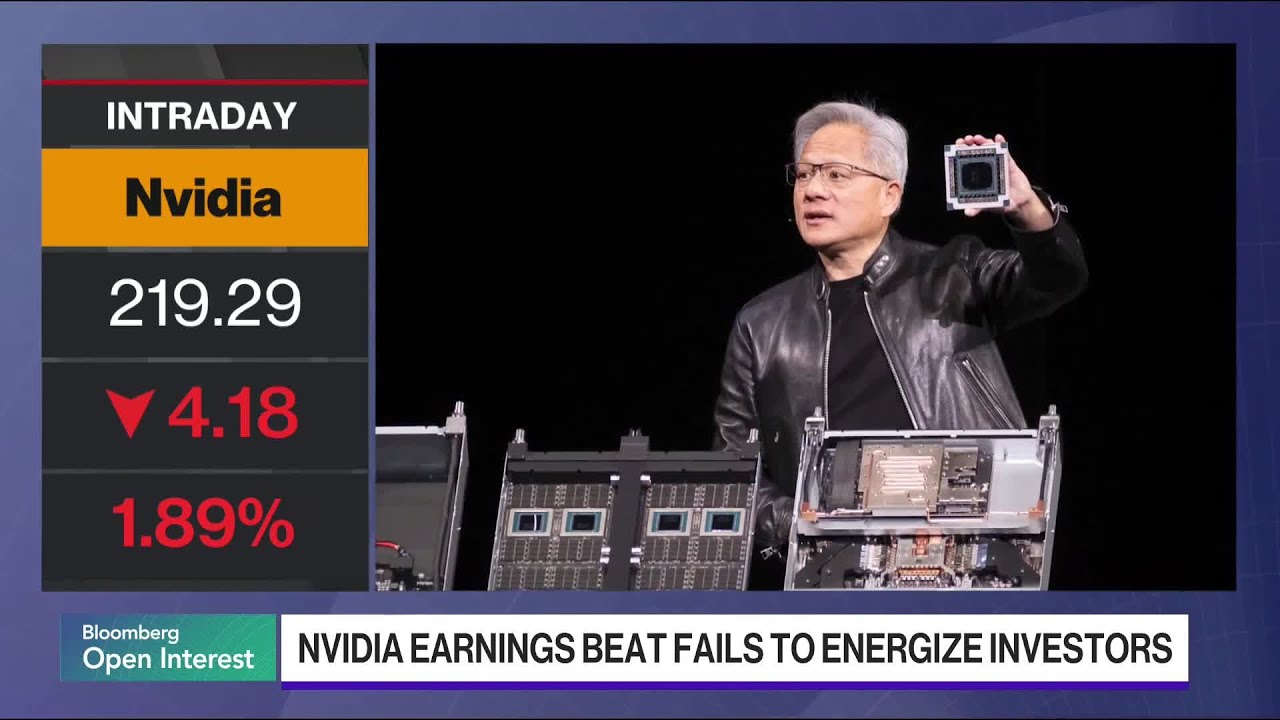
NVIDIA’s recent earnings report impressed with strong performance, but investor enthusiasm was tempered by the company’s already high valuation and massive size. Jensen Huang, NVIDIA’s CEO, confidently highlighted the company’s dominance in several markets, notably claiming segments with virtually no competition aside from minor players. He emphasized NVIDIA’s rapid growth in standalone CPU business and downplayed competitors in hyperspeed inference, reinforcing NVIDIA’s central role in the AI industry. The company’s networking business, generating $15 billion in revenue, was also noted as a significant but often overlooked contributor, placing NVIDIA on par with Qualcomm in that space.
The discussion then shifted to comparing NVIDIA’s valuation and growth prospects with SpaceX, which is preparing for a mega IPO. SpaceX is valued at around $2 trillion with a price-to-sales ratio of 80, despite a slower growth rate of about 20%, whereas NVIDIA trades at a much lower multiple with significantly higher growth. The panelists debated the plausibility of SpaceX’s enormous total addressable market (TAM) estimate of $28.5 trillion, acknowledging that much of SpaceX’s valuation is driven by its visionary mission to make humanity multiplanetary. While SpaceX’s current commercial payload launches remain limited, Elon Musk’s track record suggests the company could overcome technical challenges and realize its ambitious goals.
SpaceX’s AI business, particularly its xAI division, was also examined. Despite burning through cash, SpaceX rents out excess GPU capacity to Anthropic, helping offset costs while its own AI model, Grok, matures. This strategy reflects Elon Musk’s approach of balancing current revenue-generating operations with emerging businesses and long-term visionary projects. The panelists highlighted how Musk’s companies, including Tesla and SpaceX, are valued not just on present earnings but on the promise of future breakthroughs, which fuels investor enthusiasm despite ongoing losses.
Attention then turned to the competitive landscape in AI, focusing on OpenAI and Anthropic. While OpenAI has been the dominant player, Anthropic has recently gained significant traction, especially with its coding tools, which have doubled user numbers and are now favored by some developers. This shift has intensified the race among AI companies, with Google’s Gemini also entering the fray as a strong contender. The panelists emphasized that the AI market remains highly competitive and fluid, with enterprises often using multiple AI platforms simultaneously, making it too early to declare a definitive leader.
Finally, the importance of capital for AI companies was underscored, particularly for OpenAI, which requires massive investment to sustain infrastructure deployment and maintain its competitive edge. The timing of IPOs for these companies is critical, as the influx of new public offerings could impact market dynamics and investor appetite. Ultimately, the AI and space sectors are seen as engines of future growth, with investors willing to tolerate significant losses in exchange for the potential of transformative technological advancements and enormous market opportunities.