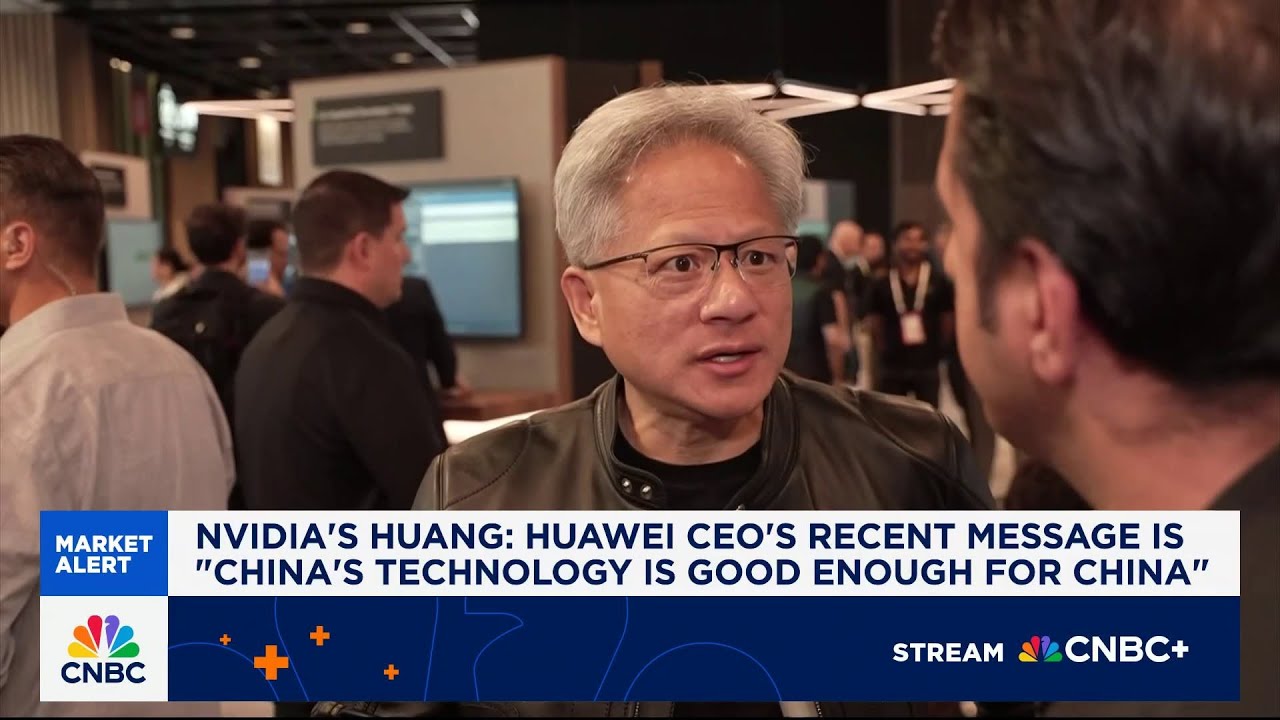
Nvidia CEO Jensen Huang acknowledged China’s resilience and self-sufficiency in AI development despite US export restrictions, noting that Chinese companies like Huawei are capable of supporting their technological needs independently. While he recognized that Nvidia currently holds a technological lead, he also emphasized China’s determination and potential to close the gap through continued innovation.
In a recent interview at a tech conference in Paris, Nvidia CEO Jensen Huang shared his perspective on China’s advancements in artificial intelligence (AI) and the impact of US export restrictions on China’s chip industry. He highlighted that China’s approach to AI is pragmatic, emphasizing that if Chinese computers are less capable individually, they can compensate by deploying more units. This strategy underscores China’s resilience and resourcefulness in developing its technology sector despite external challenges.
Huang pointed out that Huawei, a leading Chinese tech company, has adapted to these restrictions by asserting that China’s technology is sufficiently advanced for its domestic needs. He noted that Huawei and other Chinese firms are capable of supporting China’s technological infrastructure without relying heavily on US technology. This reflects a broader narrative of self-sufficiency within China’s tech industry, even in the face of international trade barriers.
Regarding the technological gap between Nvidia and Chinese companies, Huang stated that Nvidia’s technology is currently one generation ahead of China’s. However, he clarified that the term “generation” in this context is not strictly defined by typical timeframes like Moore’s Law or dog years. Instead, it signifies a significant leap in technological capability, emphasizing Nvidia’s leadership in AI hardware and software.
Huang’s comments suggest that while China is making substantial progress in AI, Western companies like Nvidia still hold a competitive edge in terms of technological maturity. Nonetheless, he acknowledged China’s determination and capacity to innovate, which could potentially narrow this gap over time. The emphasis remains on the importance of continued innovation and investment in AI development.
Overall, Huang’s remarks reflect a nuanced view of China’s AI landscape: recognizing China’s resilience and self-sufficiency, while also affirming Nvidia’s current technological leadership. His insights underscore the ongoing competition in the global AI race, shaped by geopolitical factors and technological advancements, and highlight the strategic importance of innovation in maintaining industry dominance.