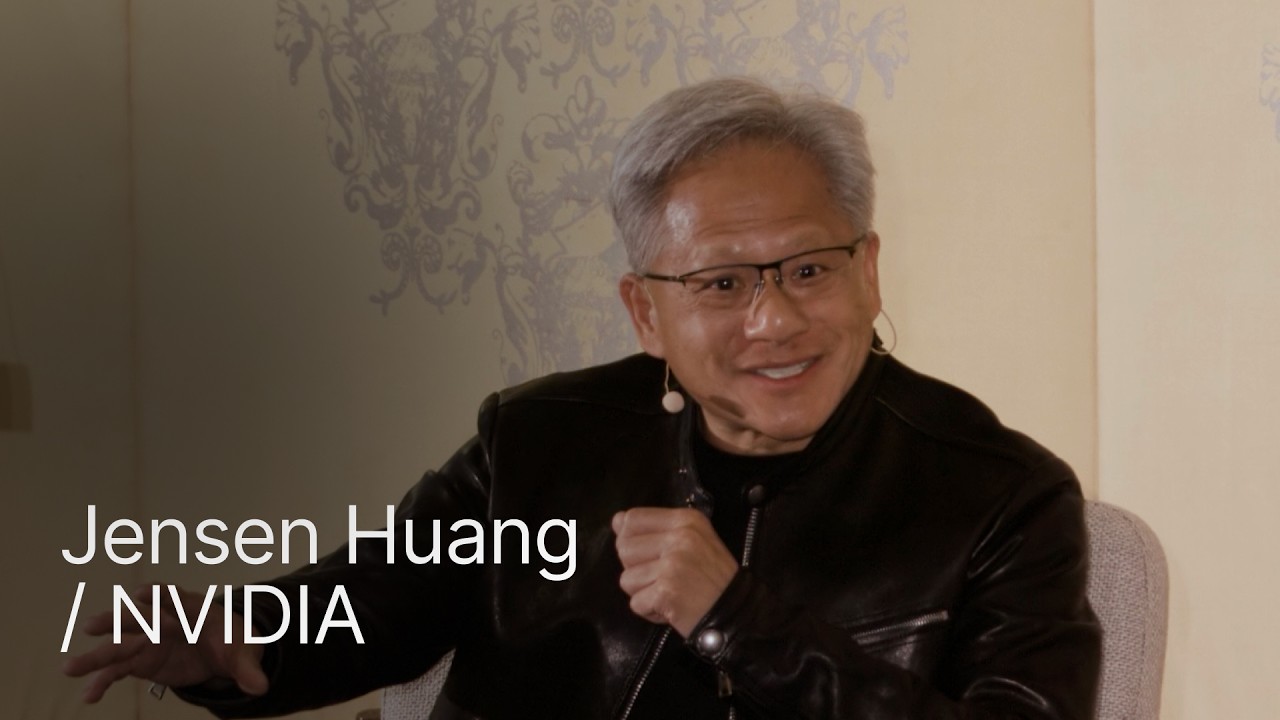
In the discussion, Jensen Huang, CEO of NVIDIA, elaborates on the transformative AI revolution, describing it as the largest infrastructure buildout in human history. He explains the concept of an “AI factory,” a system that generates intelligence in real-time rather than merely retrieving stored data. This generative AI can understand, reason, and perform work autonomously, marking a significant evolution from earlier AI models like ChatGPT. Huang emphasizes that AI is no longer just about generating content but about thinking, problem-solving, and controlling tools, including future mechanical systems like robots and self-driving cars.
Huang outlines the industrial and technological foundations of AI, tracing the evolution from traditional computing, which focused on data retrieval, to the current generative paradigm where every interaction produces unique, context-aware outputs. He highlights the scale of AI’s impact, predicting a future where billions of AI agents communicate and collaborate across industries, creating a continuous layer of intelligence enveloping the globe. This new era parallels previous revolutions in energy and telecommunications, with NVIDIA’s GPUs acting as the core “dynamo” powering this intelligence generation.
The conversation introduces a five-layer industrial model for AI investment: energy, chips and computing hardware, infrastructure (including data centers), AI models, and application layers. Huang stresses the massive economic opportunity, with trillions of dollars flowing into these layers, creating jobs and driving innovation across sectors like healthcare, finance, manufacturing, and more. He also discusses the importance of understanding AI’s structural learning capabilities, which extend beyond language to fields like biology and physics, enabling AI to grasp complex systems and generate meaningful insights.
Addressing concerns about AI and employment, Huang argues that AI will not eliminate jobs but elevate them by automating tasks and enhancing human capabilities. He uses radiology and software engineering as examples where AI has increased productivity and demand rather than causing job losses. Huang encourages individuals and enterprises to embrace AI as a superpower, warning that those who do not adopt AI risk being outcompeted by those who do. He advocates for responsible AI development and widespread engagement to ensure the technology benefits society safely and equitably.
In conclusion, Huang paints an optimistic vision of the AI-driven future, where intelligence generation becomes as fundamental as energy and communication. He calls for broad participation in this revolution, highlighting the democratization of technology that allows more people to “program” and innovate. This transformation promises not only economic growth but also a shift in how people work, solve problems, and find purpose, moving from executing tasks to designing solutions and creating new possibilities.