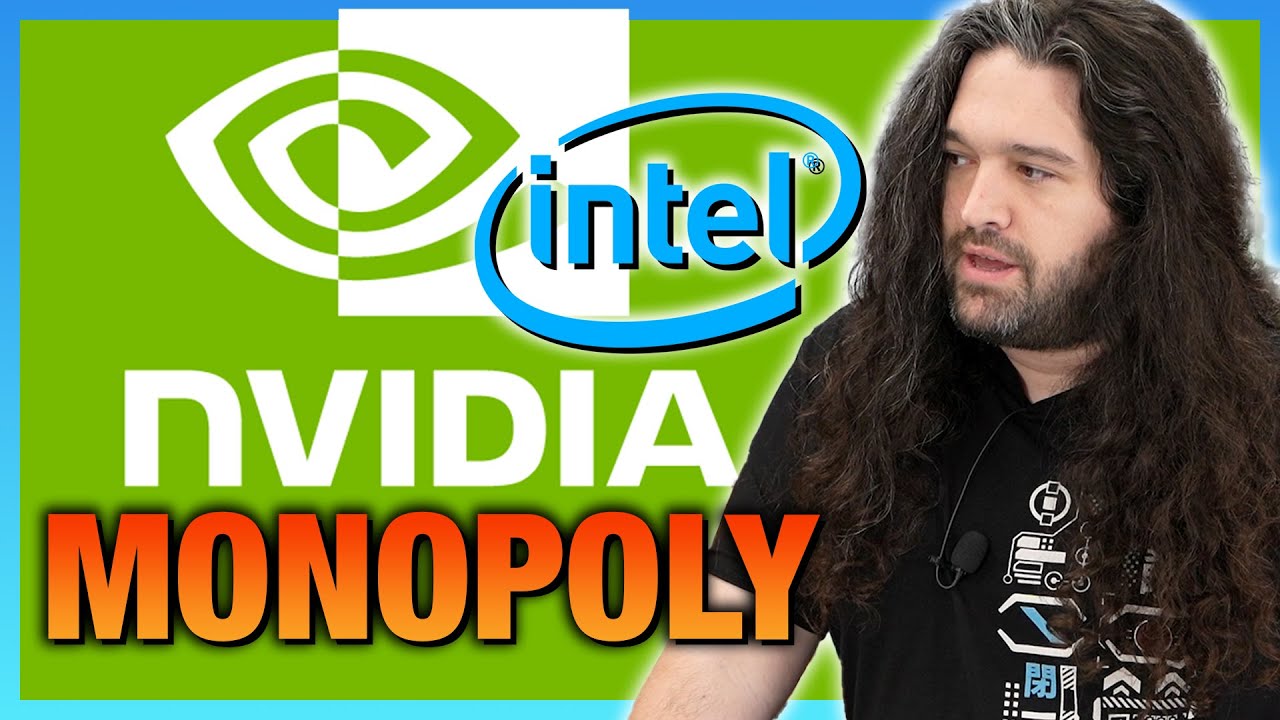
The video discusses Nvidia’s recent $5 billion investment into Intel, marking a significant development amid a tumultuous year for Intel. Over the past 10 months, Intel has faced major challenges, including massive layoffs, leadership changes, and political scrutiny, particularly from former President Donald Trump, who criticized Intel’s CEO and expressed concerns about Intel’s investments in Chinese companies with military ties. Despite this chaos, Intel’s stock has seen a notable recovery, partly due to government involvement, including the U.S. government’s purchase of a 10% stake in Intel and SoftBank’s $2 billion investment. Nvidia’s investment is positioned as a strategic move to collaborate on developing custom x86 CPUs and integrate Nvidia’s GPU technology with Intel’s CPU architecture.
Nvidia and Intel announced a partnership to jointly develop multiple generations of custom data center and PC products, focusing on integrating Nvidia’s AI and accelerated computing capabilities with Intel’s x86 ecosystem. A key aspect of this collaboration is the use of Nvidia’s NVLink technology to connect GPUs and CPUs seamlessly, which could lead to new system-on-chip (SoC) designs that combine Intel’s CPUs with Nvidia’s RTX GPU chiplets. This integration aims to enhance performance in laptops, data centers, and other computing platforms, potentially creating a new class of high-performance, integrated devices. The partnership also signals Nvidia’s intent to deepen its involvement in the x86 market after its failed attempt to acquire ARM.
The video raises concerns about the increasing consolidation and vertical integration within the semiconductor industry, comparing it to other large industries like automotive and oil. Nvidia’s investment in Intel could strengthen its market position and influence, particularly in laptops and data centers, potentially squeezing out competitors like AMD. The collaboration may lead to Nvidia having more control over supply chains, marketing, and product launches, which historically has given Nvidia significant leverage over OEMs and partners. This consolidation could reduce competition and innovation, raising antitrust and monopolistic concerns.
The video also highlights some controversial aspects of Nvidia’s corporate behavior, including its attempts to control media coverage and its use of allocation and marketing funds to influence laptop manufacturers. Nvidia’s insistence on requiring permission to reproduce or transcribe content from its earnings calls is criticized as an attempt to limit free reporting and transparency. The partnership with Intel, a company partially owned by the U.S. government, makes these restrictions particularly problematic. The video emphasizes the importance of free speech and open coverage in the tech industry, warning against corporate overreach that could stifle independent reporting.
In conclusion, the Nvidia-Intel partnership represents a major shift in the semiconductor landscape, with Nvidia investing heavily in Intel to jointly develop integrated CPU-GPU solutions. While this collaboration promises technological advancements, it also raises significant concerns about market monopolization, reduced competition, and corporate control over the industry and media. The video suggests that this deal could solidify Nvidia’s dominance, potentially at the expense of competitors like AMD, and calls for vigilance regarding the broader implications for the tech ecosystem and consumer choice.