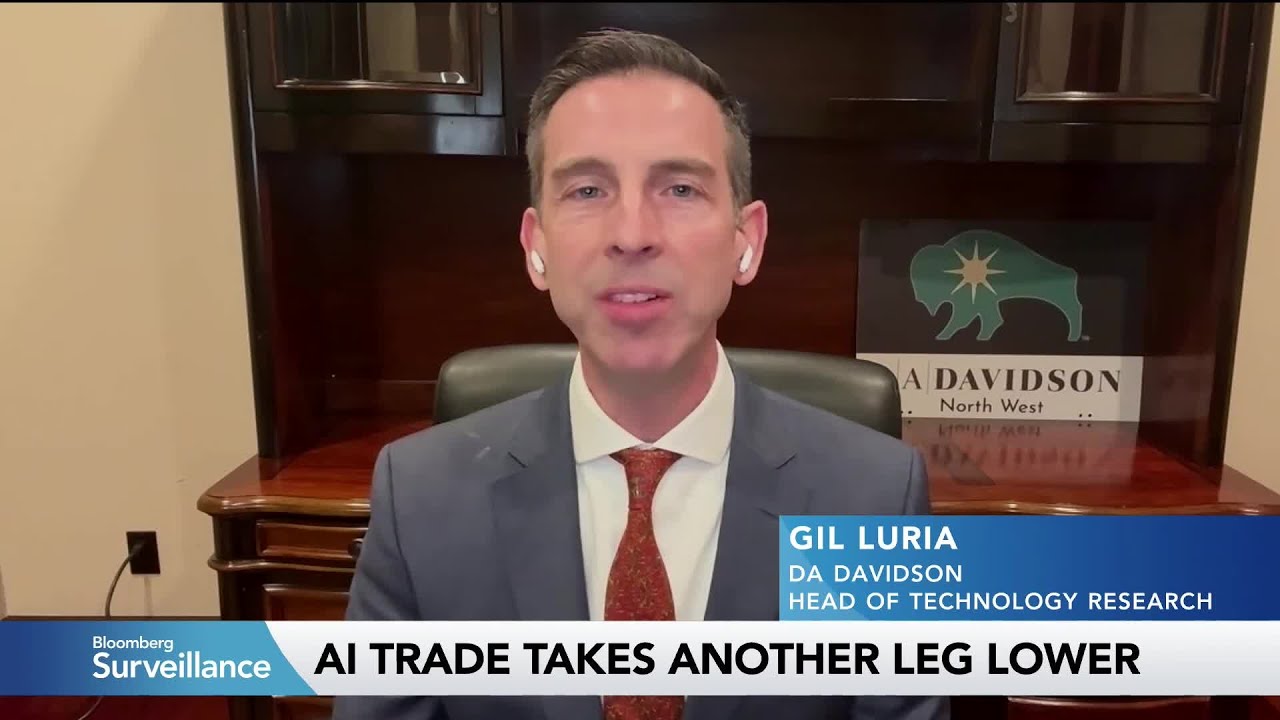
Gil Luria of DA Davidson maintains a neutral stance on semiconductor stocks while raising the price target, highlighting investor sensitivity to technology earnings reports. Despite strong revenue growth from companies like Nvidia, which saw a 50% increase in revenue and a 143% rise in AI-related revenue, investor expectations have become exceedingly high due to spectacular results from other tech firms like Intel, AMD, and Dell. Luria emphasizes that the semiconductor industry is cyclical, with uncertainty about the cycle’s duration, which could range from lasting through next year to extending until 2030.
Luria points out that different semiconductor stocks are currently valued based on varying assumptions about the cycle’s peak. Stocks like Intel and AMD are priced as if the cycle will peak around 2030, while Nvidia and Micron are trading as if the peak is imminent, possibly next year. He suggests that investing in companies with lower valuation multiples, such as Nvidia at 22 times earnings and Micron at 10 times, presents safer opportunities compared to higher-valued stocks like Broadcom, AMD, and Intel.
There is also uncertainty about the addressable market size for these semiconductor companies, as illustrated by projections from SpaceX and others. Luria explains that the rapid pace of AI development and adoption makes it difficult to predict when the market will reach saturation or peak functionality. The capital demands from hyperscalers like Google, Amazon, Microsoft, and Meta are significant, with Google recently raising $80 billion to support AI and cloud infrastructure investments, indicating strong ongoing demand and confidence in returns.
Regarding pricing power, Luria notes that hyperscalers currently rely heavily on Nvidia chips, which helps maintain Nvidia’s gross margins around the mid-70% range. While alternatives from Broadcom and AMD are emerging, they are still in early stages and offer similar margin profiles. Memory chip suppliers also benefit from limited supply, supporting high margins. The sustainability of these margins depends on the length of the AI-driven cycle and continued investment by hyperscalers, which in turn relies on AI’s ability to generate real economic value and productivity gains.
In conclusion, Luria advises cautious optimism, suggesting that semiconductor profit margins appear secure for now, especially for companies with reasonable valuations. However, the sector faces volatility due to capital demands, market uncertainties, and the evolving AI landscape. Investors should monitor AI adoption trends and hyperscaler spending closely, as these factors will ultimately determine the duration and profitability of the current semiconductor cycle.