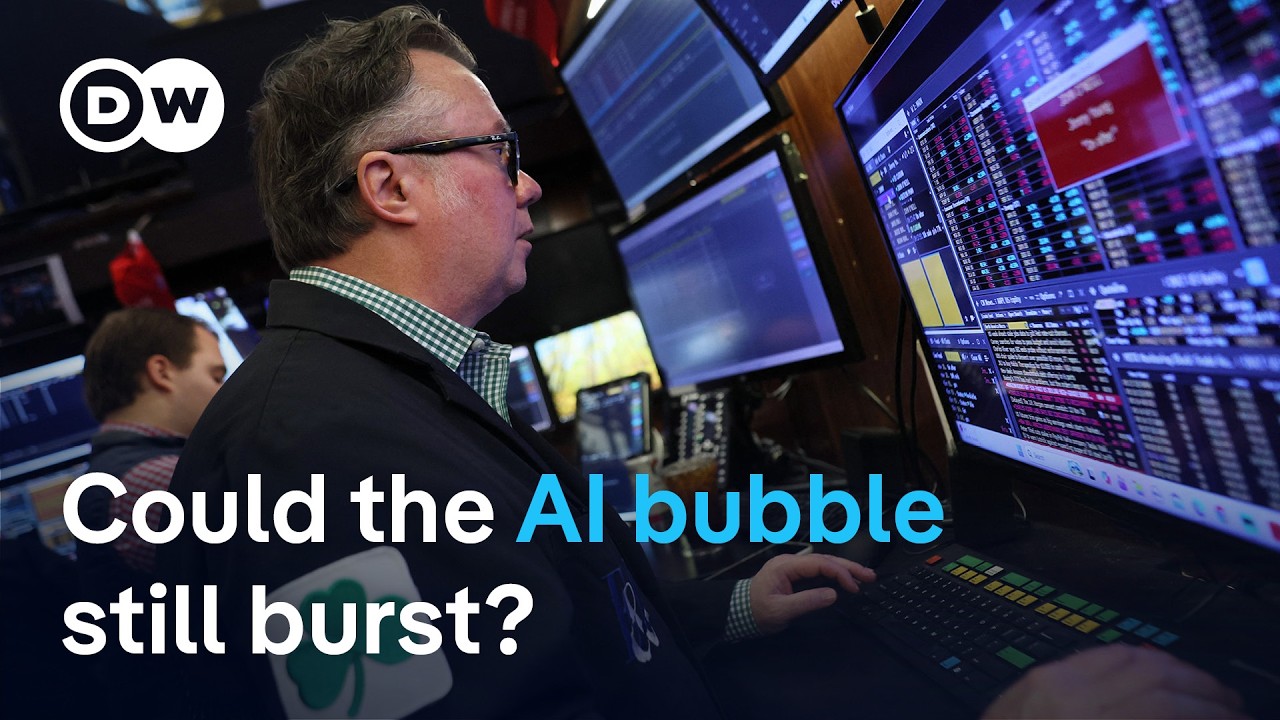
Nvidia’s recent quarterly results have been closely watched as a litmus test for the ongoing AI hype and the broader technology industry. The US tech giant reported a record-breaking profit of $31.9 billion, a 65% increase compared to the previous year, surpassing analysts’ expectations. This strong performance has buoyed global stock markets, with gains seen in tech-heavy markets across Asia and Europe, temporarily dispelling fears of an imminent AI bubble. Nvidia’s success is largely driven by surging demand for its AI chips, which power advanced technologies including ChatGPT, medical diagnostic devices, and autonomous vehicles.
Nvidia’s CEO Jensen Huang highlighted the transformative potential of AI, emphasizing that software will increasingly be generated in real time, tailored uniquely to individual users and contexts. The company’s rise has been meteoric since the launch of ChatGPT in 2022, with its market value increasing tenfold, making it the world’s most valuable publicly traded company. Despite this, some analysts caution that while Nvidia benefits from AI investments, there is skepticism about whether buyers of these chips will fully monetize AI’s potential, keeping the possibility of a bubble alive.
Sam Winter Levy, a research fellow at the Carnegie Endowment for International Peace, explained Nvidia’s strategic importance in the AI market. Nvidia holds a privileged position due to its ability to produce advanced chips essential for AI models used across various sectors, including national security. These chips represent a global choke point, giving Nvidia and a few other companies disproportionate influence over technological and geopolitical landscapes. Governments, particularly the US and its allies, control key parts of the semiconductor supply chain, leveraging this control in international negotiations.
The discussion also touched on the complex US-China relationship regarding chip sales. While the US government has imposed restrictions to limit China’s access to advanced chips, there have been instances, such as under former President Trump, where sales were allowed with revenue-sharing agreements. This creates a tension between maintaining national security and economic interests, as Nvidia seeks access to the lucrative Chinese market. The mixed signals from the US government complicate alliances, as allies are pressured to align with export controls while observing inconsistent US policies.
Finally, the conversation linked these technological and economic dynamics to broader geopolitical issues, such as the recent peace plan for Ukraine, which some allies felt sidelined by. This reflects a recurring theme of unilateral US actions combined with efforts to coerce allies into compliance, often leading to frustration and uncertainty about US strategic intentions. The interview concluded by highlighting the challenges of navigating these intertwined technological, economic, and geopolitical pressures in an increasingly complex global landscape.