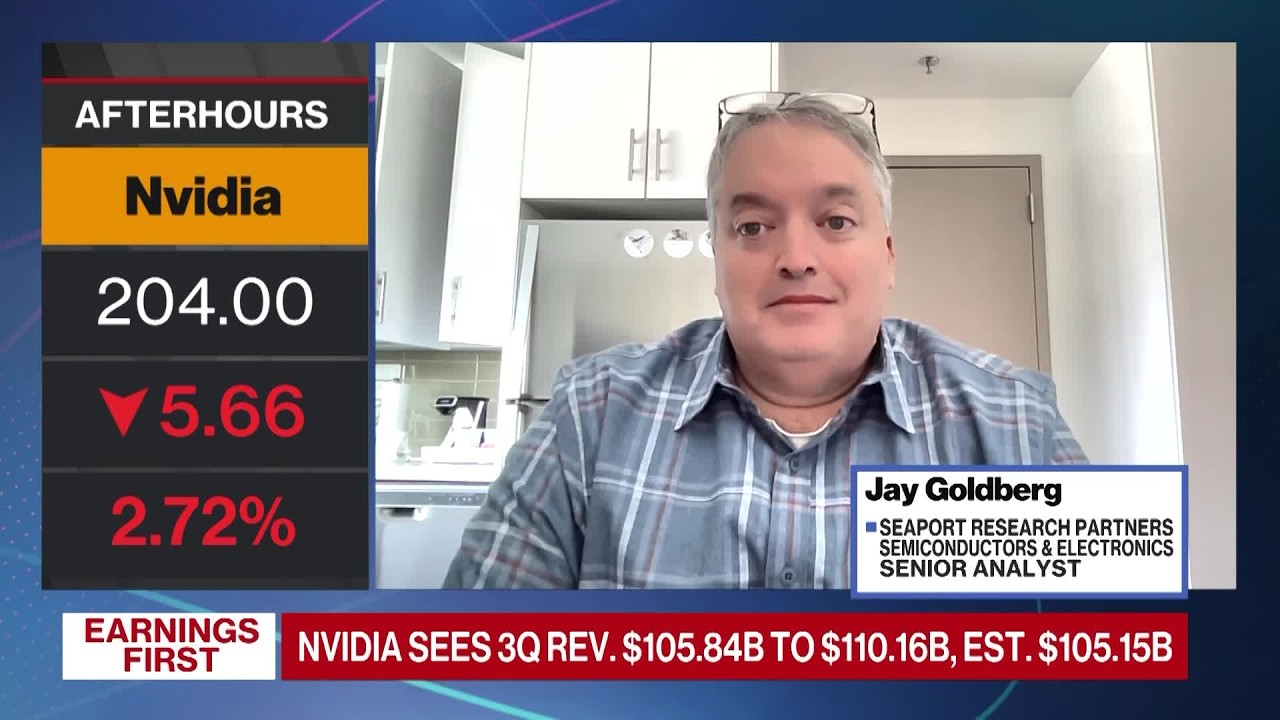
Nvidia’s recent strong financial results were tempered by production capacity constraints and high market expectations, limiting near-term growth and stock momentum despite promising developments like the Vera Rubin chip. Additionally, increasing competition from AMD, Google, and others, along with external challenges, complicates Nvidia’s path forward as it seeks to maintain its leadership in the AI chip market.
In the discussion about Nvidia’s recent financial results and guidance, the initial reaction was that while the quarter was impressive in terms of numbers, it was not impressive enough to excite the market. Despite Nvidia’s strong performance, the stock struggled to gain momentum, largely because the company is currently sold out of production capacity. This limitation makes it difficult for Nvidia to show significant growth or upside in the near term, which tempered investor enthusiasm.
The conversation highlighted Nvidia CEO Jensen Huang’s role as a persuasive speaker who often manages to inspire confidence and optimism during earnings calls. However, his recent track record in this regard has been less effective, and investors are now closely analyzing every nuance of his communication to gauge the company’s true outlook. While Nvidia continues to post strong results, the market’s expectations have become so high that even solid performance is not enough to move the stock significantly.
A key point of interest was Nvidia’s mention of an inflection point in AI, particularly with the Vera Rubin chip entering full production. Although this development is promising and could impact revenue and profit growth in the longer term, it is not expected to dramatically change the company’s trajectory on its own. The main bottleneck remains production capacity, especially the number of chips Nvidia can secure from TSMC, which is a critical constraint for the foreseeable future.
Looking ahead, there are some potential growth drivers for Nvidia, including the upcoming volume shipments of the acquired company Brock’s products, new software revenue streams, and partnerships like the revenue share with NIO clouds. These factors could help improve Nvidia’s growth trajectory next year. However, the company also faces increasing challenges and uncertainties, many of which are outside its control, making the path forward more complex.
Finally, the competitive landscape is becoming more crowded, with AMD’s Instinct series, Google’s TPU, and new chips from OpenAI and Anthropic entering the market. While Nvidia is expected to maintain a dominant market share, these emerging competitors introduce pricing pressures and other challenges. The evolving ecosystem means Nvidia will need to navigate both supply constraints and intensifying competition to sustain its leadership in the AI chip market.