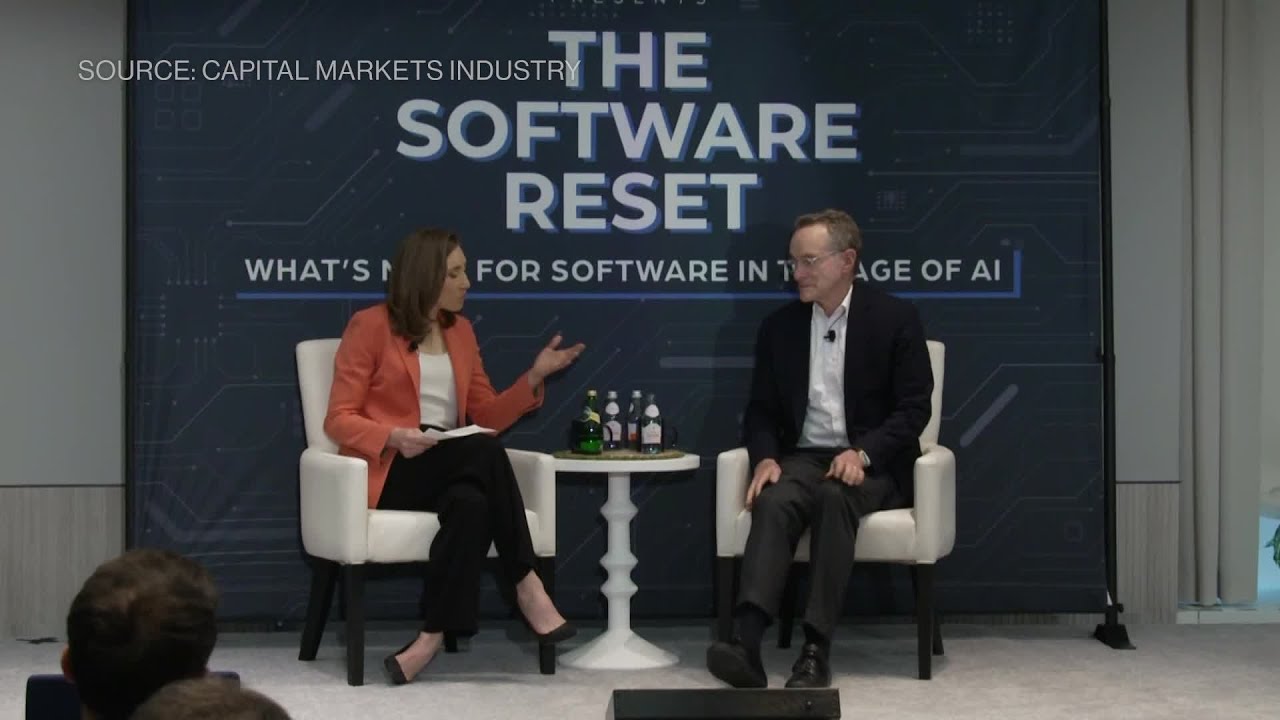
Certainly! Here’s a five-paragraph summary of the interview with Howard Marks:
Howard Marks, co-founder of Oaktree Capital, discusses the current investment landscape, focusing on the unpredictability introduced by artificial intelligence (AI) and the state of private credit markets. He emphasizes that while AI as a technology is not a bubble and may even be underestimated, the same cannot be said for investments in AI-related companies, which could be subject to speculative excess. Marks draws on his decades of experience in credit markets, noting that lending to companies is fundamentally sound, but problems arise when too many investors chase the same opportunities, leading to lower returns and increased risk.
The conversation shifts to the risks and concerns surrounding private credit. Marks explains that cycles of enthusiasm and fear are natural in financial markets, especially with new financial innovations or technologies. He observes that private credit, once a niche with attractive returns, has become more crowded, leading to compressed yields and diminished safety. He warns that when new investment vehicles are marketed to less sophisticated retail investors, issues like illiquidity and lack of transparency can become problematic, especially when market conditions turn.
Marks highlights the unpredictability brought by AI, arguing that it makes the future more uncertain than ever before. He stresses that successful investing requires not just a view of what will happen, but also an assessment of the probability of being right. The transformative potential of AI raises unprecedented questions about job displacement, societal impacts, and the viability of traditional business models, making it harder for investors to rely on past patterns or predictions.
Regarding the use of AI in investment processes, Marks acknowledges its strengths in data analysis, pattern recognition, and emotion-free decision-making. However, he believes that AI lacks human intuition and judgment, particularly in assessing management quality and sensing market turning points. While AI can generate hypotheses and assist with research, Marks insists that human oversight remains essential, especially in making final investment decisions and recognizing when assets have become attractively priced.
In closing, Marks maintains a cautious investment stance, preferring to wait for clear opportunities rather than chase returns in uncertain times. He notes that the market is not currently pricing in a significant default cycle, suggesting that optimism prevails. However, he warns that defaults are a normal part of credit cycles and that periods of easy money often lead to future problems. Marks concludes that most people are underestimating the disruptive impact of AI, as evidenced by recent large-scale layoffs, and urges investors to remain vigilant and prepared for rapid change.