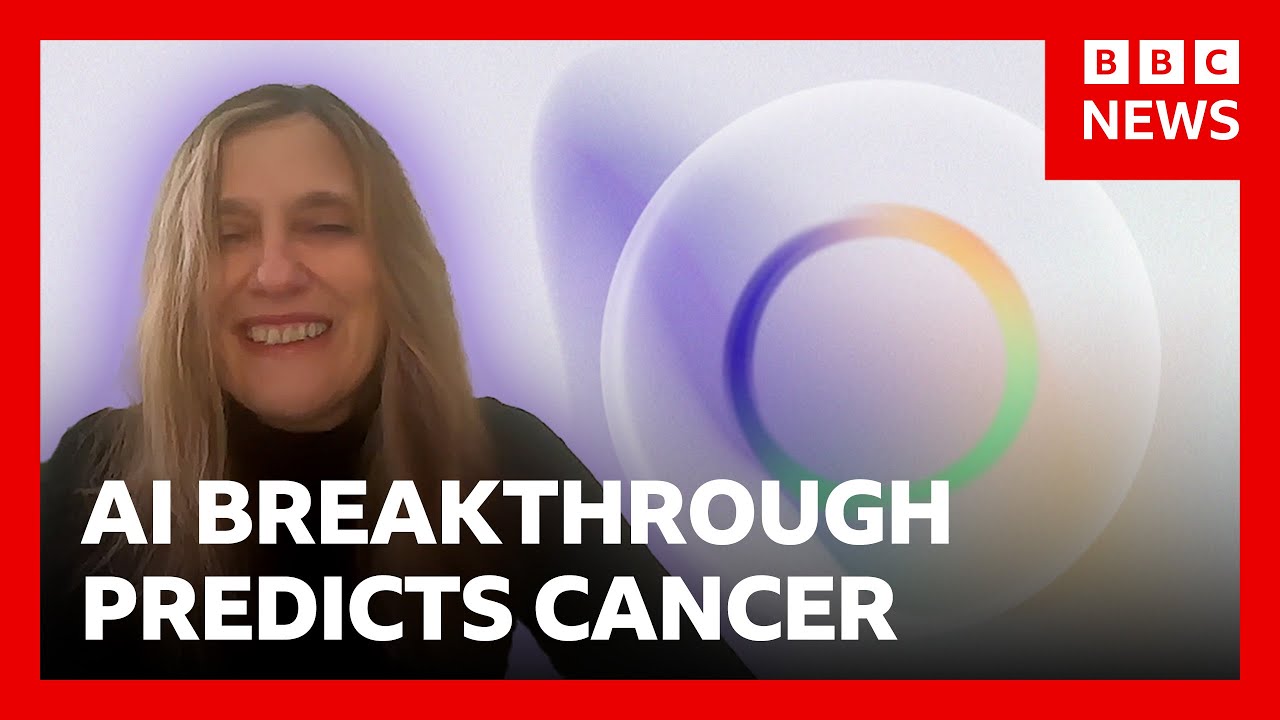
The BBC News segment focuses on the groundbreaking work of Dr. Regina Barzilay, an MIT professor and breast cancer survivor, who has pioneered the use of artificial intelligence (AI) in healthcare, particularly for cancer detection and prevention. After her own diagnosis in 2014, Dr. Barzilay was struck by the lack of advanced technology in patient care, even at top hospitals. This experience motivated her to develop AI tools that could address the uncertainty and limitations in cancer diagnosis and treatment, leading to the creation of an AI model named Mirai (meaning “future” in Japanese). Mirai can predict a patient’s risk of developing breast cancer up to five years in advance by analyzing subtle changes in mammograms that are often undetectable to the human eye.
The discussion highlights the significant impact of Mirai, which has already been used on over two million mammograms across 48 hospitals in 22 countries. Dr. Barzilay explains that while radiologists often miss early signs of cancer due to the ambiguous nature of medical images, AI can detect minute changes in color and texture, enabling much earlier and more accurate risk assessments. This technology could revolutionize screening protocols by identifying high-risk individuals who need earlier and more frequent screenings, while sparing the majority of women from unnecessary procedures and anxiety.
The conversation also addresses the broader implications of AI in healthcare policy, particularly the variation in breast cancer screening guidelines across different countries. Dr. Barzilay points out that a more personalized approach, enabled by AI, could optimize screening schedules and resource allocation, ensuring that those at highest risk receive timely intervention. She also discusses her work on AI models that predict the effectiveness of flu vaccines by analyzing the evolution of viral strains, which could help public health authorities make better decisions about vaccine composition and deployment.
Looking to the future, Dr. Barzilay envisions AI playing a central role in personalized medicine, not only for early detection but also for tailoring treatments to individual patients based on their unique biological data. She describes ongoing clinical trials in the United States where AI is used to match cancer patients with the most effective treatments, potentially reducing the guesswork and variability that currently exists in oncology. AI is also accelerating drug discovery by modeling disease mechanisms and predicting which molecules are most likely to succeed in clinical trials, thereby shortening development timelines and reducing costs.
The program concludes with a lighter segment on AI-generated content for pets, responding to a viewer’s question about why cats seem to prefer animated or AI-generated visuals. The hosts experiment with AI-created clips for cats and dogs, inviting viewers to share their pets’ reactions. The discussion underscores the versatility of AI, from transforming healthcare to entertaining animals, and ends with a call for continued public engagement and education about AI’s capabilities and limitations. Dr. Barzilay expresses hope that, within the next decade, AI will enable much earlier cancer detection, more personalized and less toxic treatments, and significantly improved survival rates.