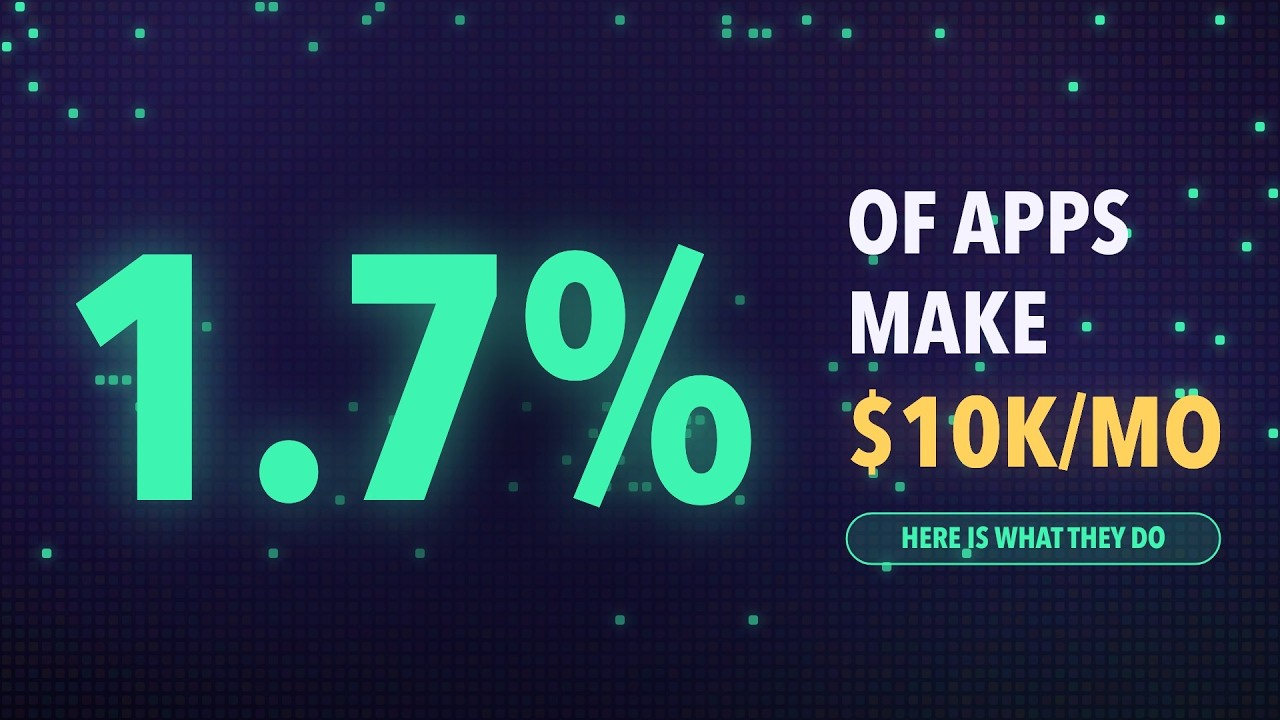
Only 1.7% of iOS apps make $10,000 a month, and a founder named David Chi analyzed data from over 400,000 apps to understand what sets the successful ones apart. He found that building the app itself is no longer the biggest challenge thanks to AI, which accelerates development. Instead, success hinges on four key factors: having the right idea that solves a real problem people already pay to fix, ensuring users are willing to pay, and most importantly, mastering distribution. David’s approach emphasizes starting with a proven market where customers are already spending money, such as health or productivity apps, rather than chasing untested ideas.
The first lesson is to identify a problem that people are actively paying to solve before focusing on branding or features. For example, apps like Cali, which tracks calories by simply taking a photo of food, quickly gained traction and revenue by addressing a clear, existing demand. David advises studying competitors to understand what users dislike and where customers are found, using this insight to shape the app’s design and marketing strategy. This evidence-based approach reduces risk and helps target markets with demonstrated willingness to pay.
Once the idea is validated, the next step is to build the app rapidly—ideally within 7 to 14 days—focusing only on essential features like onboarding, a paywall, and the core user loop. David recommends analyzing top apps in the category to understand their onboarding flows and paywall placements, then using AI tools to replicate and refine these proven designs. This method avoids wasting time on unnecessary polish or features and ensures the app is ready to test with real users quickly.
Onboarding is critical and should be treated as a marketing funnel rather than a simple welcome screen. The goal is to guide users through a path of belief: recognizing their problem, trusting the app, and being motivated to pay after experiencing value. Successful apps like Cali have run extensive split tests on onboarding and paywall designs to optimize conversion rates. Tracking user behavior through the funnel helps identify where users drop off, allowing targeted improvements to increase trial-to-paid conversions and reduce cancellations.
Finally, distribution must start before the app is finished by studying competitors’ marketing tactics on platforms like TikTok and leveraging creators who understand effective hooks. David stresses focusing ad spend only on proven content that drives installs and conversions, turning marketing into a data-driven funnel where each step is optimized. Continuous iteration based on real user data, reviews, and cancellations is key to scaling. The overall formula is to enter a proven market, build fast, treat onboarding as marketing, test distribution at scale, and double down on what works—success comes from many small, tested decisions rather than one magic idea.
Useful Links