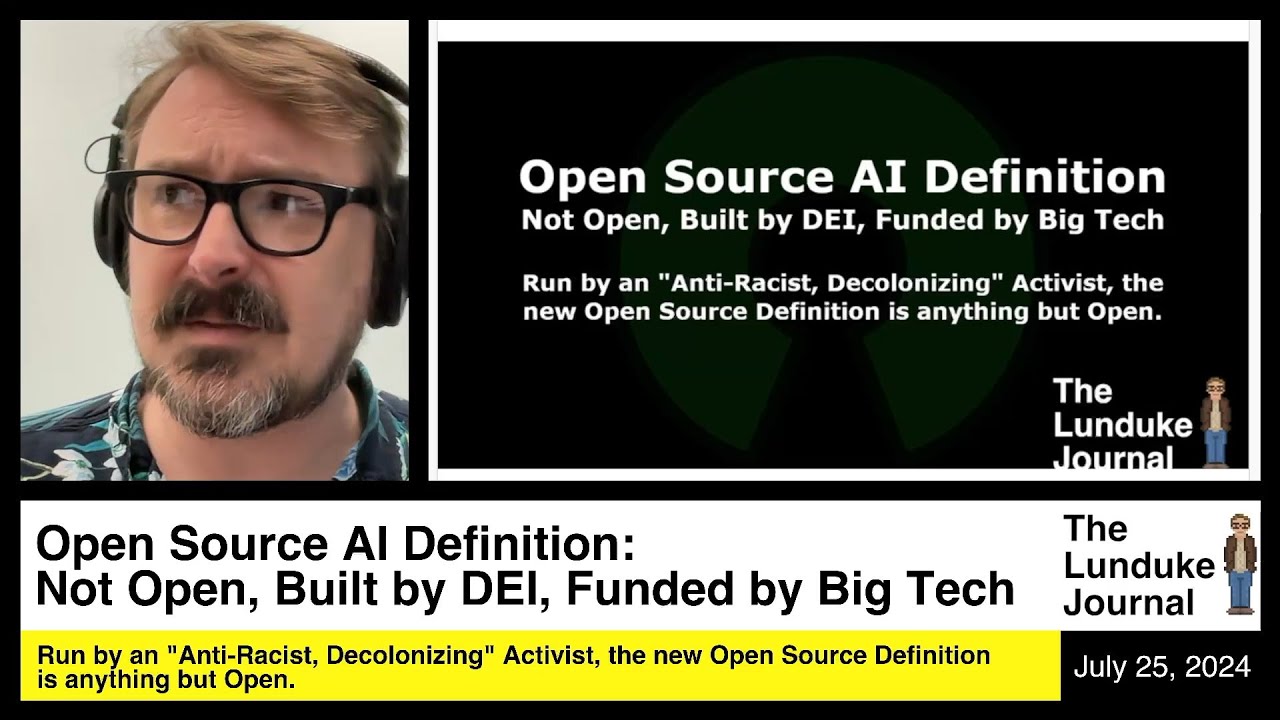
The video critiques the Open Source Initiative’s efforts to define open-source AI, highlighting concerns about its lack of clarity, particularly regarding the inclusion of proprietary data and the prioritization of diversity over technical expertise in leadership roles. It also raises alarm over the influence of major tech companies funding the OSI, suggesting these dynamics may undermine the integrity of open-source principles.
The video discusses the Open Source Initiative (OSI) and its efforts to create a new definition for open-source artificial intelligence (AI), which is met with skepticism due to its peculiarities. The OSI, known for its Open Source Definition (OSD), was established to certify software licenses as open source. The current movement to define open-source AI has been criticized for its lack of clarity, particularly the notion that an AI system could be considered open source even if it does not disclose any training data, which raises questions about the essence of open-source principles.
The OSI hired Mayor Joyce from the consulting firm Do Big Good to lead the creation of this new definition. However, Joyce’s background appears to be primarily in political activism rather than technical expertise in software or AI. This choice has been criticized as indicative of a broader trend within tech organizations to prioritize diversity, equity, and inclusion (DEI) over technical qualifications when appointing leaders for technical projects.
The video highlights the troubling formation of working groups based on skin color and gender identity, aiming for representation rather than technical merit. This approach emphasizes diversity over expertise, suggesting that the OSI is more focused on meeting DEI criteria than on creating a robust and clear definition for open-source AI. Critics argue that this undermines the quality and integrity of the definition being developed.
Another point of contention is the OSI’s claim that an absence of data used to train an AI system qualifies as open source, as long as there is some detailed information available about the data. This reasoning has been described as absurd, as it allows for proprietary data to be used without being disclosed, contradicting the fundamental principles of open-source software. The video posits that this could lead to a significant dilution of what it means to be open source, allowing closed systems to be classified as open.
Lastly, the video underscores the financial influences behind the OSI’s efforts, noting that major tech companies like Google and Microsoft fund the organization. This relationship raises concerns that the OSI is catering to the interests of big tech rather than upholding the core values of open-source software. The potential impact of these developments could lead to a corruption of open-source ideals, with significant implications for the broader software industry as the OSI finalizes its new definition for open-source AI.