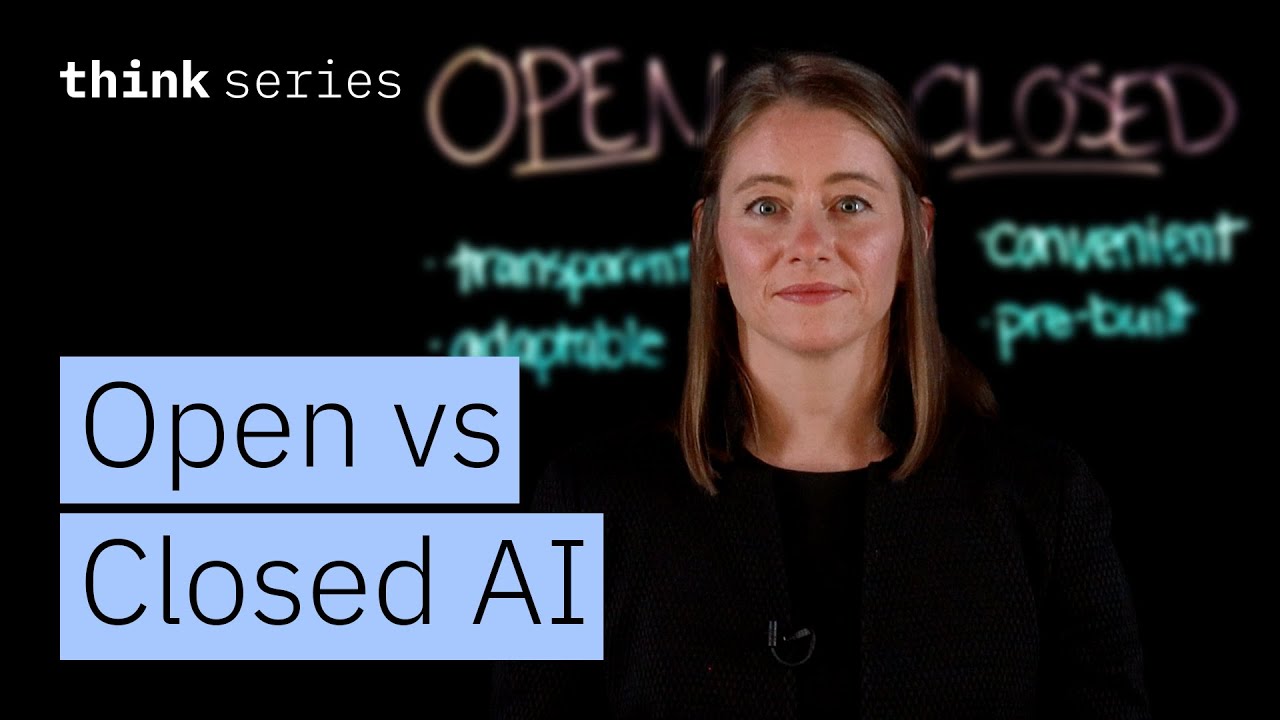
The video explores the distinctions between open-source and closed-source AI solutions, particularly focusing on large language models (LLMs), AI agents, and the overall AI technology stack. It emphasizes that developers can build AI systems entirely from open-source components, from simple chatbots to complex agents. Open-source software, whose code is publicly available and free to use, is highly valuable, with estimates placing its worth at $8.8 trillion. Within AI, many innovative features from commercial tools are quickly replicated by the open-source community, fostering rapid development and distribution.
At the core of the AI stack is the model layer, where various open-source models are available, including base-tuned and fine-tuned LLMs tailored for specific tasks or domains. Specialized models, such as those for anomaly detection in biomedical images, also exist. Using open-source models requires implementing an inference engine to run them, with options like Ollama for laptops or vLLM and TensorRT LLM for servers. In contrast, closed models are typically accessed via APIs, which simplifies usage by managing the inference engine and infrastructure but limits customization and control.
The data layer involves sourcing, integrating, and structuring data to enhance AI models. Both open and closed AI solutions share similar components here, such as data connectors, data conversion tools, and retrieval-augmented generation (RAG) pipelines with vector databases. However, open-source tools offer free access, customization, and deployment flexibility, allowing users to run systems on-premises or in public clouds. Closed-source solutions, often commercial and API-based, provide convenience but less control over data privacy and deployment environments.
Orchestration is the layer that manages how AI systems break down tasks, including reasoning, planning, executing tool or function calls, and iterative review to improve responses. Open-source agent frameworks offer extensive customization for these processes, while closed-source platforms provide simpler, API-driven orchestration with less flexibility. This tradeoff highlights the balance between ease of use and the ability to tailor AI behavior precisely to specific needs.
Finally, the application layer defines the user interface for interacting with AI solutions. Open-source options prioritize customizability, with tools like Open Web UI and Anything LLM, as well as rapid setup frameworks like Gradio and Streamlit for quick web-based interfaces. Closed-source approaches typically involve embedding AI directly into proprietary applications, requiring more development effort but potentially offering a seamless user experience. Understanding these layers—models, data, orchestration, and application—helps developers make informed decisions about when to use open versus closed AI components based on their project requirements.