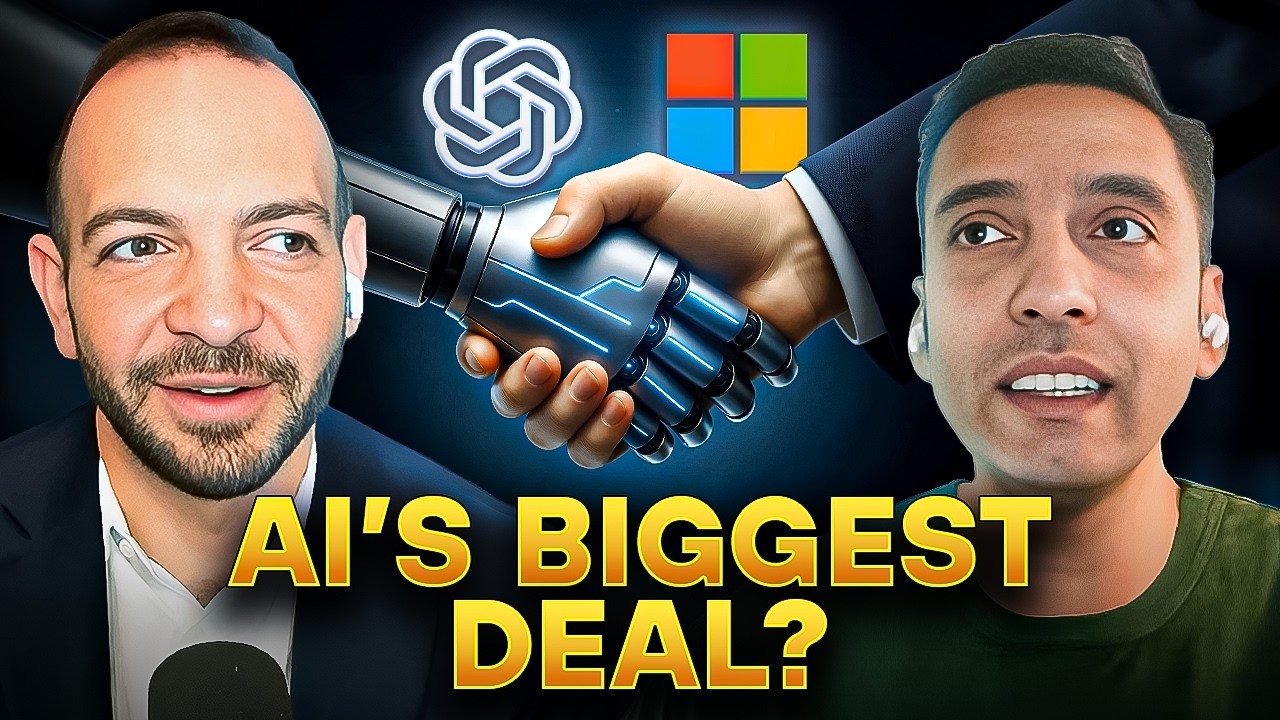
The recent Big Technology Podcast Friday edition delves into the landmark agreement between Microsoft and OpenAI, marking a significant milestone in the generative AI landscape. OpenAI has transitioned its for-profit subsidiary into a public benefit corporation, with Microsoft acquiring a 27% stake. This restructuring resolves longstanding legal and regulatory challenges, paving the way for a potential OpenAI IPO. The deal also secures Microsoft’s exclusive intellectual property rights to OpenAI’s technology until 2032 and includes a commitment from OpenAI to purchase $250 billion worth of Azure cloud services, solidifying Microsoft’s position in the AI infrastructure space.
Sam Altman’s vision for OpenAI’s next three years was a focal point of discussion. Altman outlined ambitious goals, including developing an automated AI research intern by 2026 and a fully autonomous AI researcher by 2028, aiming to accelerate AI self-improvement and discovery. While some skepticism was expressed regarding the vagueness of these plans and the continued emphasis on public interest despite OpenAI’s for-profit status, the overarching theme is that OpenAI is striving toward an intelligence explosion through recursive self-improving AI systems. Additionally, Altman hinted at OpenAI’s aspiration to build its own AI cloud platform to support large enterprises, signaling a move toward competing with established cloud providers.
Despite these grand visions, the podcast highlighted a contrasting reality within OpenAI’s corporate culture, which is increasingly influenced by executives from Meta (formerly Facebook). This shift has introduced strategies reminiscent of Meta’s growth tactics, including a focus on user engagement and advertising revenue. Products like Sora, a video app with social networking features, exemplify this “Facebookification,” raising concerns among some employees about prioritizing engagement metrics over product quality. This internal tension reflects a broader trend of OpenAI adopting business models centered on monetization and user growth, potentially at odds with its original research-driven mission.
The discussion also touched on the broader AI industry dynamics, particularly Meta’s position amid the generative AI surge. While Meta is ramping up capital expenditures to stay competitive, its business model differs from Microsoft and Google, as its returns depend heavily on product-driven advertising revenue. The podcast suggested that Meta might benefit from focusing on building products atop existing AI models rather than developing its own from scratch. Furthermore, the concept of an “AI wobble” was introduced to describe the current market’s cautious adjustment to AI investments, contrasting with the dot-com bubble narrative and emphasizing the uncertainty around AI’s economic viability and long-term returns.
Finally, the episode concluded with a discussion about the new humanoid robot, Neo, developed by 1X Technologies. Demonstrations showed Neo performing household tasks like loading a dishwasher and folding clothes, albeit controlled remotely by a human operator via VR. While the hosts appreciated the startup’s bold attempt to bring humanoid robots into everyday life, they expressed reservations about the practicality and safety of such robots, especially given the reliance on remote human control and potential privacy concerns. The debate underscored differing views on the future of robotics, with some preferring specialized task-specific robots over humanoid forms, highlighting the ongoing challenges in integrating robotics into domestic environments.