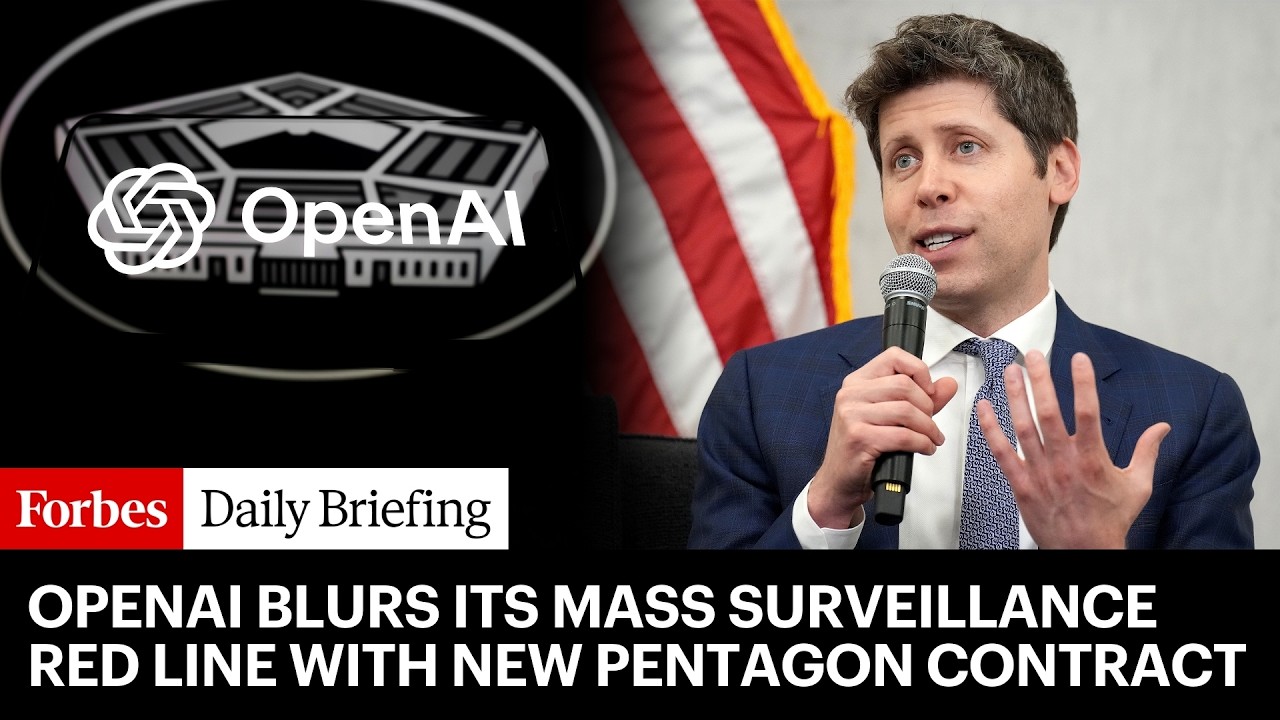
OpenAI, led by CEO Sam Altman, recently entered into a controversial contract with the U.S. Department of Defense, stepping in after rival AI company Anthropic withdrew from negotiations. Anthropic’s CEO, Dario Amodei, had insisted on strict contractual limits to prevent their AI, Claude, from being used for fully autonomous weapons and mass domestic surveillance. Amodei publicly explained his concerns, emphasizing the risk of AI being used to aggregate vast data sets—such as location and web browsing data—to create detailed profiles of citizens without warrants, posing a significant privacy threat.
After Anthropic’s withdrawal, the U.S. government retaliated by labeling the company a “supply chain threat,” effectively barring it from federal contracts. Anthropic has announced plans to sue over this designation. Meanwhile, OpenAI claimed its agreement with the Pentagon maintained its own “red lines,” including a prohibition on using its tools for mass domestic surveillance. However, OpenAI’s subsequent blog post clarified that its AI could be used for lawful purposes and would comply with existing surveillance laws, specifically the Foreign Intelligence Surveillance Act (FISA) and Executive Order 12333.
These laws, FISA and Executive Order 12333, have long been criticized for enabling broad surveillance of U.S. citizens. The contract language stated that OpenAI’s systems would not be used for “unconstrained monitoring of U.S. persons’ private information as consistent with these authorities.” Critics, including legal and AI policy experts, pointed out that this wording essentially adopts the intelligence community’s broad definitions, which have historically allowed the very surveillance the contract claims to prohibit.
Public backlash was swift. Data showed a sharp increase in uninstalls of the ChatGPT mobile app, while Anthropic’s app surged in popularity. In response to mounting criticism, Altman announced that OpenAI would amend its contract with the Pentagon to explicitly prohibit intentional domestic surveillance of U.S. persons and nationals. He also stated that intelligence agencies like the NSA would be barred from using OpenAI’s tools unless the contract was further modified.
Despite these assurances, skepticism remains. The Department of Defense already purchases large amounts of Americans’ personal data from companies like Babel Street and LexisNexis, using AI to connect disparate data sources and reveal personal connections and online activity. The NSA also acquires “netflow” data, which can track website and app usage. While Altman insists that OpenAI’s deal will not facilitate mass surveillance, many observers remain unconvinced, given the broad legal frameworks and existing government practices. For more details, readers are directed to Thomas Brewster’s full coverage on Forbes.com.