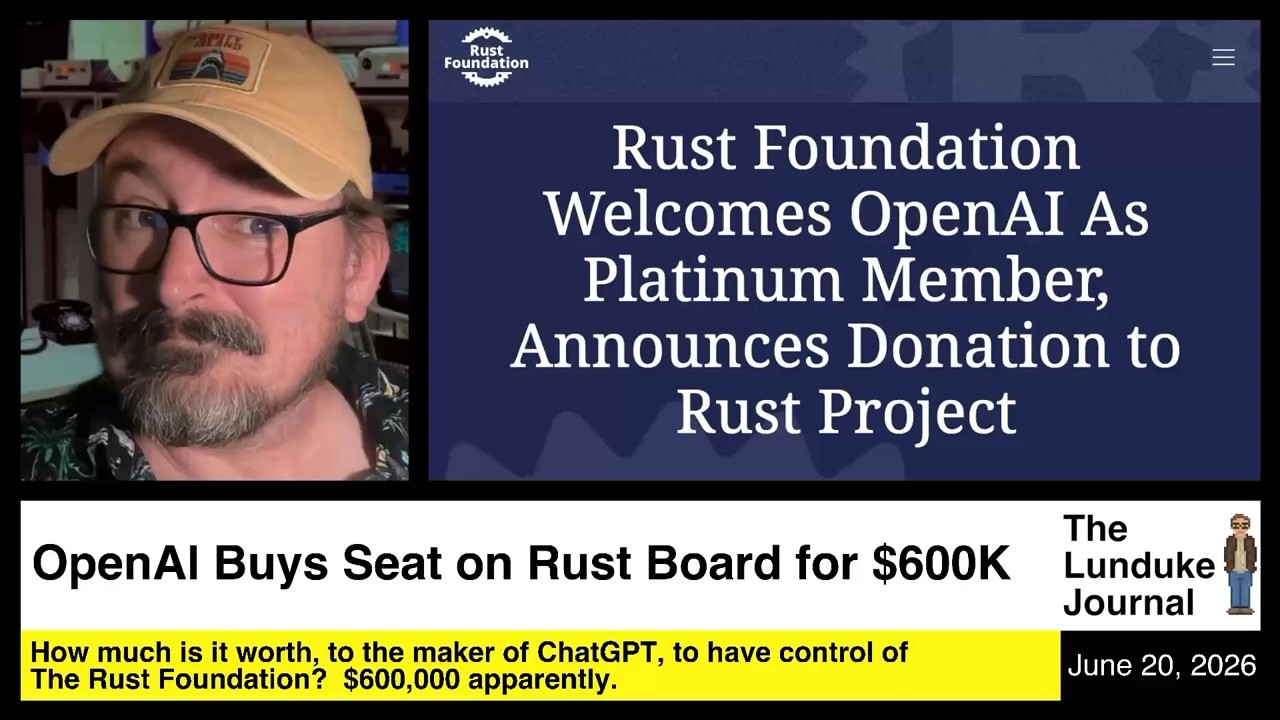
OpenAI has purchased a $600,000 platinum membership and a seat on the Rust Foundation Board to potentially influence the development of the Rust programming language in ways that benefit AI research. The video expresses skepticism about corporate involvement in open-source projects, highlighting concerns over possible undue influence while encouraging support for independent journalism covering such issues.
OpenAI, the company behind ChatGPT, has purchased a seat on the Rust Foundation Board of Directors for $600,000. This move grants OpenAI a platinum membership in the Rust Foundation, the non-profit steward of the Rust programming language. As part of this arrangement, Pedro Grzybowski, a long-time Rust community member and maintainer of Cargo SemVer Checks, will represent OpenAI on the board. The announcement was made on June 17th from Dover, Delaware, where the Rust Foundation is incorporated.
This kind of corporate involvement in open-source foundations is not unusual. Many foundations, such as the Linux Foundation, routinely offer board seats to corporations that contribute significant funding. These corporations gain a degree of influence or control over the direction of the projects. The Linux Foundation, for example, generates hundreds of millions of dollars annually through this model, with board members representing major tech companies like Microsoft. The Rust Foundation’s acceptance of OpenAI’s investment follows this common pattern of open-source governance and funding.
The key question raised by this development is what OpenAI hopes to achieve by securing a seat on the Rust Foundation board. OpenAI is unlikely to invest such a large sum without expecting some form of influence or benefit. Since Rust is still evolving and not fully finalized, OpenAI may want to steer the language’s development in ways that benefit AI research and deployment. This could include optimizing Rust for AI workloads or ensuring the language’s features align with the needs of companies building large language models and other AI systems.
The video’s narrator expresses some skepticism about this arrangement, highlighting concerns about the potential for corporate influence to lead to a form of corruption within open-source projects. The narrator also shares personal anecdotes about OpenAI’s ChatGPT, noting some unusual restrictions on discussing certain topics, including the narrator’s own name. This skepticism extends to the broader implications of OpenAI and Rust collaborating in this financially motivated manner, suggesting it may reflect a standard but somewhat problematic business model in the open-source world.
Finally, the narrator thanks supporters of the Lunduke Journal and encourages viewers to subscribe, highlighting various lifetime subscriber walls themed around retro computing platforms. The video closes with a call to action for viewers to support independent journalism and open-source coverage through subscriptions, emphasizing the importance of community support in sustaining this kind of content. Overall, the video provides a critical perspective on OpenAI’s new role within the Rust Foundation and the broader dynamics of corporate involvement in open-source governance.