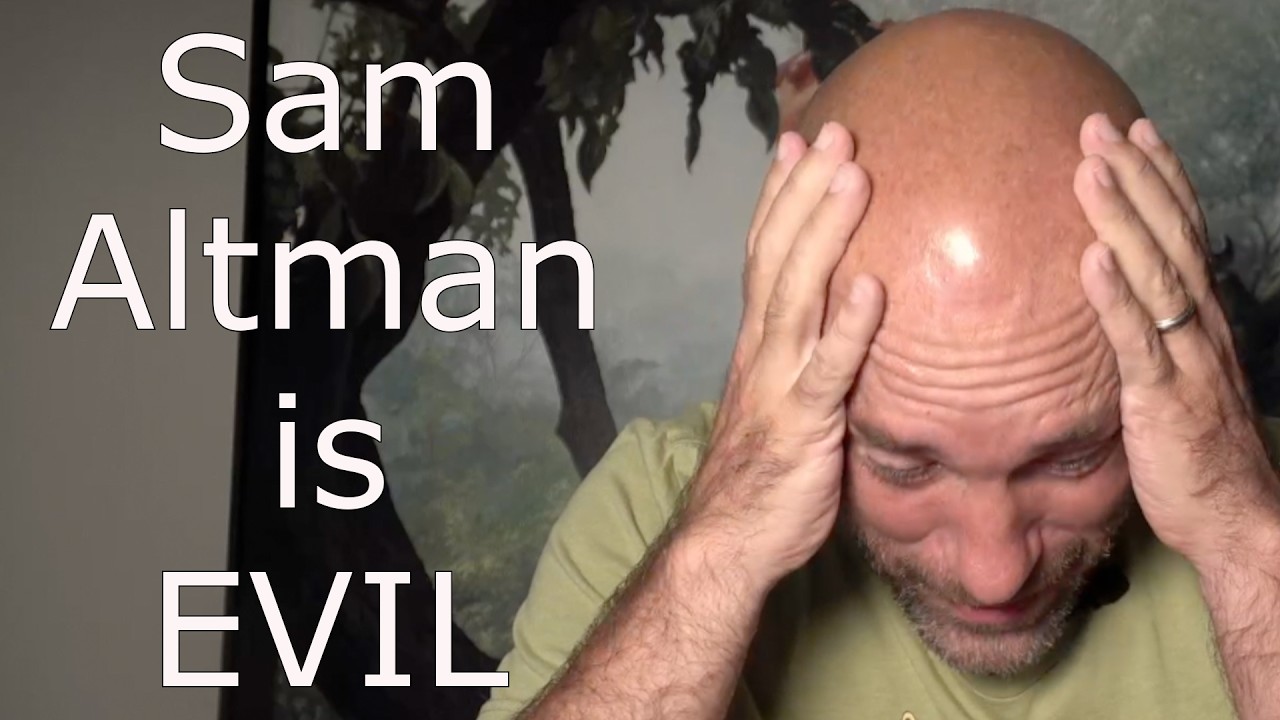
The video critically examines OpenAI CEO Sam Altman’s acceptance of negative consequences from AI development, highlighting concerns about the industry’s toxic culture, ethical contradictions, and prioritization of profit over societal well-being. It urges viewers to question the trade-offs presented by AI progress and remain skeptical of promises made by AI leaders amid ongoing harm and corporate controversies.
The video presents a critical perspective on OpenAI CEO Sam Altman’s recent statements about accepting some negative consequences of AI development for the greater good. The speaker sarcastically proposes crowdfunding to buy Altman a pony, highlighting frustration with what they perceive as Altman’s disregard for the harm his company causes. They argue that while technological progress can improve overall societal conditions, it often leaves some individuals worse off, a reality that must be acknowledged as AI advances. The speaker condemns OpenAI’s corporate culture as toxic and indifferent to the damage inflicted on others, citing incidents like the alleged attacks on Hugging Face and numerous reports of AI agents causing harm.
The speaker reflects on their personal experience with technology, noting that unlike previous technological revolutions, AI’s benefits are constantly touted but not as clearly evident. They acknowledge AI’s usefulness in coding and small tasks but criticize the lack of significant breakthroughs, such as curing diseases. The speaker expresses skepticism about the promises made by AI leaders, including Altman and Anthropic’s Dario Amodei, who warn of AI’s dangers yet continue to release more powerful models. This contradiction fuels the speaker’s distrust of the industry’s motives and ethics.
The video delves into allegations against Altman and OpenAI’s leadership, including accusations from Altman’s sister and internal dissent within the company. The speaker highlights the disconnect between OpenAI’s public messaging and its internal culture, portraying it as manipulative and self-serving. They contrast OpenAI’s approach with Anthropic’s more cautious stance on AI use in autonomous weapons and surveillance but remain critical of both. The speaker questions the sincerity of AI executives who claim to prioritize safety while aggressively pushing forward with new technologies.
Financial aspects are also discussed, with the speaker noting the enormous valuations and IPO expectations for AI companies like OpenAI, Anthropic, and SpaceX. They suggest that investor enthusiasm may be overly optimistic given the ethical and functional challenges these companies face. The speaker implies that the pursuit of profit and market dominance often overshadows genuine concern for societal impact, raising doubts about how long the public and investors will tolerate the industry’s “degradation.”
In conclusion, the speaker challenges viewers to consider whether they accept the harm caused by AI development as a necessary price for progress. They criticize Altman’s framing of this trade-off as a fait accompli and urge skepticism toward the industry’s promises. The video ends with an invitation to join free technology training sessions and encourages viewers to share their opinions on the complex balance between AI’s benefits and its risks.
Useful Links