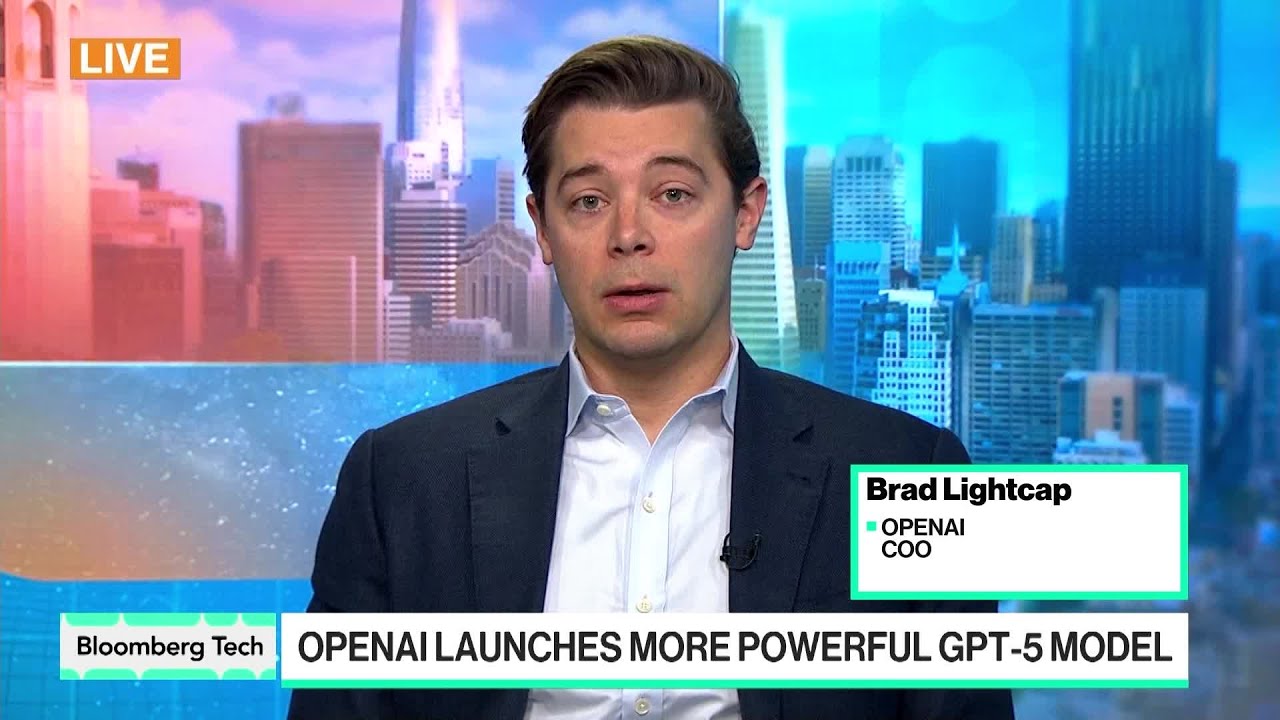
In the discussion about the launch of GPT-5, OpenAI’s COO highlights the model’s significant advancements, particularly in coding, writing, and healthcare applications. GPT-5 is described as a much more reliable and capable model, excelling in tool usage, structured thinking, reasoning, and problem-solving. These improvements open up a wide range of enterprise use cases, as businesses increasingly adopt AI to enhance productivity across various functions such as marketing, software engineering, data analysis, and research. The organic adoption of earlier models by a vast majority of Fortune 500 companies underscores the strong demand and potential for AI integration in the workplace.
The conversation also touches on market competition, referencing analysis from Menlo Ventures that suggests OpenAI’s enterprise market share has declined in favor of competitors like Anthropic. However, OpenAI emphasizes its focus on delivering value to customers through superior models and products, supported by a robust developer ecosystem with over 4 million active API users. The company reports rapid growth in enterprise usage, indicating strong and accelerating demand. OpenAI views its efforts as a long-term commitment to serving both developers and enterprises with cutting-edge AI technology.
Infrastructure demands for training and deploying these advanced models are immense, prompting OpenAI to invest heavily in projects like Stargate, a $500 billion initiative aimed at building AI infrastructure in the United States. This investment is seen as critical not only for OpenAI’s growth but also for maintaining U.S. competitiveness in the global AI landscape. Despite significant prior investments, OpenAI acknowledges it has often been on the “wrong side” of the demand curve and plans to continue aggressive expansion to meet growing needs.
The partnership with Microsoft remains a cornerstone of OpenAI’s strategy, with Microsoft providing essential infrastructure through Azure and playing a key role in distributing OpenAI’s technology. While details of future collaborations and ownership stakes are still being worked out, OpenAI expresses confidence that Microsoft will remain a significant partner. The relationship is viewed as mutually beneficial, helping to scale AI adoption across enterprises and consumers worldwide, even as competition for talent intensifies within the industry.
Finally, the COO reflects on OpenAI’s mission-driven culture, which continues to attract and retain talent despite a competitive market. Founded as a nonprofit focused on creating beneficial general intelligence, OpenAI remains committed to this mission, which employees find inspiring and motivating. Regarding the timeline for achieving artificial general intelligence (AGI), the COO refrains from making predictions but notes steady progress through incremental improvements like GPT-5’s ability to dynamically adjust its reasoning process. These advancements are seen as crucial steps toward eventually realizing truly remarkable AI capabilities.