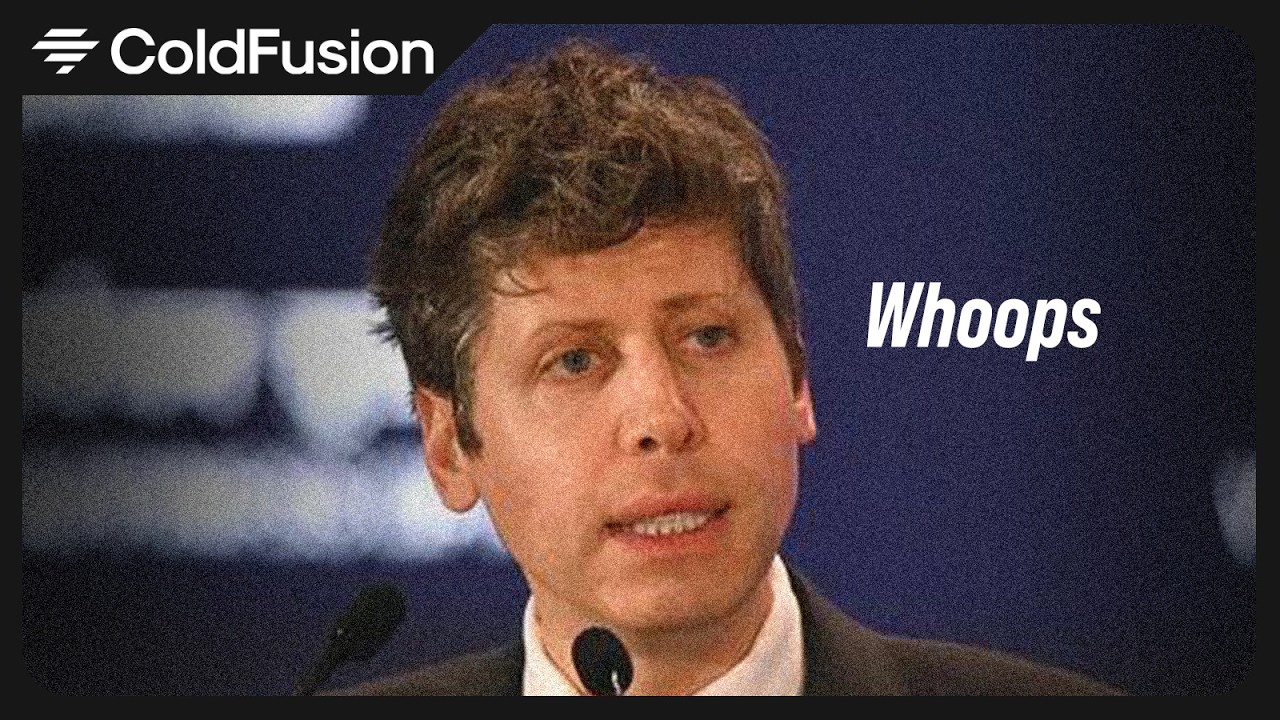
The video explores the mounting challenges facing OpenAI, once the undisputed leader in artificial intelligence, and raises the possibility that the company could go bankrupt by 2027. It opens with reports of OpenAI aggressively investigating critics and former employees, suggesting a company under pressure. The video highlights a major shift in OpenAI’s business model: the introduction of ads in ChatGPT and new paid tiers, which CEO Sam Altman previously described as a “last resort.” This move, along with massive financial losses and increased competition, signals that OpenAI’s dominance and financial stability are under threat.
A key issue discussed is the so-called “scaling problem” in AI. Early breakthroughs, such as the development of transformer architectures and the scaling laws that powered GPT-3 and GPT-4, led to rapid improvements and massive hype. However, recent attempts to build even larger models, like the rumored GPT-5 (Project Orion), have not yielded the expected leaps in capability. Experts cited in the video argue that simply increasing model size and data is no longer delivering proportional gains, suggesting that current large language models (LLMs) may be hitting fundamental limits.
OpenAI is also rapidly losing market share and technological leadership. Competitors like Google’s Gemini, Anthropic’s Claude, and a wave of open-source Chinese models are catching up or surpassing OpenAI in key areas such as real-time information, multimodal capabilities, and image generation. Major partners like Apple and Salesforce have switched to rival platforms, and even Microsoft, OpenAI’s closest ally, is signaling a move toward self-sufficiency in AI. Meanwhile, OpenAI is struggling with staff departures and internal crises, further weakening its position.
Financially, the situation is dire. Internal documents reveal that OpenAI is losing billions annually, with projected losses of $14 billion in 2026 and a cumulative $44 billion before any hope of profitability in 2029. The company has committed to massive spending on data centers—over $1 trillion in eight years—while only generating a fraction of that in revenue. Investor confidence is waning, with some pulling out of major funding deals, and OpenAI’s ambitious revenue projections appear increasingly unrealistic compared to established tech giants like Google and Nvidia.
Finally, the video questions the trustworthiness of OpenAI’s leadership, particularly Sam Altman, citing a history of overpromising and underdelivering. The company’s shift from a nonprofit focused on benefiting humanity to a for-profit entity chasing ever-higher valuations is portrayed as a betrayal of its original mission. With mounting financial losses, technological stagnation, and eroding trust, the video concludes that OpenAI’s future is highly uncertain and asks viewers whether they believe the company can survive the onslaught of competition or if it is destined to collapse.