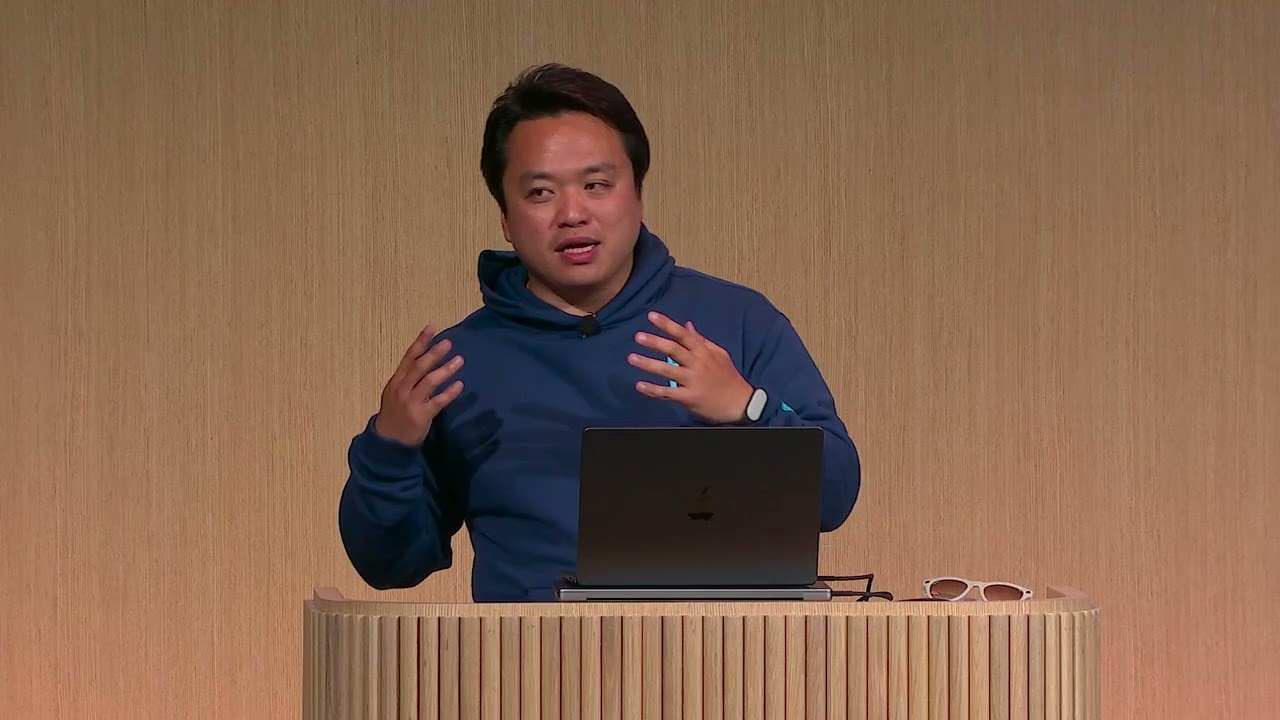
In the OpenAI DevDay 2024 presentation, Sean, a Singaporean living in the U.S. for 15 years, shares his vision of transforming Singapore into an AI engineering nation over the next 30 years. He emphasizes the importance of understanding the power of foundation models available today and encourages the audience to respect and leverage this knowledge. Sean’s talk is structured around the concept of AI engineering, a role he believes is crucial for software engineers working with AI technologies. He highlights his podcast, which focuses on AI engineering and features discussions with prominent figures, including Singapore’s Minister of Communications and Information.
Sean introduces the concept of AI agents, defining them as a combination of large language models (LLMs), memory, planning, and user interaction. He references insights from Lilan Wang, a notable figure in AI safety, and shares his own modifications to this definition. Throughout his presentation, he provides the audience with “homework” in the form of resources and recommendations for further exploration of AI engineering concepts. He discusses the importance of having a clear understanding of the tools and frameworks necessary for building AI infrastructure, emphasizing the need for a structured approach to development.
The presentation delves into the essential components of AI agent architecture, including memory and knowledge management. Sean highlights the significance of memory in AI systems, referencing the ChatGPT memory implementation and the M GPT paper. He also discusses the growing interest in knowledge graphs and their potential applications in AI. Additionally, he touches on the planning and multi-agent systems, recommending key papers and projects that explore these areas. Sean stresses the importance of staying updated with advancements in model capabilities, as they present opportunities for building state-of-the-art agents.
In the latter part of the talk, Sean discusses tools and orchestration, emphasizing the foundational features that every AI agent requires. He mentions the importance of code interpreters, browser control, and self-ask/react loops in creating effective AI systems. He encourages the audience to explore various open-source tools and projects, including those developed by Singaporean innovators. Sean’s enthusiasm for AI engineering is evident as he shares his experiences and insights, aiming to inspire others to engage with this rapidly evolving field.
To illustrate his points, Sean presents a live demo where he builds a Space Invaders game using AI agents. He showcases how these agents can interact and improve the game’s features through voice commands, demonstrating the potential for human-AI collaboration. The demo highlights the ease of integrating AI capabilities into software development, reinforcing Sean’s message that software engineers do not need to be PhD-level researchers to succeed in this domain. He concludes by urging the audience to seize the opportunity to contribute to Singapore’s AI engineering landscape, emphasizing the value that OpenAI places on their involvement.