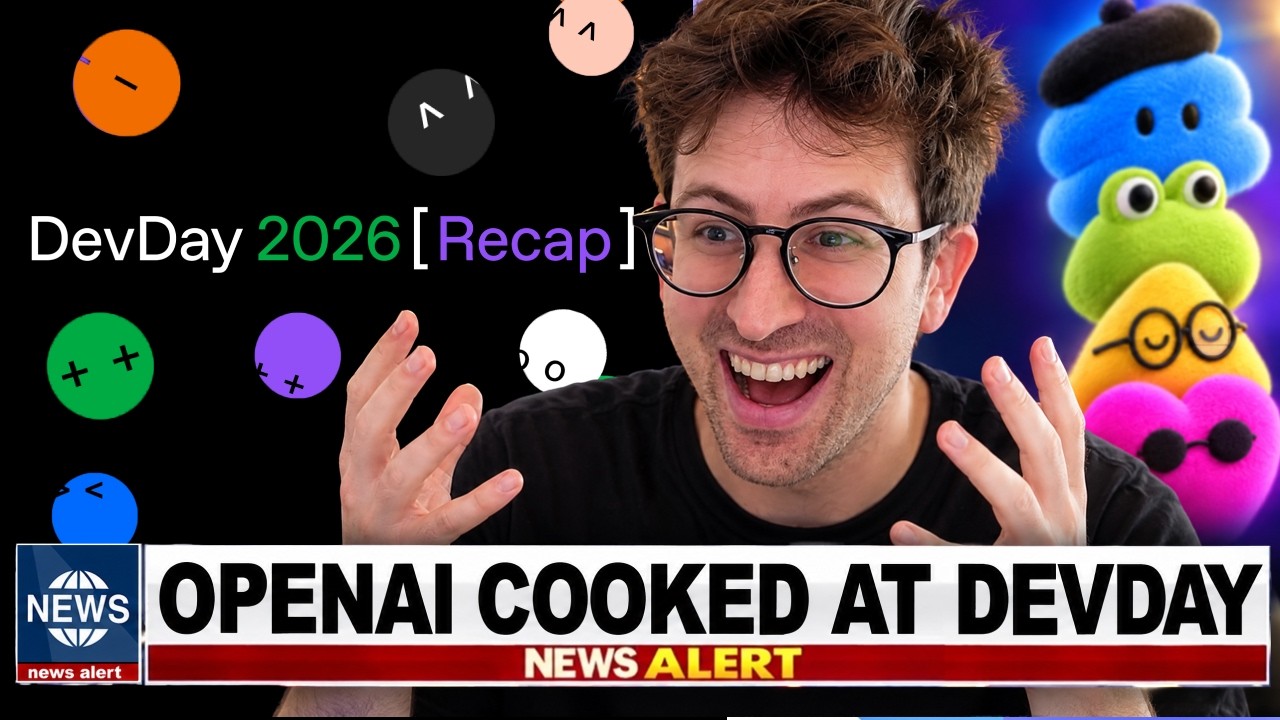
In this episode of the Startup Ideas podcast, Greg Eisenberg breaks down the major announcements from OpenAI’s Dev Day 2026, highlighting several new features and platforms that he believes will create billions of dollars in business opportunities. He emphasizes the significance of OpenAI’s personal agent platform called Dots, which integrates with ChatGPT to serve 1.2 billion weekly active users. Dots allows users to request services through plugins—mini apps that perform specific tasks—enabling businesses to automate and fulfill customer requests seamlessly. Greg stresses that mastering plugin development and integration with Dots could position entrepreneurs to capture a substantial share of the emerging AI-driven transaction economy.
Another key launch discussed is the Decision API, OpenAI’s answer to the popular tool Jev, which enables real-time decision-making by processing user-defined questions with limited, predefined answers. This API can be used for content classification, routing requests, or determining an agent’s next action, opening up new possibilities for optimizing workflows and user experiences. Greg points out that while it’s still early to compare OpenAI’s Decision API with Jev, the potential for innovation in areas like UI design and conversion optimization is significant.
The Agents API also received a major upgrade, now supporting computer use and enabling developers to build AI agents that interact with software to complete complex tasks. This enhancement brings multi-agent capabilities, tool search, and context compaction, allowing businesses to create AI-native applications tailored to specific verticals. Greg encourages developers to experiment with the Agents API to build specialized applications that leverage proprietary data, workflows, and integrations, highlighting the vast untapped potential in this space.
One of the more understated but transformative announcements is the ability to sign in to third-party apps using ChatGPT credentials, similar to how Facebook Login revolutionized app ecosystems. This feature allows developers to offer free core apps, lowering user acquisition barriers and enabling monetization through upselling premium features or enterprise solutions. Greg envisions this as a game-changer for niche AI applications that were previously not economically viable, enabling creators to build sustainable businesses around specialized workflows and services.
Finally, Greg outlines a mental model for building businesses in this new AI-driven world, centered around four stages: trigger, decision, action, and feedback. He advises founders to focus on owning at least two of these stages to create strong value propositions. He also suggests opportunities such as creating real-world service APIs that connect vetted specialists to AI platforms, and building analytics tools to optimize plugin discovery and usage within personal agent ecosystems. Overall, Greg is optimistic about the future, seeing OpenAI’s latest launches as foundational building blocks for a new wave of AI-powered businesses and workflows.
Useful Links