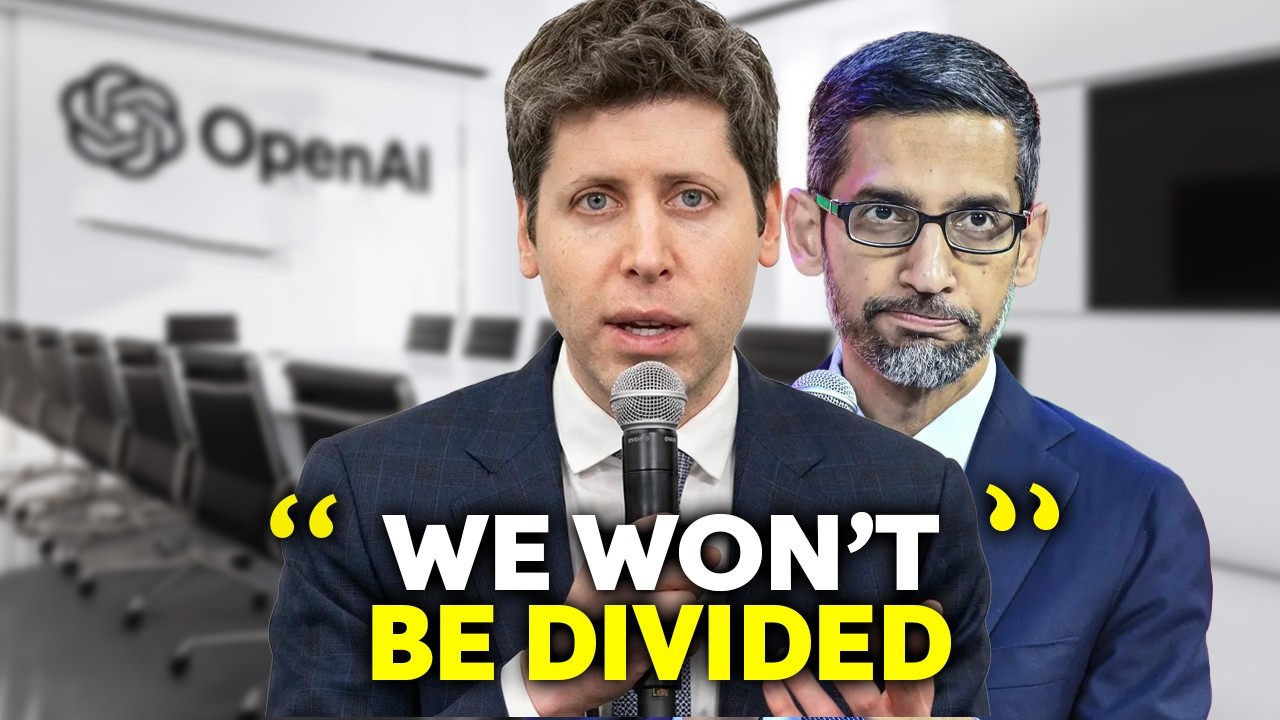
Employees from Google and OpenAI have signed an open letter urging their companies to resist U.S. government pressure to use AI for military purposes, such as autonomous weapons and mass surveillance, citing ethical concerns and the immaturity of the technology. The letter, which follows similar resistance from Anthropic, aims to unite AI companies against controversial Pentagon demands, while contrasting with Elon Musk’s xAI, which is reportedly moving forward with military AI contracts.
Recently, employees from Google and OpenAI, two of the leading artificial intelligence companies, signed an open letter addressing concerns about the U.S. government’s push to use AI for military purposes, specifically for mass domestic surveillance and autonomous weapons capable of killing without human oversight. This letter, which has been gaining attention online, follows ongoing tensions between the government and Anthropic, another major AI company, which has refused to allow its Claude model to be used for certain military applications. The letter urges company leaders to stand together and resist the Department of Defense’s demands, emphasizing the moral responsibility of AI researchers and the potential dangers of unchecked military use of AI.
The letter has been signed by 209 current Google employees and 64 from OpenAI, with the expectation that more will join as awareness grows. The employees express concern over the government’s attempts to pressure companies individually, using tactics like threatening to invoke the Defense Production Act to force compliance or labeling companies as supply chain risks. The signatories argue that the technology is not yet mature enough for such high-stakes applications and that yielding to government pressure would be reckless and irresponsible.
Negotiations between the Pentagon and AI companies are ongoing, with reports suggesting that Google may be closer to an agreement than OpenAI, though both are being asked to accept an “all lawful uses” clause. This clause is controversial because it would allow the government to define what constitutes lawful use, potentially enabling ethically questionable applications. Anthropic has refused to sign such an agreement, setting a precedent that other companies are now following. The letter serves to create solidarity among AI researchers and prevent the government from dividing the companies through fear of missing out on lucrative military contracts.
Meanwhile, Elon Musk’s xAI and its Grok model appear to be moving forward with a deal to provide AI services to the Pentagon, including for classified systems, which contrasts with the stance taken by Google, OpenAI, and Anthropic. This divergence highlights the complexity of the issue and the varying ethical standards among AI companies. The video’s creator notes that if all major AI companies were to unite in refusing to support autonomous weapons and mass surveillance, it could force the government to reconsider its approach and potentially lead to more responsible AI deployment.
The discussion also references a 2018 pledge signed by thousands of AI researchers, including Google DeepMind’s chief scientist Jeff Dean, which stated that the decision to take a human life should never be delegated to a machine. The video concludes by emphasizing the importance of maintaining high ethical standards in AI development and the risks of sparking an international arms race in autonomous weapons. The creator suggests that while national security concerns are real, the priority should be ensuring that AI systems are safe and reliable before being deployed in life-and-death situations.