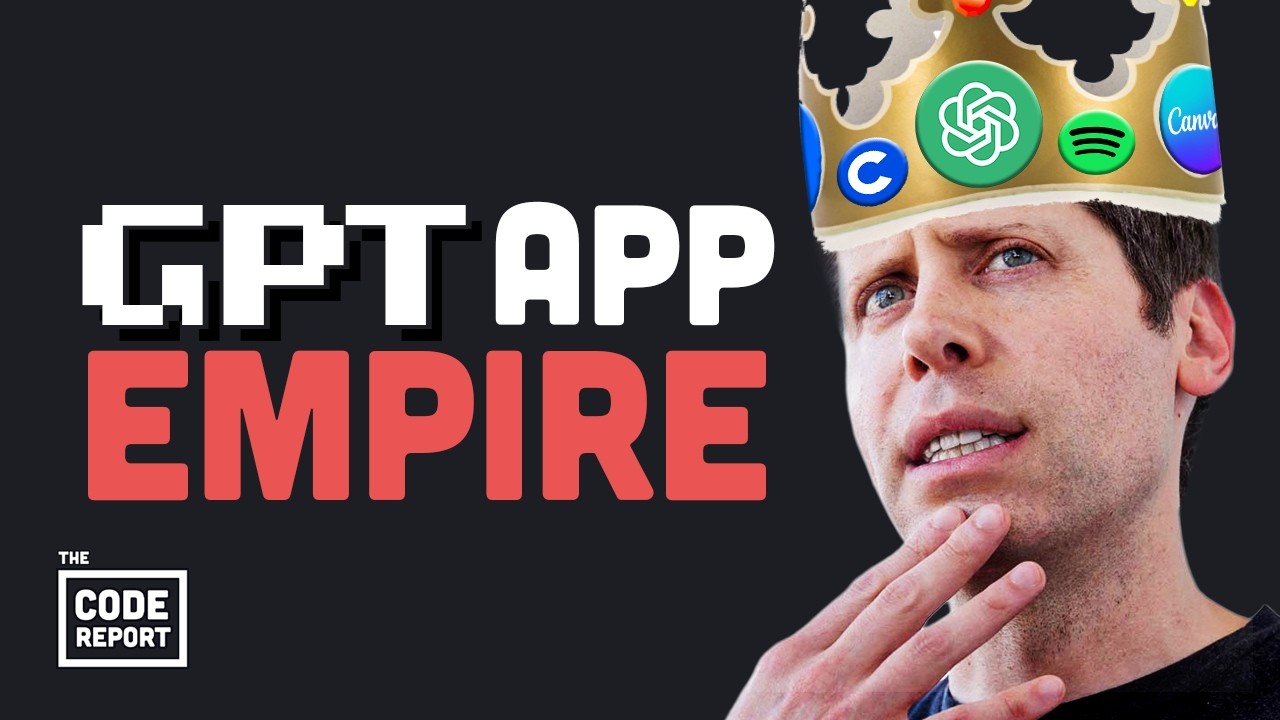
At the recent OpenAI Dev Day in San Francisco, Sam Altman announced a bold vision that essentially renders the current technology stack obsolete. OpenAI is pivoting to transform ChatGPT into an app platform, aiming to replace traditional websites and mobile apps with a unified chat-based operating system. This means users could interact with services like Spotify directly through ChatGPT by typing commands, eliminating the need to open separate apps. While this approach may seem unconventional, it leverages ChatGPT’s massive user base of 800 million weekly active users, offering developers a significant distribution opportunity.
OpenAI’s journey with plugins and GPTs has seen mixed success, with earlier iterations fading away. Now, the focus is on ChatGPT apps, which are currently in trial with major companies. These apps could revolutionize industries like real estate by providing faster, AI-driven services that might outperform traditional methods. However, there is some skepticism about whether chat-based interfaces will always be preferable to dedicated app UIs, as chatbots can sometimes complicate straightforward tasks.
Significant updates to the OpenAI API were also announced, including the availability of Sora 2 and GPT-5 Pro models. Sora 2 enables high-quality video generation but comes at a steep cost, making it suitable mainly for niche use cases. Additionally, OpenAI introduced smaller, more affordable models for voice and image generation, broadening access for developers with budget constraints. A particularly useful new feature is the GitHub action for codecs, which automates code reviews, security scans, and documentation generation, streamlining development workflows.
One of the most exciting announcements was Agent Kit, a unified toolkit for building, deploying, and optimizing AI agents. Agent Kit offers a flowchart-style interface that allows developers—and even non-engineers—to create complex AI applications without extensive coding. While no-code tools like this often hit a complexity ceiling requiring traditional programming intervention, Agent Kit represents a promising step toward democratizing AI app development and could become a powerful alternative to platforms like Zapier or N8N.
Lastly, the video highlighted JetBrains’ new AI coding assistant, Juny, which integrates deeply with their IDE and understands the full context of a codebase. Juny excels in handling complex projects and supports asynchronous task management across teams, making it a valuable tool for large-scale software development. Although it may be slower than some other code generation tools, its accuracy and contextual awareness make it a strong choice for professional developers. Overall, these announcements signal a transformative shift in how AI-powered applications will be built and used in the near future.