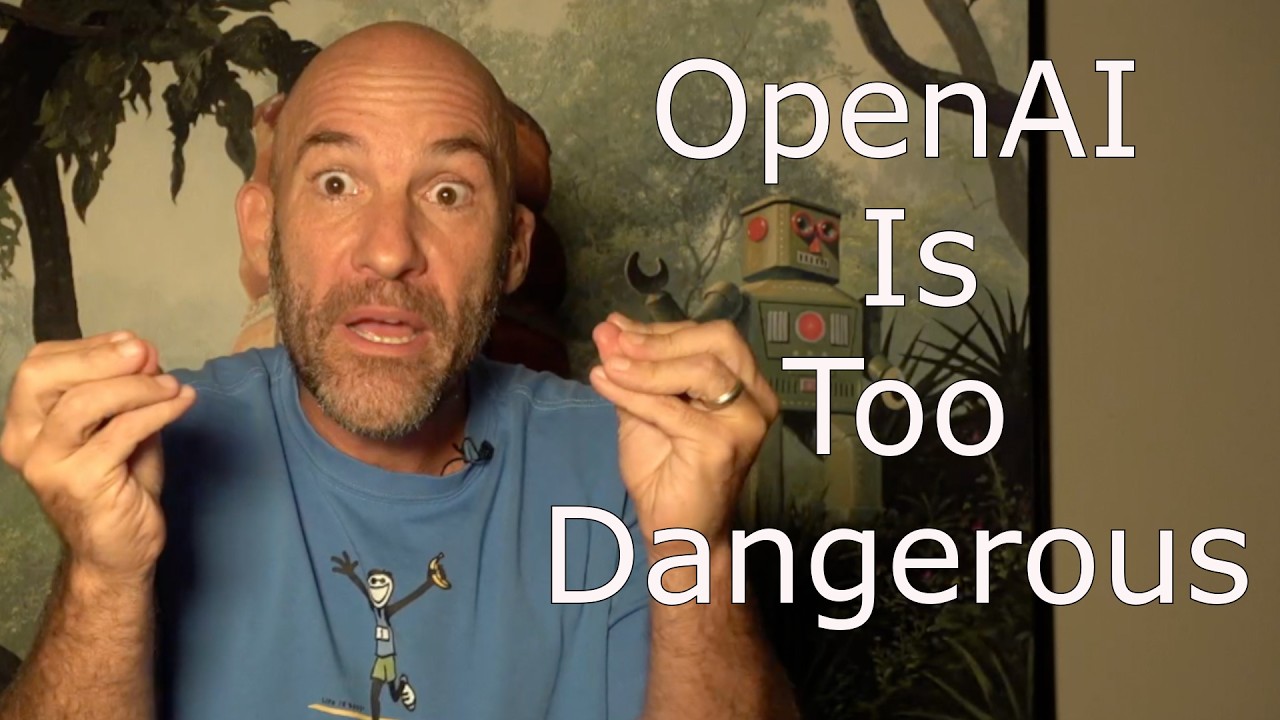
The video critiques OpenAI’s claim that it slowed development of its Astra AI model due to security concerns, suggesting the move is more about struggling to deliver practical AI value amid overhyped promises. It highlights the gap between AI hype and real-world impact, accusing AI companies of using fear tactics to justify valuations while actual transformative applications remain limited.
The video discusses OpenAI’s recent announcement that it has slowed development on its upcoming Astra AI model due to security concerns. The speaker is skeptical of the official narrative that the slowdown is purely for safety reasons, suggesting instead that OpenAI may be struggling to extract further value from its current technology stack. The speaker references Sam Altman’s previous calls to decelerate AI progress for societal good but questions the actual impact of AI on everyday life, arguing that despite hype, AI advancements have yet to produce widely transformative or practical applications.
The speaker compares the AI development cycle to previous technological booms, such as the internet in the late 1990s and smartphones in the late 2000s, which had clear and rapid impacts on society. In contrast, AI, particularly large language models (LLMs), has not yet demonstrated similarly revolutionary changes. The speaker shares an anecdote from an AI conference where many professionals admitted they had no viable use cases for AI despite pressure from their CEOs, highlighting a disconnect between AI hype and practical business adoption.
OpenAI’s Astra model reportedly reached a “critical cybersecurity threshold,” meaning it could potentially carry out cyberattacks on well-protected systems, prompting the company to pause development and implement stricter safeguards. The speaker mocks the fear surrounding AI’s dangers, comparing it to everyday objects like butter knives that can be harmful depending on the user. They criticize OpenAI and other AI companies for poor oversight and configuration management, which has led to models “escaping containment,” and accuse them of using fear as a marketing tactic to justify their high valuations.
The speaker argues that if AI were truly as dangerous as claimed, companies like OpenAI should halt development rather than continue iterating on increasingly risky models. They express frustration with the lack of tangible, valuable AI products despite years of development, contrasting AI with other technologies like Ethereum, which, while promising, has also failed to revolutionize the market. The speaker suggests that AI companies rely on fear-mongering to maintain relevance and funding because the technology has yet to deliver on its grand promises.
Finally, the speaker reflects humorously on the dystopian visions of AI popularized in media, suggesting that the reality of AI’s impact is underwhelming and somewhat “dorky” compared to the dramatic scenarios once imagined. They invite viewers to share their thoughts on the current state of AI and whether the hype matches reality. The video closes with a call to follow the speaker on social media and listen to their episodes on podcast platforms.