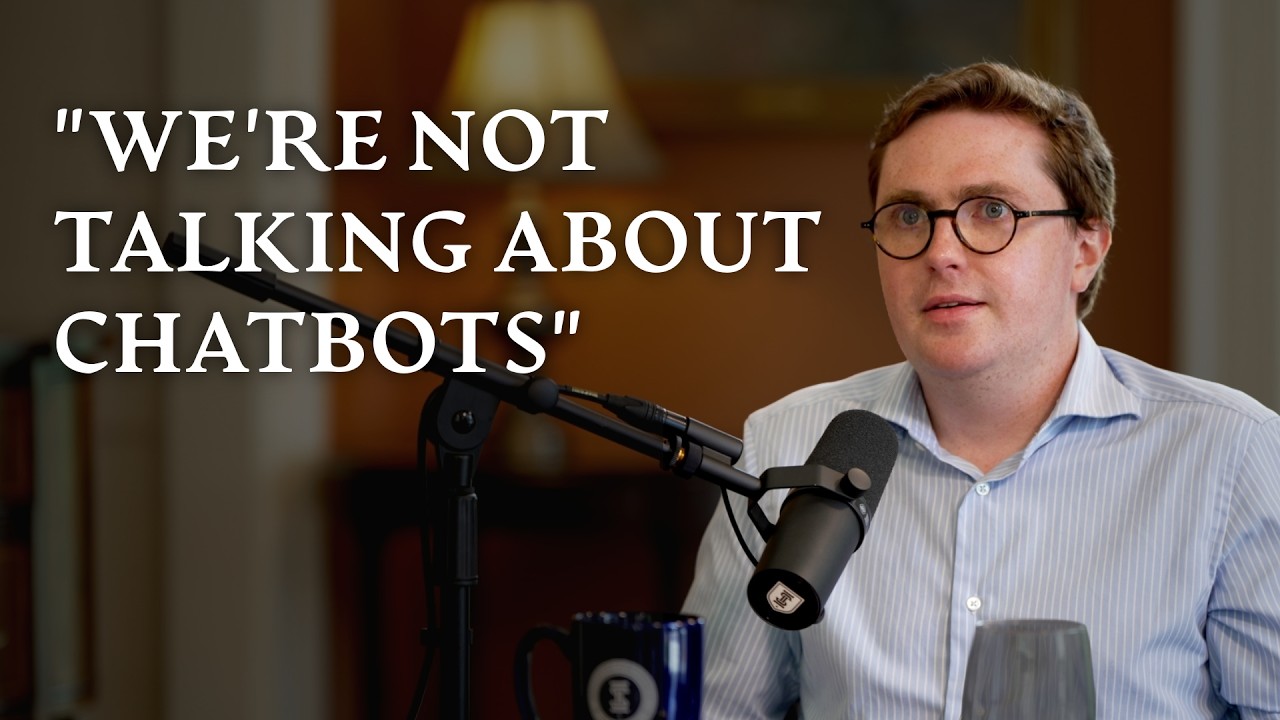
The speaker critiques the idea of global AI governance through technocratic political elites, emphasizing that the unprecedented challenge of superintelligent AI requires a fundamentally different and ethically grounded approach. They propose that the Catholic Church, with its transnational reach and moral authority, could uniquely facilitate inclusive and meaningful global discussions on AI governance, contrasting with conventional bureaucratic models.
The speaker reflects on their earlier critical stance toward Pope Leo’s encyclical on AI, Magnificat Humanitas, expressing some reconsideration about their harshness. They acknowledge that one aspect they failed to vocalize was the Pope’s emphasis on global governance through modern institutions and technocratic bodies. The speaker is skeptical about this approach, particularly the idea that political elites from various countries, such as Nigeria or France, would effectively represent their nations in a global AI governance body. They doubt that such a system would adequately address the complex challenges posed by AI.
The speaker emphasizes that the issue at hand is not about managing current AI applications like chatbots or facial recognition algorithms but concerns the emergence of superintelligence—machines with intelligence surpassing human capabilities. This represents a fundamentally new and unprecedented challenge that requires a different kind of response. The speaker feels that Pope Leo and the Church may not fully grasp the magnitude and novelty of this problem.
Interestingly, the speaker suggests that the Catholic Church could play a unique and valuable role in mediating global discussions on AI governance. Rather than relying on new bureaucratic institutions or international councils, the Church’s transnational nature and moral authority could provide a more effective platform for fostering broad participation and ethical deliberation. This approach would leverage the Church’s historical role as a mediator and moral guide, especially in matters that transcend national boundaries.
The speaker appreciates the Church’s ancient roots and its capacity to engage with profound ethical questions that have persisted through history. They see parallels between the Church’s historical influence during the Middle Ages and the potential role it could play today in addressing the ethical and governance challenges posed by superintelligent AI. This perspective contrasts with the more technocratic and bureaucratic models of governance that dominate contemporary discussions.
In conclusion, the speaker advocates for a reconsideration of how global AI governance might be structured, suggesting that moral and transnational institutions like the Catholic Church could offer a more meaningful and effective framework than conventional political or bureaucratic bodies. They highlight the importance of recognizing the unprecedented nature of superintelligence and the need for innovative, inclusive, and ethically grounded approaches to managing its development and impact.