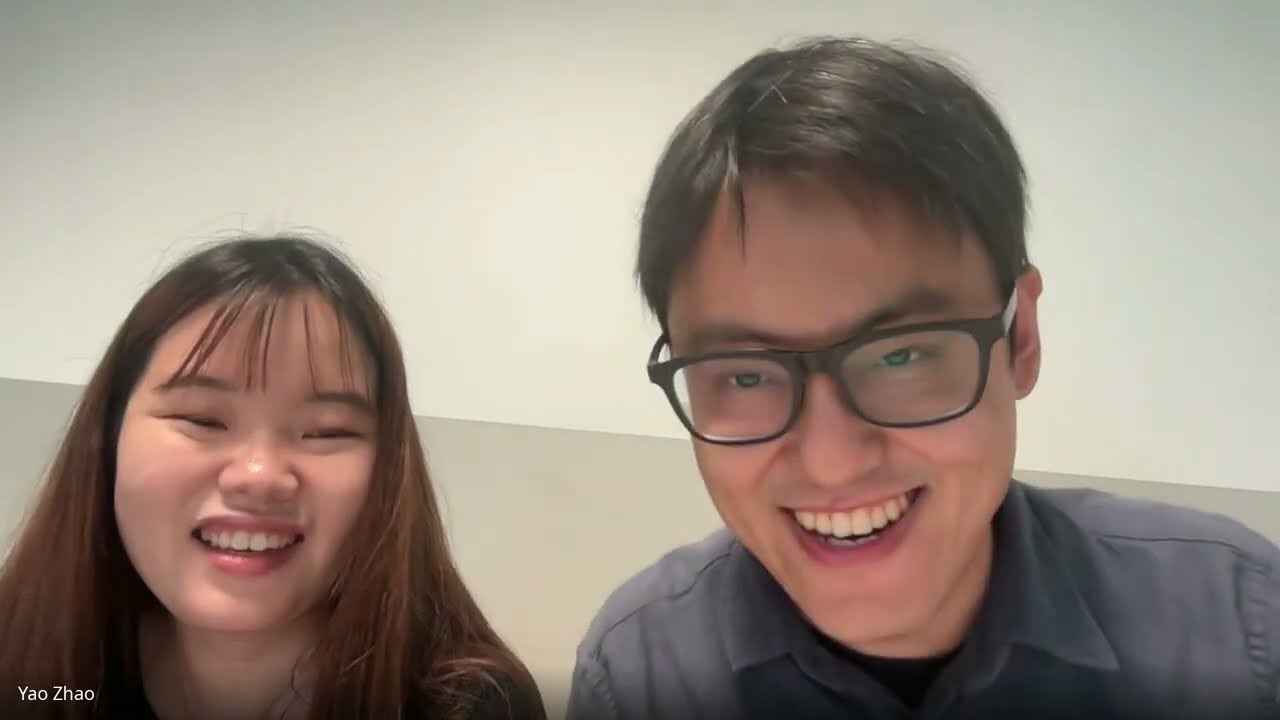
Team Black Bean, finalists in the OpenAI Z Challenge, developed AKOS, a scalable AI system combining OpenAI’s models and deep learning to identify and analyze over 100 potential archaeological sites in the Amazon rainforest through satellite image classification and an interactive website. They highlighted GPT’s role as a collaborative partner in decision-making and report generation, expressing gratitude to the community and a commitment to expanding their innovative approach to advance archaeological research and other scientific fields.
The video features Team Black Bean, one of the five finalists in the OpenAI Z Challenge, presenting their innovative project called AKOS. AKOS is a scalable system designed to assist in archaeological discoveries in the Amazon rainforest by integrating OpenAI’s models with deep learning techniques. The team trained classifiers on satellite images to identify different types of earthworks and classify segments of the Amazon forest. They divided the region into 3x3 km tiles, running their model repeatedly to extract parameters for prediction and detection, ultimately identifying over 100 potential archaeological sites. An interactive website was developed to allow users to explore these sites in detail, with GPT models acting as virtual archaeologists to generate comprehensive reports.
The team members introduced themselves and shared the story behind their team name, Black Bean, which honors their late family dog. They described how they discovered the challenge through Kaggle and formed their team during a gap year focused on learning machine learning and deep learning. Their enthusiasm and dedication were evident as they balanced their professional and academic commitments to contribute to this groundbreaking project. The team emphasized the novelty and potential impact of their approach, highlighting how it could revolutionize archaeological research by making site discovery more efficient and scalable.
A key highlight of their work was the successful application of deep learning to classify and detect archaeological features in the Amazon, which was validated through manual analysis and expert knowledge. They praised OpenAI’s models, particularly GPT, not just as a question-answering tool but as a collaborative partner that helped guide decision-making throughout the project. GPT’s ability to remember dialogue and provide multiple solution options was invaluable, making it feel like an experienced team member. The team also noted GPT’s strength in summarization, which helped them create detailed, accessible reports for archaeologists and broader audiences.
The team expressed gratitude to the archaeological community and judges, acknowledging the support and inspiration they received. They discussed plans to make their work public to gather feedback and inspire further research. They see room for improvement in their approach and hope to expand its application beyond Amazon archaeology to other fields. Collaboration with other finalists and participants is also part of their vision to continue advancing this innovative use of AI in scientific discovery.
In closing, Team Black Bean thanked OpenAI, the challenge organizers, and the judging panel for the opportunity to participate in such an exciting project. They expressed a strong desire to continue their work, hoping it will contribute significantly to archaeological research and site discovery in the Amazon rainforest and beyond. Their project exemplifies how AI and deep learning can be harnessed to tackle complex real-world problems, inspiring others to explore similar interdisciplinary applications.