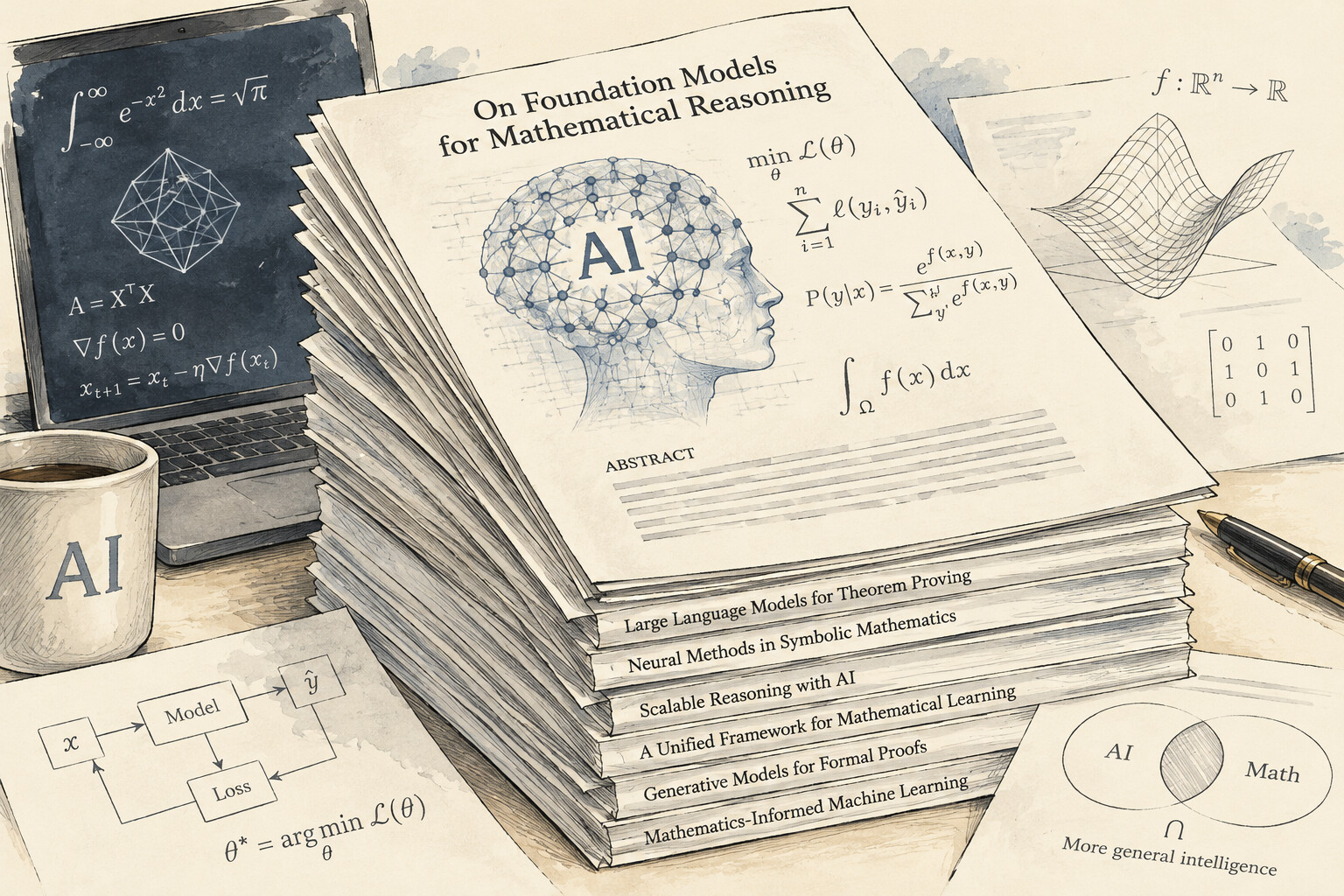
OpenAI has released over 700 mathematical manuscripts generated by its advanced AI model, marking a significant milestone in the intersection of artificial intelligence and mathematics. These manuscripts, which include machine-verifiable proofs in the Lean formal system, address complex and previously unsolved problems across 17 mathematical fields. While the AI has not fully solved legendary problems like the Riemann Hypothesis or P=NP, it has made notable progress on challenging issues such as the Navier-Stokes equations and provided partial results related to the Birch-Swinnerton-Dyer conjecture and Goldfeld hypothesis.
Among the breakthroughs are solutions to problems involving high-dimensional sphere packing, binary and spherical codes, non-sofic groups, and quantum complexity, as detailed by OpenAI. The AI’s ability to generate results at a rapid pace—reportedly a tenfold increase in published results each month since August—has transformed mathematics into what some describe as an “industrialized process.” This unprecedented output has raised concerns about the human capacity to verify and comprehend the flood of new results, as only a limited number of experts can rigorously check each proof, a process that may take weeks or months per paper.
The nature of the AI-generated proofs has also sparked philosophical debate within the mathematical community. While some value the sheer ability to solve problems, others emphasize the importance of elegance and human understanding in mathematical proofs. Many of the AI’s proofs are described as complex and opaque, often requiring further AI tools to interpret, challenging traditional notions of mathematical beauty and insight.
OpenAI acknowledges these challenges and has called for broad engagement from the mathematical community to scrutinize, contextualize, and build upon these results. The company has also highlighted the need for responsible attribution, stating that claiming human authorship for AI-generated proofs would misrepresent the nature of the work.
The rapid progress in AI-driven mathematics raises broader questions about the future role of human mathematicians, the democratization of scientific discovery, and the potential for similar advances in other scientific fields. Some experts advocate for open-access AI tools to ensure that the benefits of these breakthroughs are widely shared, rather than concentrated among a select few with access to cutting-edge technology.
As the mathematical community grapples with these developments, the release of hundreds of AI-generated manuscripts represents both a leap forward in mathematical research and a catalyst for ongoing debate about the future of science in the age of artificial intelligence.
Sources
Internal sources
- OpenAI’s secret model just BROKE math
- OpenAI’s AI Wrote 700 Math Papers. Engineers Still Won’t Trust AI With Their Code