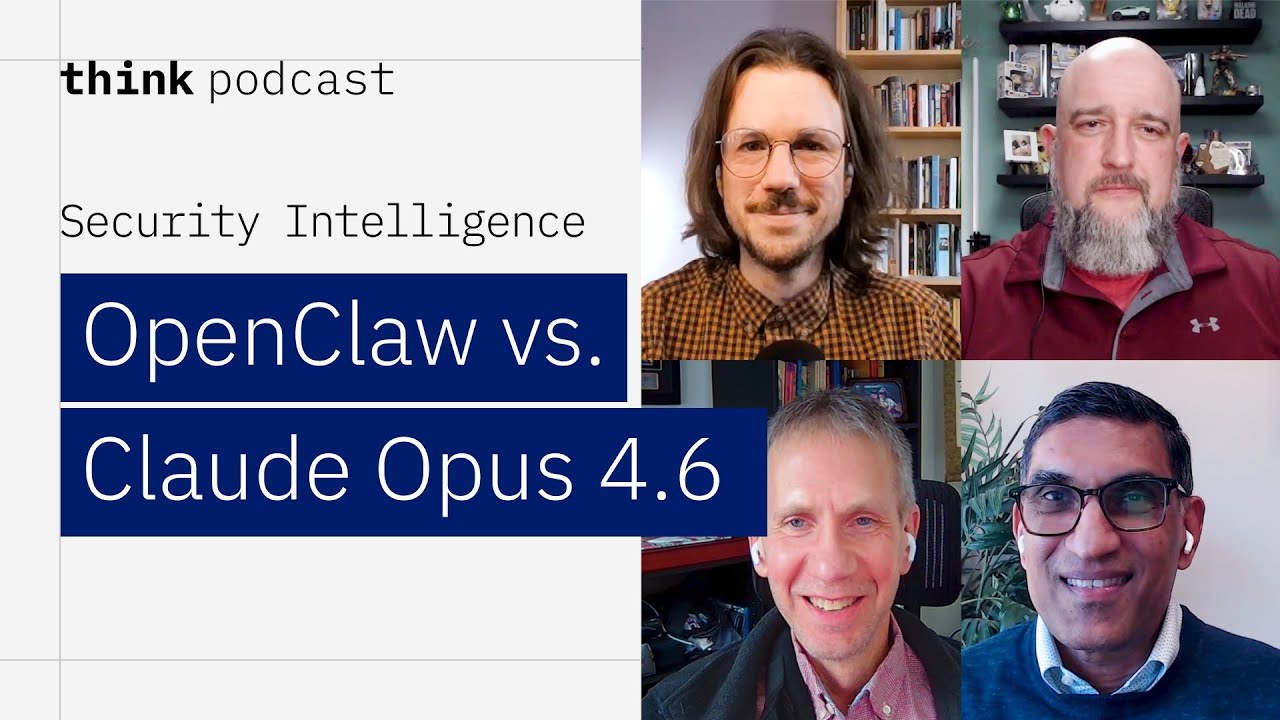
The podcast episode from IBM’s Security Intelligence focuses on the evolving landscape of AI agent security, particularly in the enterprise context, with recent developments like OpenClaw (an open-source AI agent) and Claude Opus 4.6 (Anthropic’s proprietary agent platform). The panelists discuss the security implications of both open-source and proprietary AI agents, highlighting that while open-source solutions offer flexibility and community-driven innovation, they also introduce significant risks due to unknown contributors and potential vulnerabilities. Proprietary agents, while more controlled, are not immune to risks, especially as the technology is still maturing. Across both models, the consensus is that the principle of least privilege and strong guardrails are essential to minimize risk.
A recurring theme is the challenge of “shadow AI”—the unsanctioned use of AI tools by employees when official, vetted options are unavailable or slow to be approved. The panel notes that business leaders often prioritize speed and innovation over security, leading to widespread adoption of unapproved AI tools. This creates tension between the need for rapid business growth and the imperative to maintain security and privacy. The experts advocate for a pragmatic approach: rather than outright bans, organizations should provide sanctioned, secure options and educate users about the risks, thereby channeling innovation into safer pathways.
The discussion then shifts to the broader philosophy of “move fast and break things,” a mantra that has driven much of the tech industry’s rapid innovation but has also led to a proliferation of security vulnerabilities. The panelists argue that while speed and innovation are necessary for business success, they must be balanced with discipline and rigor in security practices. Security should be seen not as a brake that slows progress, but as an enabler that allows organizations to move quickly and safely. Tools like DevSecOps, software bills of materials, and continuous monitoring are highlighted as practical ways to integrate security into fast-paced development cycles.
The Notepad++ breach is examined as a case study in supply chain risk and the dangers of implicit trust in widely used utility software. The incident underscores the need for comprehensive software inventories that include even the most mundane tools, as well as the importance of zero trust principles—never trusting any component without verification. The panel suggests that AI could play a crucial role in automating code reviews, monitoring for abnormal behavior, and managing the complexity of modern software environments, but stresses that continuous vigilance and layered defenses remain essential.
Finally, the episode covers the rise of the Dragon Force ransomware cartel, which is professionalizing cybercrime by offering ransomware-as-a-service with customer support, easy onboarding, and even collaboration with other criminal groups. This lowers the barrier to entry for would-be attackers and increases the scale and persistence of threats. The panel warns that as these criminal operations become more sophisticated and accessible, defenders must focus on understanding attacker tactics, techniques, and procedures (TTPs), and leverage AI and automation to detect and respond to threats more effectively. The episode concludes with a reminder that security is an ongoing process, requiring constant adaptation and risk-based decision-making.