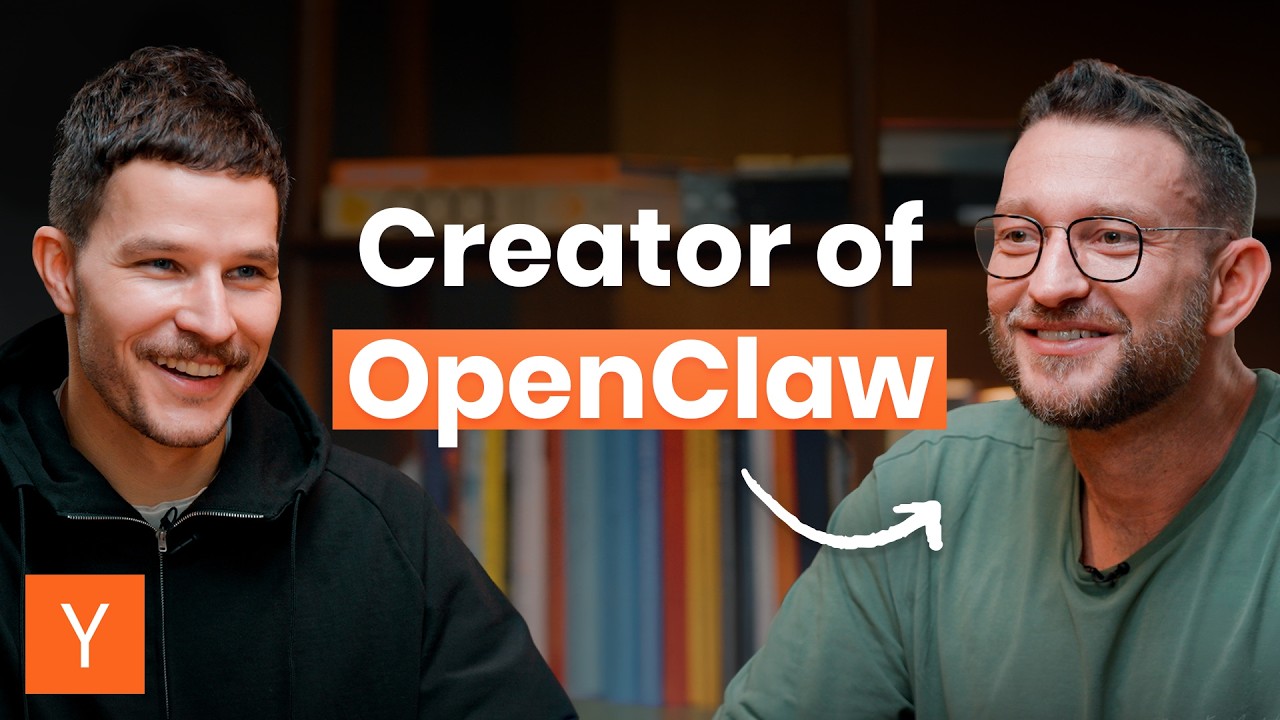
Peter Steinberger, the creator of OpenClaw, an open-source personal AI agent, discusses the explosive growth and impact of his project. OpenClaw quickly gained massive popularity, amassing over 160,000 GitHub stars and inspiring a vibrant community to build on top of it. Steinberger reflects on the overwhelming response, noting both the positive and negative feedback, and emphasizes that the project has clearly struck a chord with users by enabling new forms of interaction and automation.
A key differentiator for OpenClaw is that it runs locally on users’ computers, rather than in the cloud. This allows the agent to access and control a wide range of devices and data, making it far more powerful and flexible than cloud-based alternatives. Steinberger shares anecdotes about users being surprised by the agent’s ability to discover forgotten files and generate meaningful insights, highlighting the potential for personal AI to become deeply integrated into daily life.
The conversation explores the evolution from human-to-bot interactions to bot-to-bot and even bot-to-human collaborations, where agents can autonomously coordinate tasks, negotiate with other bots, or even hire humans to accomplish real-world objectives. Steinberger envisions a future where individuals might have multiple specialized agents for different aspects of their lives, and where swarm intelligence and community-driven development become central to AI progress.
Steinberger recounts his own “aha moment” when building OpenClaw, describing how the agent surprised him by solving problems in creative ways he hadn’t anticipated. He attributes this to the rapid improvement of coding models, which now excel at abstract problem-solving and can autonomously chain together tools and APIs. This capability, he argues, will render many traditional apps obsolete, as agents can manage data and tasks more naturally and efficiently.
Finally, Steinberger discusses his contrarian development philosophies, such as preferring local code and simple tools over cloud-based solutions and complex workflows. He emphasizes the importance of user-owned data and memories, stored as simple markdown files, and the organic, iterative way he built OpenClaw’s personality and capabilities. The interview closes with reflections on the broader implications for app development, data ownership, and the future of personal AI, positioning OpenClaw as a catalyst for a new era of user-empowered, agent-driven computing.