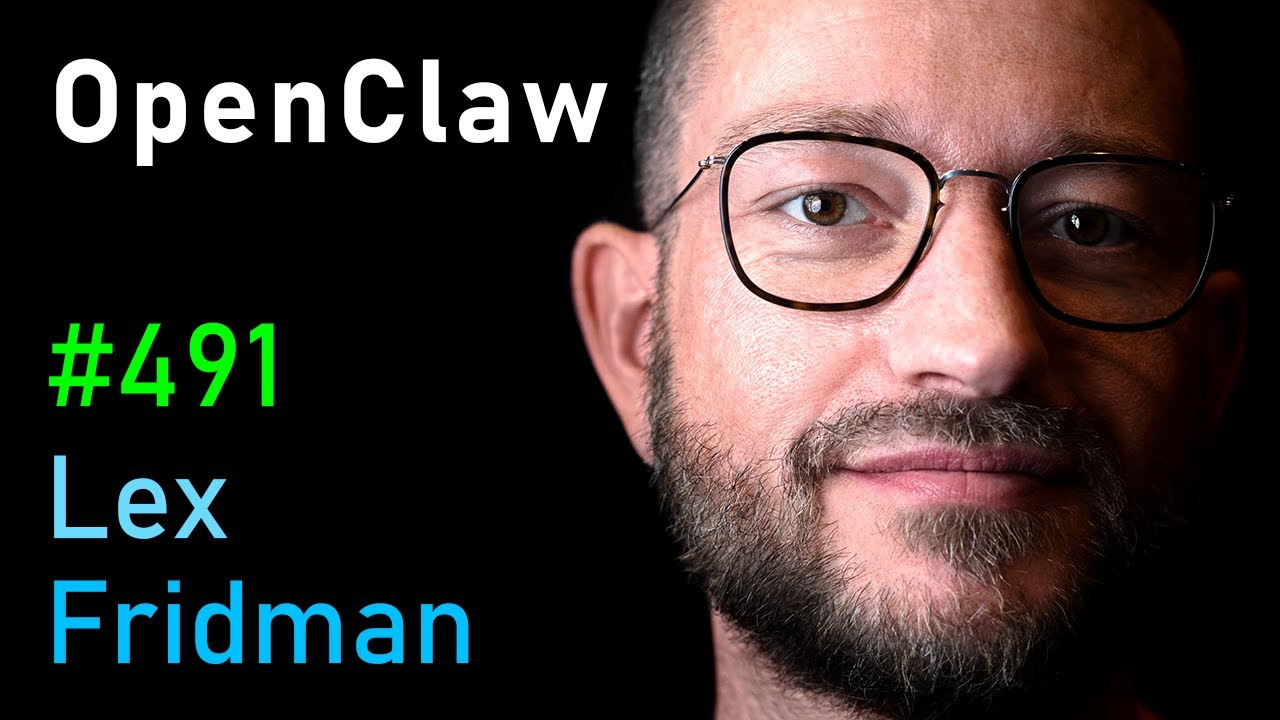
In this episode of the Lex Fridman Podcast, Lex interviews Peter Steinberger, the creator of OpenClaw, an open-source AI agent that has rapidly become a sensation in the tech world. OpenClaw, formerly known as MoldBot, ClawedBot, and Clawdus, is an autonomous AI assistant that can access a user’s computer, interact through popular messaging apps, and use various AI models to perform tasks. Its viral success is attributed to its open-source nature, community-driven development, and the leap it represents from language models to true agency—AI that not only understands but acts on behalf of users. The project has inspired excitement, debate, and even fear, as it pushes the boundaries of what personal AI agents can do.
Peter shares the story of OpenClaw’s rapid development, starting from his desire for a personal AI assistant that could interact with his data and messaging apps. He describes how early prototypes allowed him to query his WhatsApp data and receive surprisingly profound insights, which motivated him to build a more general-purpose agent. The project’s architecture leverages a combination of command-line interfaces, messaging integrations, and self-modifying code, allowing the agent to introspect, debug, and even rewrite its own software. This agentic engineering approach, as Peter calls it, has lowered the barrier for non-programmers to contribute and learn, sparking a wave of first-time open-source contributors.
The conversation delves into the challenges and drama surrounding OpenClaw’s explosive growth, including a high-profile name change prompted by Anthropic due to confusion with their Claude model. Peter recounts the difficulties of rebranding in the face of domain squatters, crypto scammers, and the need for atomic updates across platforms. Despite these setbacks, he emphasizes the importance of maintaining the project’s open, playful, and community-oriented spirit. The viral phenomenon of MoldBook—a social network where AI agents debate and post manifestos—illustrates both the creative potential and the risks of AI-driven platforms, as it generated both artistic amusement and public anxiety about AI autonomy.
Security is a recurring theme, with Peter acknowledging the dangers of giving AI agents broad system access. He discusses best practices for securing OpenClaw, such as sandboxing, allow-lists, and careful model selection, noting that more intelligent models are generally more resilient to attacks like prompt injection. The project’s documentation and community support aim to educate users about responsible deployment, but Peter admits that the rapid influx of non-technical users poses ongoing challenges. He also reflects on the broader implications for software development, predicting that agentic AI will render many traditional apps obsolete and fundamentally change how people interact with technology.
Throughout the interview, Peter and Lex explore the philosophical and practical shifts brought about by agentic AI. They discuss the evolving role of programmers, the importance of empathy when prompting and guiding agents, and the need to balance automation with human creativity and oversight. Peter’s journey—from burnout after selling his previous company to rediscovering joy in building OpenClaw—serves as an inspiration for builders and highlights the transformative potential of AI when approached with curiosity, openness, and a sense of fun. The episode concludes with reflections on the future of work, the democratization of software creation, and the responsibilities that come with unleashing powerful new technologies.