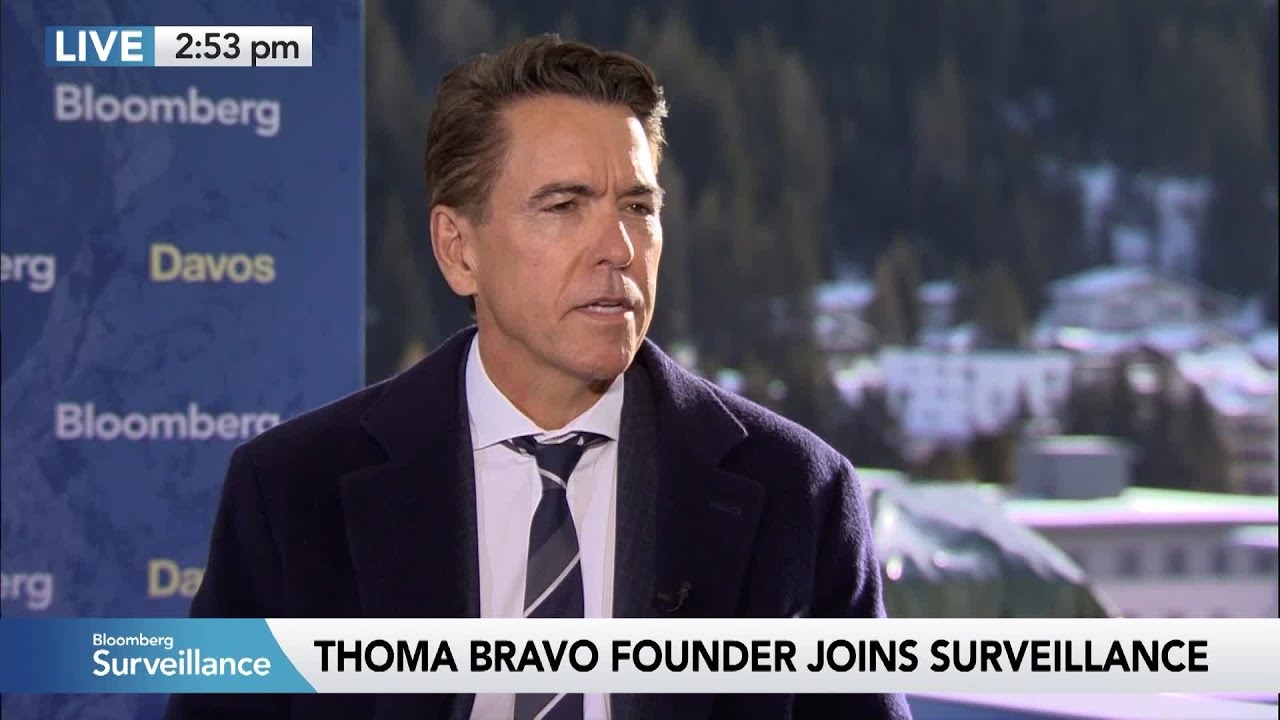
Orlando Bravo warns that venture capital firms are rushing into AI investments out of hype and fear of missing out, leading to inflated valuations without proper due diligence, while established software companies are being undervalued despite their resilience to AI disruption. He emphasizes that the U.S. remains the dominant hub for software innovation and investment, with institutional investors maintaining strong commitments to the American market.
Orlando Bravo discusses the current state of venture capital investment in AI companies, highlighting a significant trend of “FOMO” (fear of missing out) among investors. He observes that venture capital firms are aggressively investing in any AI-related company they can find, often without sufficient due diligence. This rush has led to extremely high valuations for young AI startups, which Bravo describes as “astronomical.” While he acknowledges the transformative potential of AI, he warns that the current investment climate is driven more by hype than by careful analysis.
Bravo contrasts the current enthusiasm for AI with the situation in the software sector, which he says is now “extremely out of favor.” He notes that many important software companies have seen their valuations drop by 30% year over year, and their free cash flow multiples have also declined sharply. This, he suggests, is partly due to a lack of understanding about what makes a software company valuable. The market, he argues, is failing to distinguish between companies that are vulnerable to AI disruption and those that have strong domain expertise and are less likely to be displaced.
He further explains that while AI will disrupt a portion of software companies—he estimates less than half—it will not upend the entire sector. The key factor, according to Bravo, is whether a company’s core competency is technical and easily replicable by AI. Companies with deep domain expertise and specialized knowledge are better positioned to withstand the wave of AI-driven change.
Bravo also addresses the geographic aspect of software innovation, emphasizing that the United States remains the epicenter of the industry. Despite having a growing European business, he asserts that the largest opportunities and the most significant scale are still found in North America. He points out that the U.S. continues to offer trillions of dollars in potential value for software companies, making it the primary focus for his firm.
Finally, Bravo comments on the recent discussions about diversifying away from America in terms of investment and innovation. He expresses skepticism about the feasibility of replicating the scale and success of U.S. software companies elsewhere. Based on conversations with large institutional investors, he reports that their commitment to U.S.-based investments remains strong, with no signs of reduced allocations. This, he suggests, reinforces the enduring dominance of the U.S. in the global software and AI landscape.