In this episode of The Vergecast, David Pierce and his colleagues Jake Castronakis and Hayden Field explore “vibe coding,” using AI-assisted tools to create practical, personalized projects like a meeting notes app, habit tracker, and browser extensions, while discussing the challenges and benefits of this approach. They conclude by setting a new month-long coding challenge to build personal websites tied to significant life events, inviting listeners to follow their experimental journey with AI-driven development.
In this episode of The Vergecast, host David Pierce introduces a new series focused on “vibe coding,” where he and his colleagues Jake Castronakis and Hayden Field take on coding challenges using AI-assisted coding tools to build practical projects. The goal is to explore how these tools can help create useful applications with minimal traditional coding knowledge. The episode begins with a brief news roundup before diving into the main discussion about their personal experiences with vibe coding, highlighting both successes and challenges.
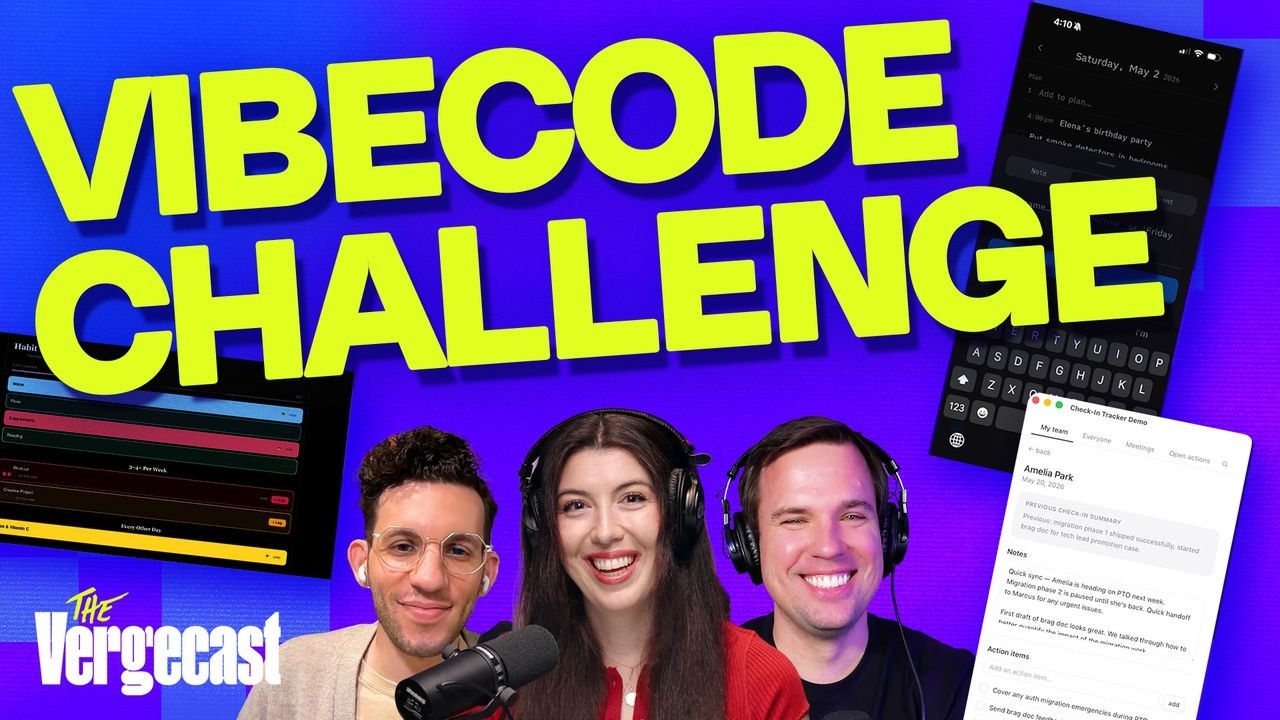
Jake Castronakis shares his journey with vibe coding, emphasizing the trial-and-error nature of the process. Initially, many of his projects failed or ended up being impractical, but over time, he found success by focusing on small, specific problems. One of his notable projects is a meeting notes app that automatically summarizes past meetings and tracks action items, tailored specifically to his workflow. He also built a custom email client that organizes Gmail labels into easily accessible tabs, improving his email management significantly, though he acknowledges the risks and complexities involved in such projects.
Hayden Field discusses his vibe coding project, a habit tracker designed to accommodate his needs as someone with ADD. Unlike generic habit apps, his tracker allows for flexible scheduling (e.g., every other day) and incorporates motivational features like rewarding stars. He built both a web and a native mobile app, noting the challenges of creating a stable mobile version but appreciating how the tool helps him maintain accountability and build new habits. Hayden also reflects on the security vulnerabilities flagged during development and the mixed reliability of AI coding assistants.
David Pierce shares his own vibe coding projects, including a combined calendar and to-do list app and a web clipper to manage his overwhelming number of browser tabs. He highlights the benefits of building browser extensions as a starting point for vibe coding due to their simplicity and lower risk. The trio discusses the broader challenges of vibe coding, such as security concerns, difficulty in sharing and scaling projects, and the tension between creating personalized tools versus building something with wider appeal.
The episode concludes with David assigning a new month-long vibe coding challenge to Jake and Hayden: to build a personal website related to a significant event in their lives—Hayden’s upcoming wedding and David’s idea to create a private photo-sharing site for his family. They invite listeners to follow their progress and share tips, emphasizing the experimental and vulnerable nature of this coding adventure. The episode encourages engagement with The Verge’s coverage of vibe coding and AI-assisted development, promising future updates on their projects.