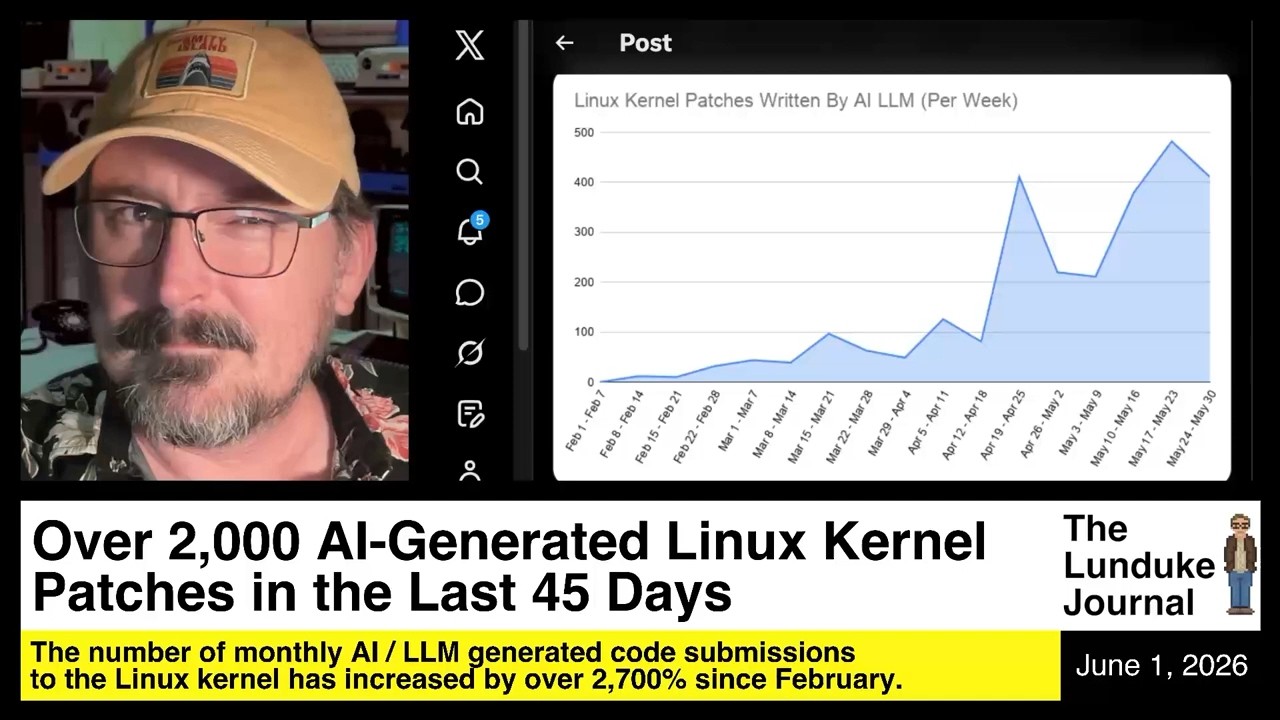
In the last 45 days, over 2,000 AI-generated patches have been submitted to the Linux kernel, marking a dramatic increase in AI-assisted contributions. Since February, the number of these patches has surged by over 2,700%, with more than 400 AI-generated submissions per week by the end of May. This data is based on a tagging system introduced in January, where developers label patches assisted by AI. However, this system relies on an honor code, meaning the actual number of AI-generated patches is likely higher, as some developers may not disclose AI assistance.
Currently, AI-generated code accounts for nearly 10% of all Linux kernel submissions, and if the trend continues, AI could be responsible for the majority of contributions by the end of the year. This shift has significant implications for the software industry, as the Linux kernel is a critical component powering countless devices and systems worldwide. The rapid growth of AI involvement in kernel development raises questions about code quality, oversight, and the understanding of the code being integrated.
One major concern is that neither Linus Torvalds nor other maintainers can fully comprehend every line of code submitted, whether human- or AI-generated, due to the sheer volume of contributions. This means a substantial portion of the Linux kernel may be controlled by AI without thorough human review or understanding. While AI code generation can enhance efficiency and innovation, it also introduces risks related to maintainability, security, and trust in the software.
The presenter acknowledges the excitement and potential benefits of AI-assisted coding but urges caution and awareness of the challenges it brings. The evolving landscape of AI in software development is a profound change that affects everyone, regardless of their stance on AI. The ongoing monitoring of this trend will be crucial to understanding its long-term impact on one of the world’s most important open-source projects.
In addition to discussing AI in Linux development, the presenter shares a personal update about the Lond Journal’s lifetime subscriber walls, which feature retro computer-themed screenshots with subscriber names. The current wall showcases Windows 1.0, and due to high demand, the presenter is extending a subscription discount through June to fill this and subsequent walls with more retro computing themes. This initiative combines a passion for vintage computing with community support, allowing the presenter to continue independent tech reporting free from corporate influence.