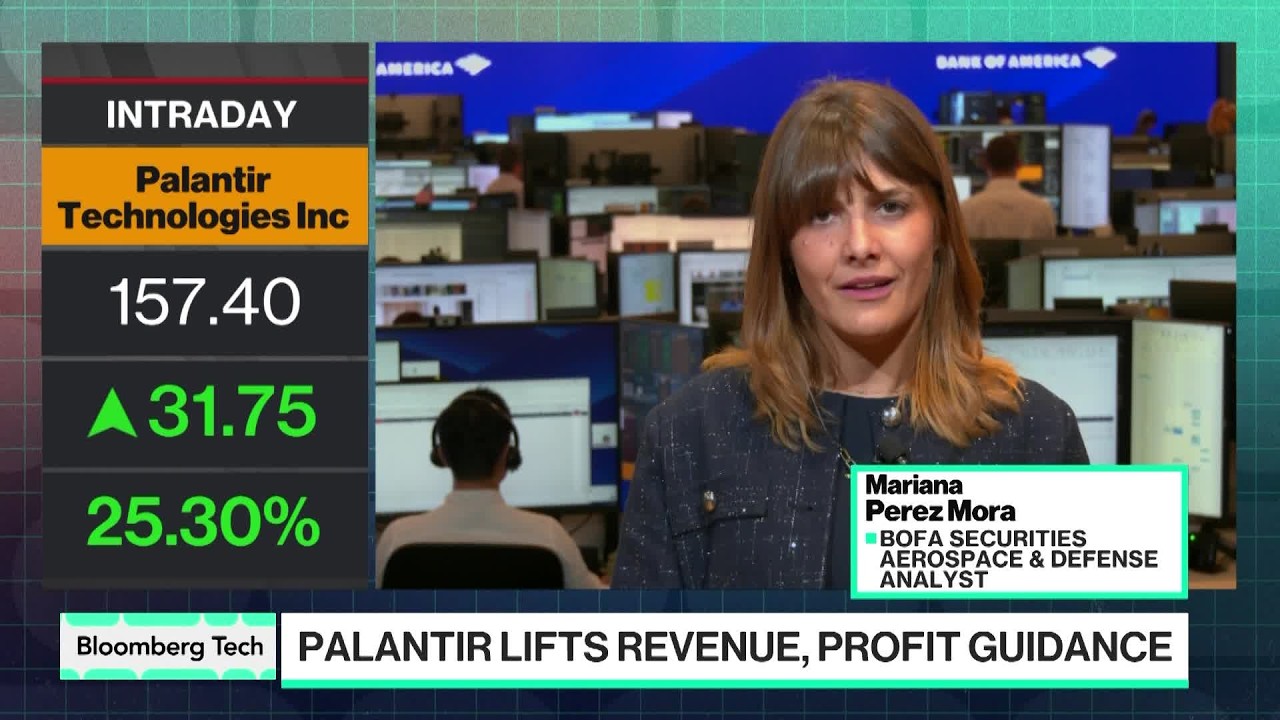
Palantir’s commercial AI business is rapidly growing, particularly in the U.S., driven by increased customer spending and its unique ability to integrate AI-powered software with human decision-making, resulting in strong revenue growth and upgraded analyst estimates. Despite challenges in Europe due to geopolitical factors, Palantir’s outcome-based pricing and deep expertise position it well to capitalize on the expanding demand for AI solutions and maintain healthy profit margins.
Palantir’s commercial AI business is experiencing significant momentum, particularly in the U.S. market. The company has secured large contracts that, while not officially labeled as backlog, indicate substantial future opportunities. This growth has led analysts to upgrade their estimates for Palantir, reflecting confidence in the company’s ability to capitalize on high demand for AI-powered software solutions. Palantir’s strength lies in its ability to operationalize AI technologies effectively, positioning itself at the right place and time to benefit from this surge.
The U.S. commercial sector is showing remarkable growth, with spending per customer increasing by approximately 67% over the trailing 12 months. This growth is driven not only by new customers but also by legacy clients who continue to integrate AI capabilities into their operations. Palantir’s core offering is AI-powered software that helps organizations analyze data, make data-driven decisions, and automate data-related processes. The company emphasizes its role in “owning the means of production” in the AI context, helping customers implement complex AI solutions that are difficult to develop independently.
Customer feedback highlights Palantir’s unique value proposition in orchestrating data analytics platforms alongside decision-making processes that involve human interaction with AI. This integration is challenging to achieve, but Palantir’s decades of experience have made it a trusted partner for clients. The company’s U.S. revenue growth stands at 115%, while international revenues are growing at a slower pace of 33%. Europe, in particular, presents challenges due to geopolitical factors and a preference for domestic solutions, especially in aerospace and defense sectors, where there is a push for technological sovereignty.
In Europe, the demand for sovereign technology platforms is complicated by Palantir’s American origins, which creates some resistance despite the company’s strong technological offerings. Palantir’s pricing strategy is another key differentiator, as it bases fees on measurable outcomes rather than upfront costs. This approach aligns Palantir’s success with that of its customers, fostering strong partnerships and enabling the company to maintain healthy cash margins of around 55%. The concept of an “ontology,” a digital model of how a business operates, is central to Palantir’s software and value proposition.
Overall, Palantir is at a turning point, growing into its valuation despite stock price fluctuations since its peak in November. The company continues to execute its strategy effectively, often exceeding expectations. This strong execution and growth trajectory suggest that Palantir is poised to outperform market expectations and maintain its leadership in the commercial AI software space.