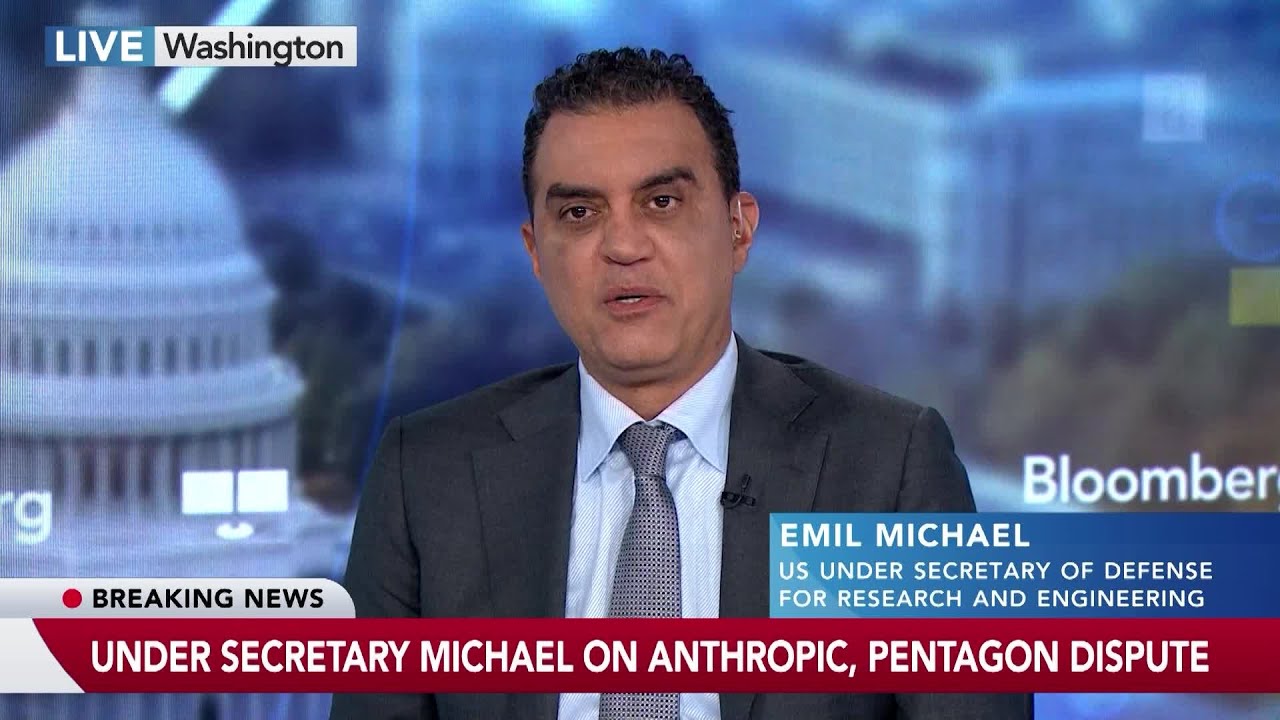
The video details a conflict between Anthropic and the Pentagon over the military’s use of AI, with Anthropic refusing to allow its technology for surveillance of U.S. citizens or autonomous lethal strikes, despite Pentagon assurances of compliance with existing laws and human oversight. Pentagon Undersecretary Michael criticizes Anthropic’s leadership for breaking off negotiations and warns of the broader risks posed by powerful tech companies overriding democratic processes.
The video covers the escalating dispute between Anthropic, an artificial intelligence company, and the Pentagon regarding the military’s use of AI technology. Anthropic faces a deadline to accept the Pentagon’s conditions or risk being blacklisted. The company’s CEO has publicly stated that threats from the Pentagon will not change their position, emphasizing ethical concerns about how their technology might be used. In response, the U.S. Undersecretary of Defense, Michael, accuses Anthropic’s CEO of dishonesty and arrogance, expressing frustration over the breakdown in negotiations.
Undersecretary Michael explains that the Pentagon has been negotiating with Anthropic for three months, making significant concessions to address the company’s concerns. The Pentagon agreed in writing to comply with all relevant laws, including the National Security Act and FISA, and to ensure human oversight in the use of autonomous weapons. Michael claims that Anthropic unexpectedly broke off talks and launched a public relations campaign, despite the Pentagon’s willingness to continue discussions and address minor remaining differences.
The core of Anthropic’s demands is that its AI technology not be used for surveillance of U.S. citizens or for autonomous lethal strikes without human involvement. Michael asserts that the Pentagon already abides by these restrictions under existing laws and directives, and that the concessions offered should have satisfied Anthropic’s concerns. He expresses surprise at Anthropic’s abrupt withdrawal from negotiations, noting that such behavior is unprecedented among the many technology companies the Pentagon works with.
The discussion also touches on the Pentagon’s broader strategy for AI procurement, which involves working with multiple vendors, including Google and ex-CIA, to ensure flexibility and security across classified and unclassified networks. Michael emphasizes the importance of having several AI options to compare strengths and weaknesses, especially as the military’s use of AI expands. He highlights the necessity of lethal autonomy for national defense, citing examples like drone swarms and hypersonic missiles, but reiterates the Pentagon’s commitment to maintaining human oversight in all autonomous weapon systems.
Finally, Michael raises concerns about the influence and accountability of tech company leaders, particularly when their personal policies might override democratically established laws. He points to issues such as potential mass unemployment, copyright lawsuits, and the risk of tech executives imposing their own values on society. Michael concludes that as AI companies grow in power, society will need to grapple with the implications of their influence and ensure that democratic processes remain paramount.